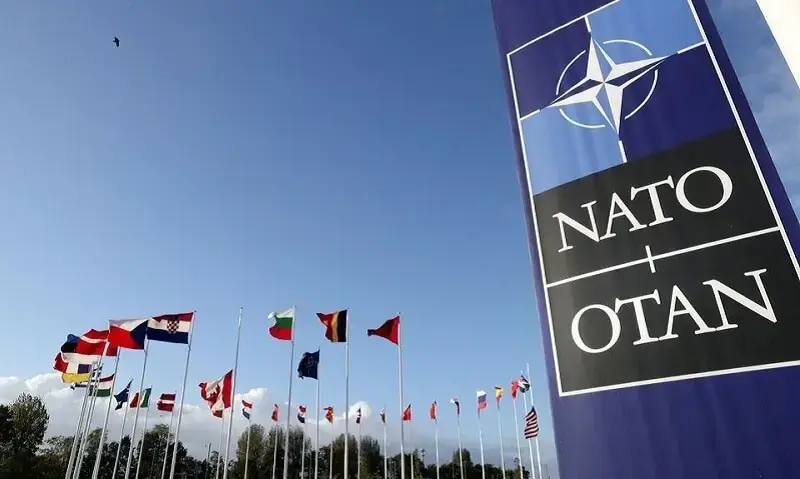
Canada seeks backing from about 10 countries for defence bank at NATO summit
Canada hopes to announce about 10 founding members for a proposed global defence bank at next week's NATO summit in Turkiye. Officials say capital commitments remain the main hurdle as allies weigh whether to join.

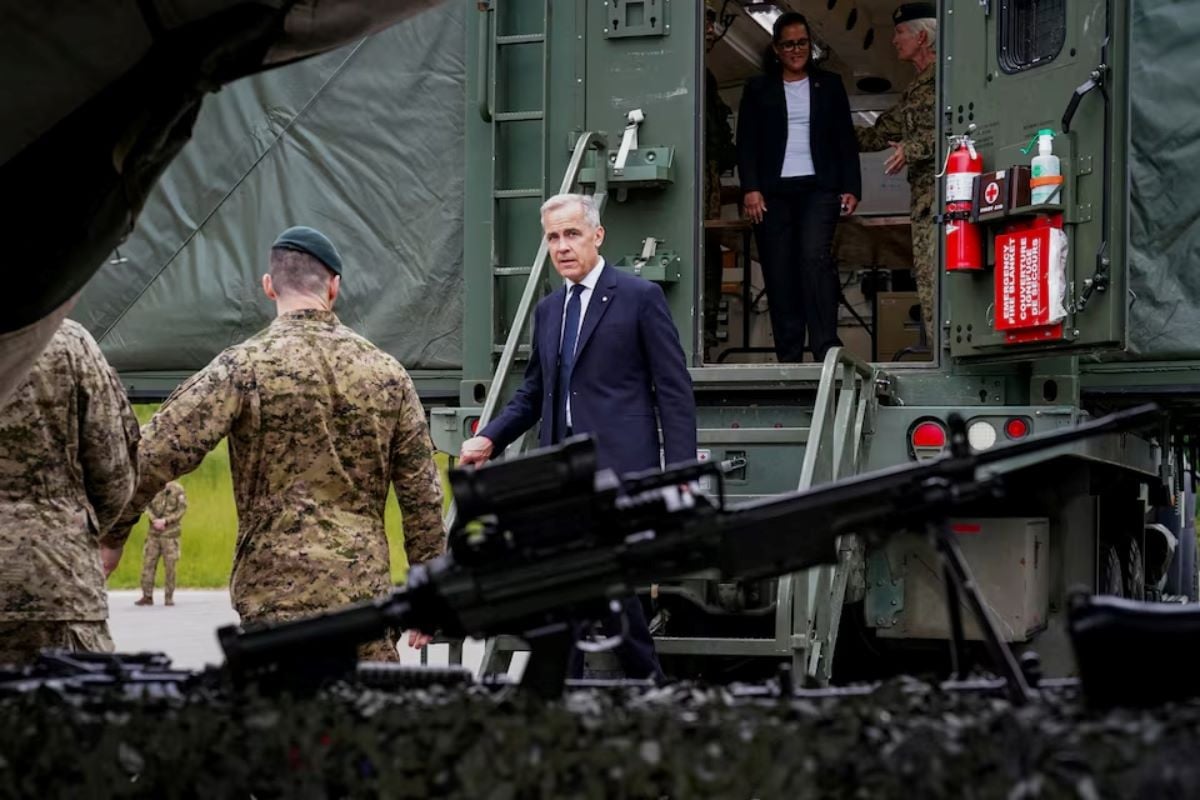
OTTAWA: Canada is working to unveil roughly 10 founding members for a proposed global defence bank at next week's NATO summit in Turkiye, according to Isabelle Hudon, the country's lead negotiator on the initiative and chief executive of the Business Development Bank of Canada.
The proposed institution, called the Defence, Security and Resilience Bank, is being promoted by Prime Minister Mark Carney as part of his push for an alliance of middle powers in response to what he sees as the weakening of the traditional US-led global order. The bank is intended to strengthen the defence capacity of allied countries by mobilising up to £100 billion in low-cost financing.
Hudon said the first group of participating countries would probably be European states along with Canada, though she did not identify them. She said an announcement at the NATO summit was still subject to final negotiations with allies, including discussions on capital commitments, but added that the effort was gaining traction.
In the interview, she said Carney had urged the team not to wait for ideal conditions before moving ahead.
"My prime minister said we should not aim for perfection before launching this initiative, that we should rally the countries that are ready to be called founding members, and then the membership will stay open"Capital commitments remain a key issue
Hudon said one of the main challenges in persuading countries to join was the amount of capital they would need to commit. She said anchor countries are being asked to contribute in proportion to the size of their economies.
"The capital is the most challenging part of the decision"According to a source familiar with the matter, that formula could leave Canada contributing as much as €1.5 billion, while smaller countries might be asked to provide between €500 million and €750 million. The project still faces uncertainty because backing from countries important to achieving a triple-A credit rating has not yet been secured.
So far, Luxembourg is the only country to have publicly joined Canada in supporting the plan, and it is set to host the bank's European base. Carney said on Friday that a critical mass of countries planned to participate, though he did not name them.
Linus Terhorst of the Royal United Services Institute said the summit in Ankara would be a significant test of whether the proposal had enough support to advance. Hudon also said it was unlikely Canada would announce the host city for the bank next week. The five cities under consideration are Toronto, Montreal, Ottawa, Halifax and Vancouver.
Support under discussion in Europe and beyond
Hudon said the DSRB had held productive discussions with South Korea and that there was a 50-50 chance it could join, possibly at a later stage. She added that no other G7 countries were close to signing up for now. South Korea's Finance Ministry had previously said it was reviewing the proposal.
John Fragos, press secretary for Canada's finance minister, said officials were trying to prepare an announcement for the NATO summit but that several issues still had to be resolved. He said the bank's advantages were widely understood.
Britain has resisted joining the initiative and has instead preferred to pursue its own defence financing plan, known as MDM, together with the Netherlands and Finland. However, two sources said British officials had explored ways to align that effort with the Canadian proposal or possibly merge the two. Carney said on Friday he looked forward to discussing the plan with the incoming British prime minister. Former Manchester Mayor Andy Burnham is the favourite to replace Keir Starmer.
Hudon said Canada remained in constant contact with stakeholders in London. Germany had also earlier kept its distance from the project, but a spokesperson for its Finance Ministry said Berlin had since joined the talks as an observer and was assessing the outcome.
According to multiple sources, Italy, Spain, Turkiye, Belgium and Ukraine have also examined the proposal. Turkiye's Foreign Ministry did not immediately comment, though sources said Ankara was interested. The Netherlands said it was not taking part and that it remained fully focused on the MDM initiative with the UK and Finland.
Competing plans and wider defence spending pressures
The DSRB was first proposed in 2024 by a group of former NATO security advisers, retired senior military officials and bankers. It comes at a time when NATO countries and partner states are facing increasing defence demands tied to the war in Ukraine, heightened tensions with Russia and concern over China's military build-up.
NATO leaders agreed in June 2025 to allocate 5% of GDP to defence and related security investment by 2035. The proposed bank also faces competition in Europe from other programmes, including the European Union's SAFE initiative.
Hudon said major banks involved in the project include JPMorgan, Deutsche Bank, Commerzbank and ING, alongside Canadian lenders RBC, BMO, CIBC, National Bank of Canada, Scotiabank and TD Bank.
Comments
No comments yet. Be the first to join the discussion!