

Nato pushes to turn rising defence budgets into weapons output
Nato is increasing pressure on defence manufacturers as rising military budgets fail to translate quickly into weapons and ammunition. Officials say Europe must expand production capacity and learn from Ukraine’s wartime industry.

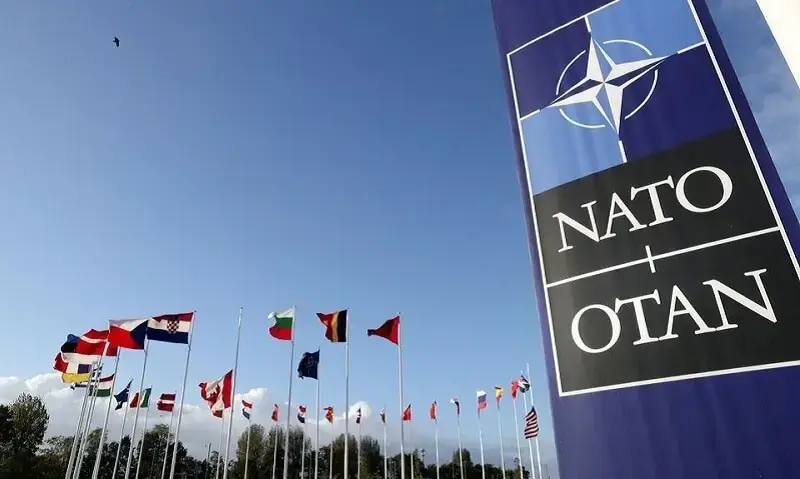
BRUSSELS: A year after Nato members made a landmark commitment to increase defence spending, the alliance is now confronting a different problem: whether industry can produce enough weapons to match the extra money being allocated.
Defence budgets in Europe and Canada rose by $90 billion last year, but Nato officials and analysts say funding alone will not address capability gaps unless production expands rapidly. Nato Secretary General Mark Rutte said the alliance must quickly convert increased spending into usable military strength. “Cash is crucial, but you can’t stop a missile or a tank with a dollar or a euro,” Nato chief Mark Rutte said. “We need to turn the cash into combat-ready capabilities, and fast. This is our shared priority.”
The issue is expected to feature prominently when leaders of the 32-member alliance meet in Ankara next week. Leaders are also expected to sign defence contracts worth billions of dollars during a special industry forum being held alongside the summit.
Production strain and strategic pressure
The difficulty in expanding production has been evident since Russia invaded Ukraine, exposing Europe’s limited ability to manufacture sufficient quantities of key military equipment. Long delivery times and shortages in critical areas have remained persistent concerns. President Donald Trump’s war on Iran has further depleted US stockpiles and underscored the pressure on defence companies to replenish supplies.
For European countries, increasing domestic capacity is seen as especially important as they seek to reduce dependence on Washington amid growing uncertainty about US reliability and warnings that Russia could mount an attack in the coming years. EU defence commissioner Andrius Kubilius said Europe has worked out how to raise more money for defence, but still needs to learn how to use those funds effectively enough to outproduce and outmatch Russia.
Industry representatives said change is underway after decades of underinvestment. Camille Grand, secretary general of the European defence industry association ASD, told AFP that many manufacturers are making major investments to raise production capacity, while acknowledging that output still falls short of where it needs to be.
Warnings over shortages
Analysts warned that Europe could exhaust some vital weapon stocks quickly if conflict erupted now, particularly air defence missiles. Researchers from the European Council of Foreign Relations said current production capacity in some crucial sectors would be unable to cope for more than a matter of days. They noted that ammunition output has increased from 300,000 shells a year in 2022 to a target of two million, but said that still would not be sufficient for a prolonged war.
Some of the problems are structural. Although the European Union has launched multiple initiatives to reshape its defence market, the sector remains fragmented, with member states such as France strongly defending their national companies. Kubilius recently said the EU still effectively operates 27 defence markets with 27 separate sets of rules, creating obstacles for industry.
Guntram Wolff of the Bruegel Institute in Brussels told AFP that large firms often have little reason to invest because they expect favourable treatment from their governments. He said the share of German defence purchases going to domestic companies had risen from around 30 per cent in 2020-2021 to 60pc in 2025-2026.
Ukraine seen as a model
Ukraine offers a nearby example of a more agile wartime defence industry. Despite more than four years of bombardment, Ukraine has built up a technology-focused sector capable of producing millions of drones.
Kubilius said European defence firms tend to produce highly advanced systems that are expensive, difficult to manufacture and hard to scale, whereas Ukrainian companies are making weapons suited to battlefield conditions during war. A growing number of European firms are entering partnerships with Ukrainian companies to benefit from their expertise, and officials want closer integration of Ukraine’s industry into Europe’s defence base.
The European Council of Foreign Relations said Ukraine’s defence-industrial integration should be regarded as an immediate security investment, arguing that its battlefield-tested capabilities in areas such as drone warfare and intelligence fusion are assets Europe needs now.
Comments
No comments yet. Be the first to join the discussion!


