June 24, 2026
Hangor-Class Submarine inducted into Pakistan Navy
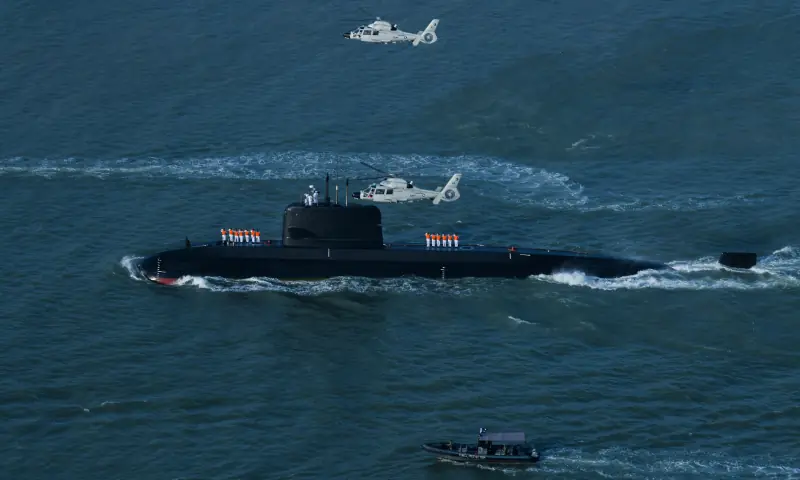
Pakistan inducted the advanced Hangor-class submarine into its Navy in Sanya, China. The fourth-generation vessel boosts stealth, endurance, and deterrence to protect key ports and sea lanes.

June 24, 2026

Boost to maritime defence
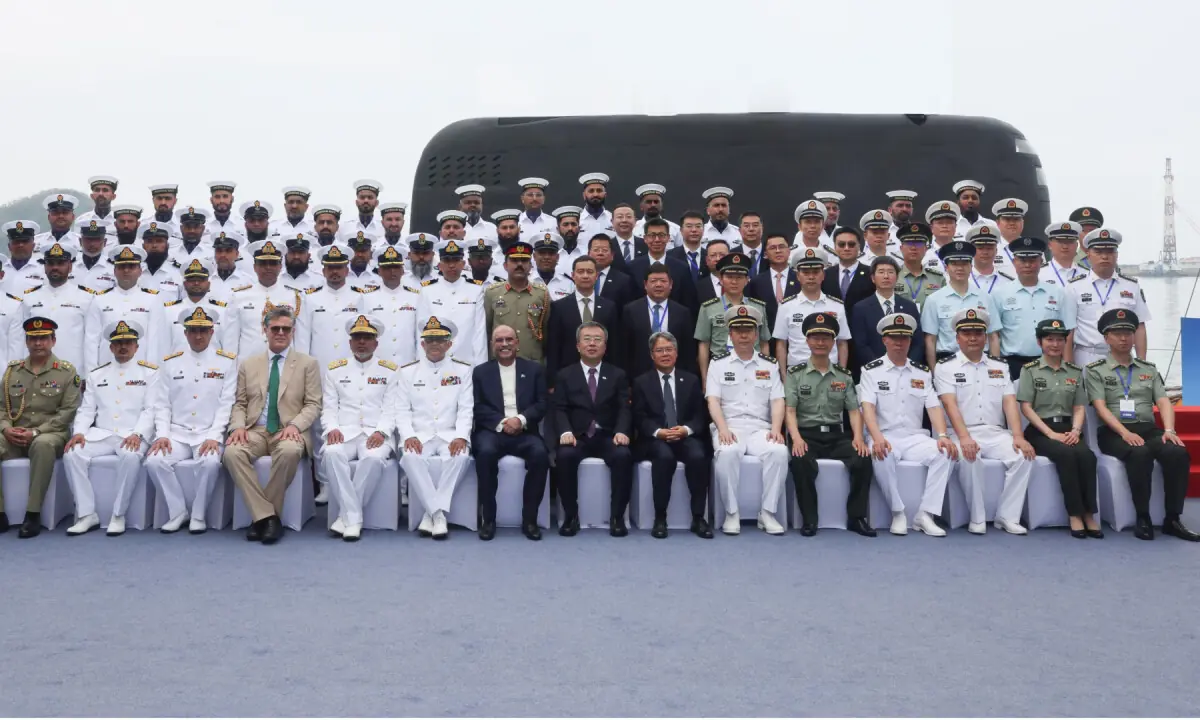
On April 30, Pakistan marked a major milestone in its maritime history by inducting the advanced Hangor-class submarine into the Pakistan Navy during a high-profile ceremony held in Sanya, on China’s Hainan Island.
The choice of location highlighted the deep strategic partnership between Pakistan and China, reinforced by the presence of President Asif Ali Zardari as guest of honour alongside senior Chinese officials. The unveiling of the first vessel symbolized both nations’ shared achievement and underscored the submarine’s importance as a modern, highly capable addition to Pakistan’s fleet.
More than a routine acquisition, the Hangor class represents a transformative leap in naval capability, replacing aging assets with fourth-generation submarines designed for stealth, endurance, and high-threat environments. These vessels strengthen Pakistan’s ability to safeguard its sovereignty and maritime interests, particularly the security of critical economic assets like the China-Pakistan Economic Corridor and Gwadar port, ensuring protection against threats such as blockades or maritime aggression.
This development comes amid increasingly contested and strategically vital global sea lanes, especially in the Indian Ocean region, where trade, energy flows, and geopolitical tensions intersect. The Hangor-class submarines enhance Pakistan’s role in maintaining maritime stability by providing advanced capabilities such as long-duration submerged operations, intelligence gathering, mine-laying, and precision strikes. Their stealth and deterrence value complicate adversaries’ strategies, forcing them to allocate significant resources to counter potential underwater threats.
In a region marked by rivalry and naval competition, these submarines enable Pakistan to protect key shipping routes and ports like Karachi, Port Qasim, and Gwadar, which are essential to its economy. Equipped with air-independent propulsion systems, they can remain submerged for extended periods, offering persistent surveillance and defence, and forming a critical layer in a broader maritime security framework that deters aggression and ensures the continuity of trade and energy supplies.
The name bestowed upon this new class of submarines, "Hangor". is not a random designation but a deliberate invocation of one of the most glorious and celebrated chapters in Pakistan’s naval history. The name carries a weight of legend and valor that resonates deeply within the military and the broader national consciousness. The first PNS Hangor (S-131), a Daphné-class submarine acquired from France, famously made history during the 1971 Indo-Pakistani War. On the night of December 9, 1971, while patrolling in the Arabian Sea off the coast of Diu, the Hangor, under the command of Commander Ahmed Tasnim, detected the Indian frigate INS Khukri and its accompanying vessel, INS Kirpan. In a textbook display of sub-surface warfare, the Hangor launched a spread of homing torpedoes, which struck the Khukri with devastating effect. The frigate, a workhorse of the Indian Western Fleet, was torn apart and sank within minutes, taking with it 18 officers and 176 sailors, including its captain. The Kirpan, realizing it was under submarine attack and lacking effective countermeasures, fled the area at full speed. This singular action gave the Hangor the unique and enduring distinction of being the first submarine to sink a warship in combat since the end of World War II. It was a feat of tactical brilliance, courage, and technological proficiency that shocked the Indian Navy and elevated the status of the Pakistan Navy on the world stage. The sinking shattered the myth of Indian naval supremacy and demonstrated that a small, well-trained submarine force could inflict disproportionate damage on a much larger surface fleet.
Now, the new submarine, officially designated PNS/M Hangor, is explicitly tasked with carrying forward this glorious tradition of silent service and decisive action. This legacy is not merely symbolic; it is an operational doctrine in its own right. The name serves as a constant reminder of the crew’s duty: to be stealthy, to be patient, to strike with lethal precision when the moment is right.
From a technical standpoint, the capabilities of the Hangor class are nothing short of revolutionary. The vessel is approximately 75-80 meters long, displacing around 2,800 tons when submerged, making it significantly larger than the existing Agosta 90B-class submarines.
The people of Pakistan feel, perhaps for the first time since 1971, that their navy is not just a coast guard or a defensive screen, but a true force in being, capable of projecting power, deterring aggression, and protecting the nation’s economic future from the silent, unforgiving depths of the ocean. The pride is not just in the steel and weaponry, but in the strategic autonomy and national resolve it represents.
Its most transformative feature is the integration of an Air-Independent Propulsion (AIP) system, likely based on Stirling-cycle or fuel-cell technology supplied or co-developed by China. AIP allows a non-nuclear submarine to remain submerged for extended periods— potentially up to two to three weeks— without needing to surface to recharge its batteries.
Traditional diesel-electric submarines must surface or use a snorkel to run their diesel generators, which makes them vulnerable to detection by radar, visual observation, or electronic surveillance.
With AIP, the Hangor class can operate almost like a nuclear submarine in terms of stealth and endurance, silently gliding at low speeds in deep waters, waiting for an opportune moment to strike, or carrying out long-range intelligence, surveillance, and reconnaissance (ISR) missions. This capability is a game-changer in the Arabian Sea, where it reduces the effectiveness of aerial anti-submarine warfare patrols and surface ship sonar sweeps.
The submarine is equipped with advanced sensors, including a highly sophisticated hull-mounted sonar array, a towed-array sonar for enhanced long-range detection, and optronic masts that replace traditional periscopes.
These optronic masts, a key feature of modern submarines, contain high-definition thermal imaging, low-light television, laser rangefinders, and electronic support measures, all of which provide a 360-degree panoramic view of the surface and air environment without requiring the mast to penetrate the surface for more than a few seconds. This drastically reduces the submarine’s radar cross-section and makes it nearly impossible to detect visually. The integration of all these sensors into a network-centric combat management system, likely Chinese in origin but adapted to Pakistani link architecture, allows for rapid data fusion and decision-making, enabling the crew to manage multiple threats and targets simultaneously with phenomenal efficiency.
The Hangor class features a bank of six or eight 533-millimeter heavyweight torpedo tubes, capable of firing a potent mix of munitions. The primary anti-ship weapon is expected to be the Pakistani-Chinese Harba-class submarine-launched cruise missile, a derivative or parallel development to the land-attack cruise missiles already in Pakistan’s inventory. These missiles can be configured with conventional high-explosive warheads and possess a range reported to be upwards of 450 to 700 kilometers. This equips the Hangor class with a formidable land-attack capability, allowing it to strike strategic targets deep inside enemy territory from concealed offshore positions, acting as a sea-based second-strike option complicating an adversary’s targeting calculus. For anti-ship warfare, the submarines will likely carry the advanced CM-708UNB submarine-launched anti-ship missile, which features a turbojet engine for high subsonic cruise speed and a sea-skimming terminal flight profile, making it extremely difficult to intercept. For close-range engagements or for dealing with other submarines, the torpedo tubes can launch advanced wake-homing and wire-guided heavy torpedoes, as well as lighter anti-torpedo torpedoes for self-defense.
The Hangor class is almost certainly fitted with a mine-laying capability, allowing it to secretly seed strategic choke points, enemy harbours, or shipping lanes with smart mines that can be activated or deactivated remotely. This would give Pakistan the ability to impose a de facto blockade or deny vast areas of the sea to enemy shipping without engaging a single surface vessel, a form of asymmetric warfare that plays directly to the submarine’s strengths. The sheer variety and lethality of these weapon systems, combined with the extended submerged endurance granted by AIP, ensure that each Hingor-class submarine is not just a single platform but a mobile, integrated weapon system capable of influencing the outcome of a theatre-level conflict.
The address of President Zardari at the induction ceremony lauded the Chinese government and defense industry for their unwavering support, describing the submarine project as a "cornerstone of regional peace and stability."
The deal, believed to be worth several billion dollars and encompassing eight submarines in total, with four to be built in China and four, under technology transfer, at the Karachi Shipyard & Engineering Works, represents the largest ever defence cooperation project between the two countries. This technology transfer is crucial, as it will not only upgrade the Pakistan Navy’s fleet but also revolutionize Pakistan’s indigenous shipbuilding and defence manufacturing capabilities.
Building submarines is an order of magnitude more complex than building surface ships; it requires expertise in high-strength steel alloys, acoustic signature reduction, precision propulsion systems, and hyperbaric life support. By acquiring this technology, Pakistan is investing in a generation of engineers, technicians, and naval architects who will form the nucleus of a future domestic submarine-building programme.
The joint construction at KSEW, which has already modernized its facilities for this purpose, is a testament to the long-term vision of the partnership. The entire nation, from the bustling streets of Karachi to the serene valleys of Gilgit-Baltistan, felt a palpable sense of pride. Newspapers ran special supplements detailing the submarine’s features, television channels broadcast analyses.
This widespread public enthusiasm underscores an important truth: in a country often preoccupied with its land borders with India and Afghanistan, the induction of the Hangor class has successfully shifted a significant portion of the national security consciousness toward the Arabian Sea. The people of Pakistan feel, perhaps for the first time since 1971, that their navy is not just a coast guard or a defensive screen, but a true force in being, capable of projecting power, deterring aggression, and protecting the nation’s economic future from the silent, unforgiving depths of the ocean. The pride is not just in the steel and weaponry, but in the strategic autonomy and national resolve it represents.
0 Comments
No comments yet. Be the first to join the discussion!