June 23, 2026
Iranian President Masoud Pezeshkian arrives in Pakistan on official visit today
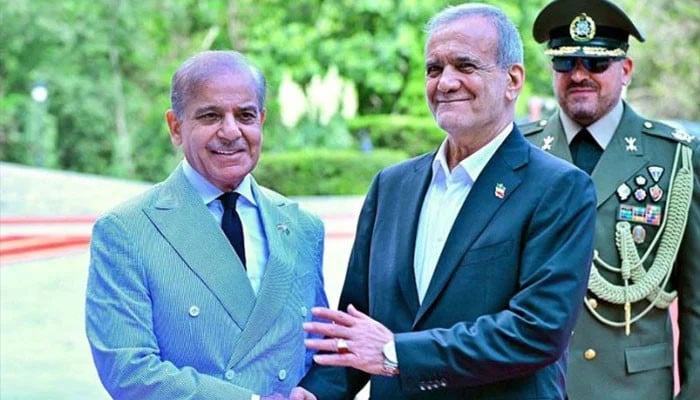
Iranian President Masoud Pezeshkian is arriving in Pakistan on an official visit at Prime Minister Shehbaz Sharif’s invitation. The trip comes amid tight security in Islamabad and follows recent US-Iran talks in Switzerland under the Islamabad MoU.

June 23, 2026
ISLAMABAD: Iranian President Masoud Pezeshkian is due to arrive in Pakistan on Tuesday on an official visit at the invitation of Prime Minister Shehbaz Sharif, with meetings scheduled with the country’s top civilian leadership.
Pezeshkian will meet President Asif Ali Zardari and hold talks with Prime Minister Shehbaz. Senate Chairman Yousuf Raza Gilani, National Assembly Speaker Ayaz Sadiq, and Deputy Prime Minister and Foreign Minister Ishaq Dar are also set to call on the visiting Iranian president.
This would be Pezeshkian’s second visit to Pakistan since taking office as Iran’s president. The trip would give both sides an opportunity to review the full range of bilateral ties and examine ways to strengthen cooperation in trade, energy, border security, people-to-people contacts and regional connectivity.
The visit is an opportunity to discuss ongoing diplomatic engagement after the signing of the Islamabad Memorandum of Understanding, along with regional and international developments of shared interest.
The visit reflected the resolve of Pakistan and Iran to deepen their historic and cultural relationship and their shared objective of peace, stability and sustainable progress in the region.
Security measures in Islamabad
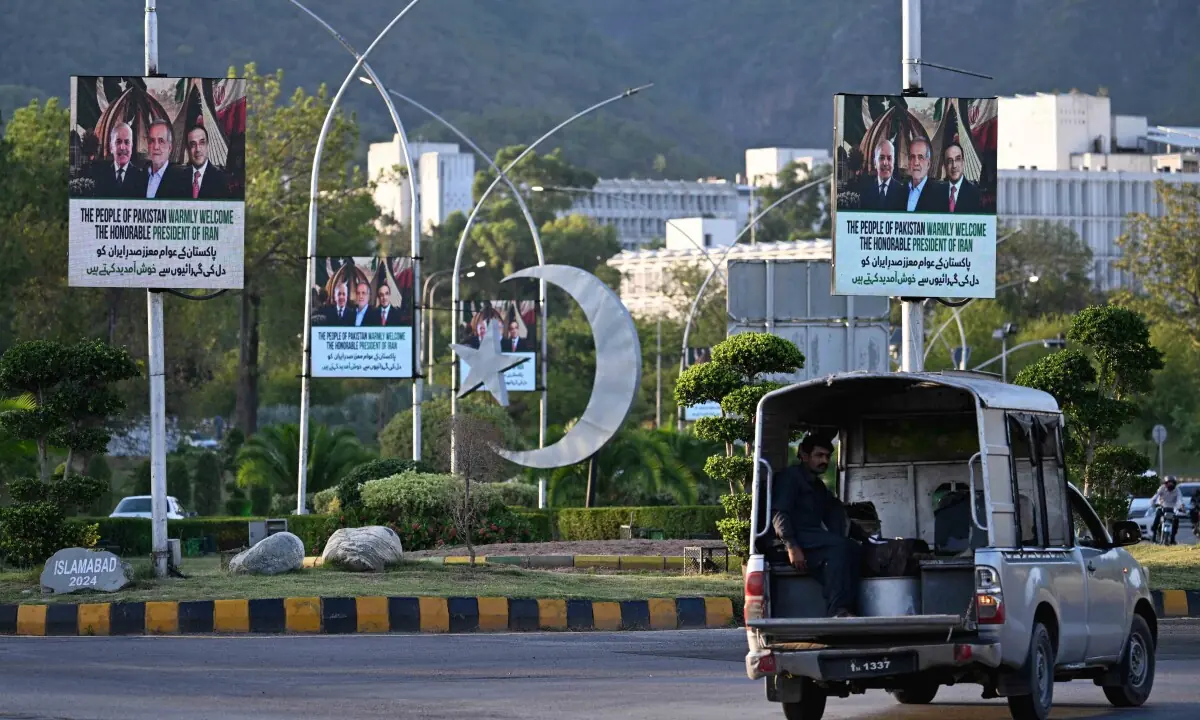
Security arrangements were tightened in Islamabad ahead of the Iranian president’s arrival. Officials of the capital administration and police said bus terminals across the capital, including those at Faizabad and Chongi No 26, were asked to shut operations before midnight on Monday and remain closed on Tuesday. The terminals will stay closed until Pezeshkian’s departure.
The Red Zone in Islamabad has also been sealed, with entry restricted to relevant officials only. In separate notifications, the federal government and district administration announced a one-day work-from-home arrangement for a number of ministries and ordered the closure of major hiking trails on Tuesday.
A notification issued by Cabinet Division Secretary Kamran Ali Afzal stated that staff of ministries, divisions and government offices situated inside the Red Zone will work remotely, while autonomous bodies and attached departments in the area will observe a full holiday. Essential federal institutions and banks have been exempted from the order. These include the Prime Minister’s Office, the Senate, the National Assembly, the Cabinet Division, the Ministry of Finance and Revenue, the Federal Board of Revenue, and the ministries of foreign affairs, interior, commerce, industries, law, parliamentary affairs and planning division, along with all federal banking institutions.
Islamabad District Magistrate Irfan Nawaz Memon also ordered the immediate closure of public hiking routes including Trail 2, Trail 3, Trail 4, Trail 5 and the tracks behind Saidpur Village, with the restriction taking effect from Tuesday until further notice.
Visit follows US-Iran talks in Switzerland
Pezeshkian’s visit comes after direct talks between the United States and Iran in Switzerland, described as the Lake Lucerne Summit, which began negotiations under the Islamabad MoU signed on June 18.
Under the 14-point accord, Washington and Tehran agreed on a framework aimed at ending the war, reopening the Strait of Hormuz and negotiating key issues within 60 days of the signing. The talks in the Swiss resort of Burgenstock were mediated by Pakistan and Qatar, with Prime Minister Shehbaz Sharif and Chief of Defence Forces Field Marshal Asim Munir representing Pakistan.
The summit also established a mechanism for further technical discussions, which are to continue this week, and created communication channels intended to end the fighting in Lebanon and keep the Strait of Hormuz open.
"Encouraging progress has been made," the mediators said in a joint statement referring to the outcome of the talks.
The joint statement added that a contact channel had been set up to avoid incidents and miscommunication in the Strait of Hormuz, while a de-confliction cell involving the parties and the Lebanese authorities had also been agreed to help prevent fighting from breaking out again.
0 Comments
No comments yet. Be the first to join the discussion!