June 23, 2026
Iran says adherence to agreed text key as US-Iran talks move forward
Iran’s president said progress in talks with the US depends on strict adherence to agreed commitments. The negotiations also produced understandings on Hormuz, Lebanon and temporary sanctions relief.

June 23, 2026
TEHRAN: Iranian President Masoud Pezeshkian said on Tuesday that progress in talks with the United States would depend on both sides observing what had already been agreed and implementing commitments accurately.
In a post on X, Pezeshkian said the success of the negotiations rested on full compliance with agreed obligations and their exact execution. He added that progress would be judged by practical observance of accepted responsibilities and said comments made outside the agreed framework would not help move the talks ahead.
It was not clear which remarks he was referring to. However, United States President Donald Trump has made a series of recent statements that Iranian officials have challenged, including assertions that Tehran had agreed to permit nuclear inspections and that any Iranian funds released under the process would be used to purchase US agricultural goods.
Hormuz, sanctions and Swiss talks
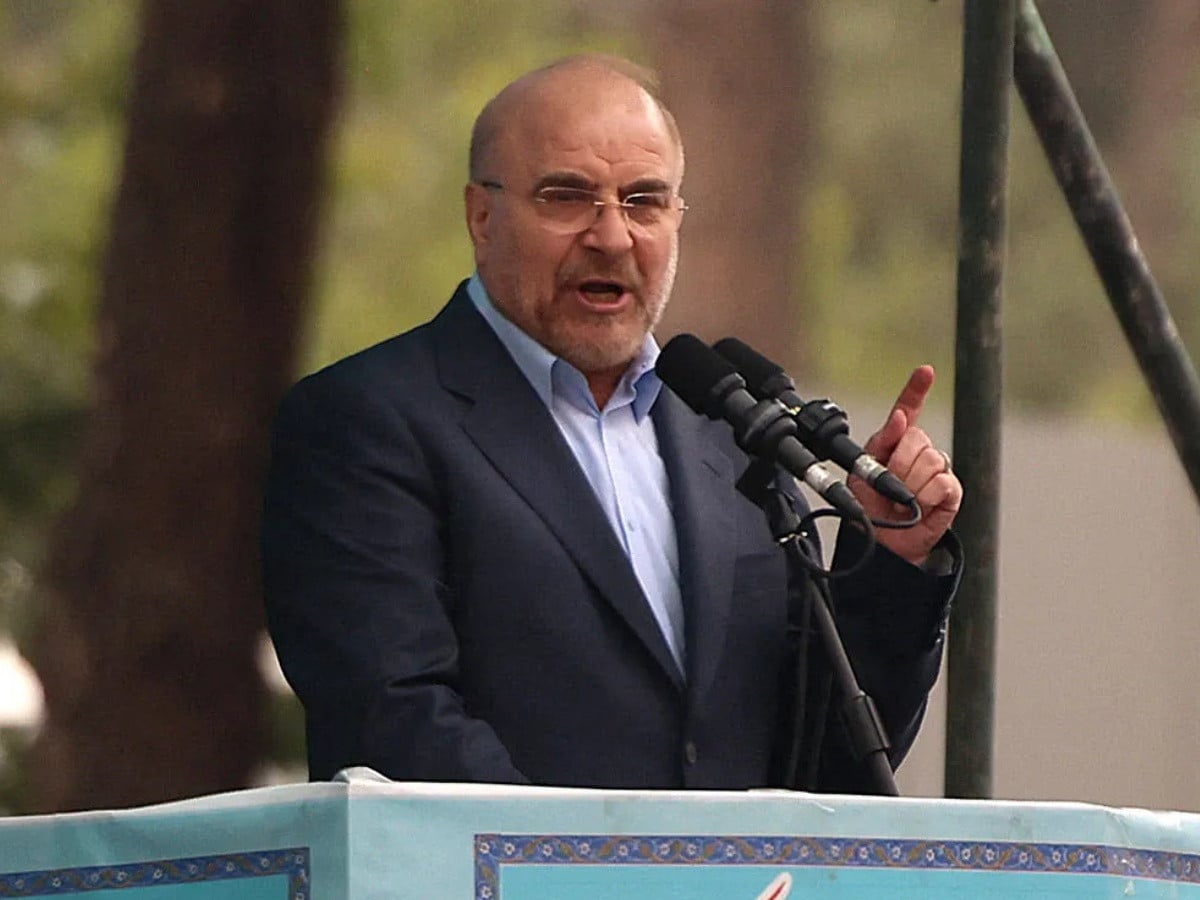
Separately, Iran’s chief negotiator Mohammad Bagher Ghalibaf said the Strait of Hormuz would remain under Tehran’s administration, according to state media, after talks aimed at halting the US-Israeli war on Iran.
"The Strait of Hormuz will never return to its pre-war conditions and will be administered by the Islamic Republic of Iran, in accordance with international law," IRNA quoted Ghalibaf as saying.
In a video posted on his Telegram account after returning from the talks, Ghalibaf described the discussions at the Swiss resort of Burgenstock as productive. He said the visit had produced progress on the strait, Lebanon, an oil waiver and the release of frozen funds, but added that the process was still at an early stage and required further effort.
Iran and the United States agreed on Monday to establish communication channels to help keep the strategic shipping route open and to work toward ending fighting in Lebanon, mediators said after the first round of talks in Switzerland. Pakistan and Qatar said the two sides had agreed on a roadmap toward a permanent agreement within 60 days.
The United States also granted a 60-day sanctions waiver from Monday. The US Treasury said the step would allow Iran to sell oil and related products and receive payment for them until August 21. The move came after US Vice President JD Vance said Tehran would allow UN nuclear inspectors to return, although Iran denied it had entered talks on its nuclear programme.
Strait tensions and maritime traffic
The waterway, which Iran had closed at the start of the war, reopened last week after Washington and Tehran reached an agreement. Tehran then said on Saturday that it had shut the strait again in response to Israeli attacks in Lebanon.
Since then, Tehran and Washington have agreed to put in place a communication line, with Qatari and Pakistani mediators saying the purpose was to avoid incidents and misunderstandings and ensure safe passage for commercial shipping through the strait.
Vessel traffic through Hormuz continued on Monday at a faster pace than before the US-Iran agreement to begin talks aimed at ending the war. Oman, which shares the strait with Iran, was also reported by Iranian state media to have been a stop on Ghalibaf’s trip.
Lebanon talks and Israeli concerns
On the Lebanon front, Israeli authorities were considering the possibility of a future US request for a phased withdrawal of Israeli troops from parts of southern Lebanon. A new round of Israel-Lebanon talks was due to begin on Tuesday under US mediation to discuss initial arrangements tied to a possible withdrawal as part of a pilot programme for the Lebanese army.
The discussions were expected to include the Israeli and Lebanese ambassadors and three Israeli brigadier generals. It also was reported that Israeli forces had begun repositioning and reorganising troops in the previous 24 hours while awaiting political decisions.
Unnamed Israeli sources said Israel was taking into account the possibility that the United States could call for a gradual pullback from parts of the so-called security zone, enabling the Lebanese army to return as a confidence-building step. Washington had approved a mechanism to monitor ceasefire violations in Lebanon involving Iran and Qatar without Israeli participation, with Israeli sources linking Israel’s exclusion to Iran’s role.
Earlier, a senior Israeli official said Washington had recently signalled to Israel that its previous freedom to carry out unrestricted military action in Lebanon had ended. Increasing differences between Washington and Israel over Lebanon were reported, saying the US viewed southern Lebanon in a wider regional context tied to the Strait of Hormuz, oil prices, the Iranian nuclear issue and the Trump administration’s diplomatic objectives, while Israel believed that any early withdrawal could be seen as weakness and as a reward for Hezbollah.
Trump, speaking after the interim understandings, said he would do what he had to do if Iran failed to uphold its side of the arrangement. Officials had noted a sustained lull in fighting in Lebanon under the agreement, even as Israel said it would keep a security zone in the south and continue acting against threats to its soldiers and citizens.
0 Comments
No comments yet. Be the first to join the discussion!