Iran wary of US intent as Trump ‘toughens deal’
Iran says it will not accept any agreement with the United States unless its rights are guaranteed, as talks remain deadlocked over nuclear and maritime issues. Disputes also persist over frozen assets and Strait of Hormuz terms.

ISLAMABAD: Iran's leadership has said it will not accept any agreement with the United States unless Tehran's rights are fully protected, as negotiations over a proposed nuclear and security arrangement continue amid deep mistrust and disagreements over key terms.
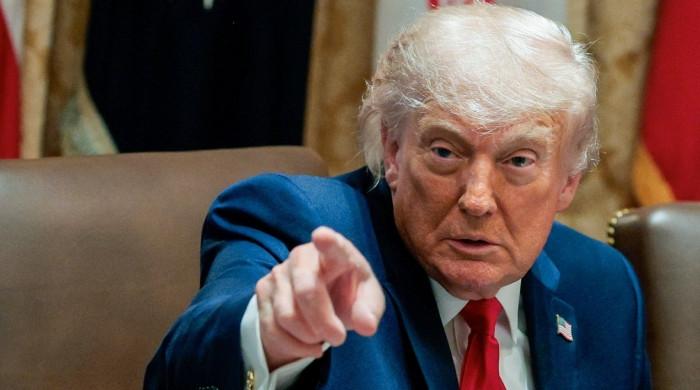
Mohammad Bagher Ghalibaf, Iran's chief negotiator and parliamentary speaker, said on Sunday that Tehran would not sign off on any deal until it was satisfied that the rights of the Iranian people had been guaranteed. His comments came after reports that US President Donald Trump had returned a revised and tougher version of a proposal being discussed in talks aimed at ending hostilities and reopening the Strait of Hormuz.
US media reports, including The New York Times and Axios, said Washington's revised framework seeks stronger assurances on Iran's nuclear programme and maritime security in the Gulf, although the precise changes have not been made public. Trump has said his central objective is to ensure Iran does not acquire nuclear weapons and to restore unrestricted shipping through the strait.
In an interview aired on Fox News, Trump said: "The one guarantee that I have to have is that there will be no nuclear weapons."
Trump also stated that Tehran had accepted that principle, but Iranian officials disputed that account and said the negotiations were still incomplete and subject to conditions.
Iranian state media quoted Ghalibaf as saying there was "no trust in the enemy's words and promises," and that any understanding must produce "tangible results before commitments are made." Tasnim news agency reported that draft texts were still being discussed and amended by both sides, and said no final agreement had been reached. It also warned that the talks could still fail if Iran's core demands are not addressed.
One of the main sticking points is Iran's insistence that its rights be recognised, including access to frozen funds said to total about $12 billion. Tehran says those assets must be released before meaningful progress can be achieved. Iranian media have also rejected US allegations about uranium stockpiles, describing them as baseless.
Security concerns continue to shadow negotiations
The talks are taking place in a fragile security climate. Although a temporary ceasefire was agreed in April after months of attacks and counterattacks, both sides have continued to report intermittent incidents, including drone activity and tensions near borders.
Iran's Revolutionary Guards claimed to have downed a US military drone that approached Iranian territorial waters, although Washington had not confirmed the incident. Iranian state media also reported that Revolutionary Guard ground forces had carried out operations against separatist groups in northern Iraq, highlighting the wider regional security backdrop.
CNN said that damage caused by US and allied strikes on Iranian missile infrastructure had been partly reversed. Satellite images were said to show that Tehran had reopened dozens of tunnel entrances at underground missile facilities. Analysts quoted said the speed of the repairs demonstrated the limits of prolonged air strikes, while one US official said Iran had been "exceeding all timelines" in rebuilding important capabilities, including missile and drone production.
Dispute persists over Strait of Hormuz terms
Another issue complicating the negotiations is the competing description of possible arrangements for the Strait of Hormuz. Trump has suggested Iran could agree to a no-tolls system for shipping under any eventual deal, but Iranian media have denied that such a provision exists.
Instead, lawmakers in Tehran have proposed an arrangement involving administrative fees and broader sovereignty over the strategic waterway. The issue has raised concern among energy market stakeholders because of the strait's importance for global oil shipments. US officials are said to be seeking guarantees against disruption, while Iran has maintained that any arrangement must take account of its territorial rights and economic interests.
Comments
No comments yet. Be the first to join the discussion!