

June 23, 2026
Mazar exempted from tax
A National Assembly panel has approved Finance Bill 2026 changes including a tax exemption for the Quaid-e-Azam Mazar Management Board and lower import duties on many vehicles. The report also proposes revisions to trader taxation, sales tax and aviation exemptions.

June 23, 2026
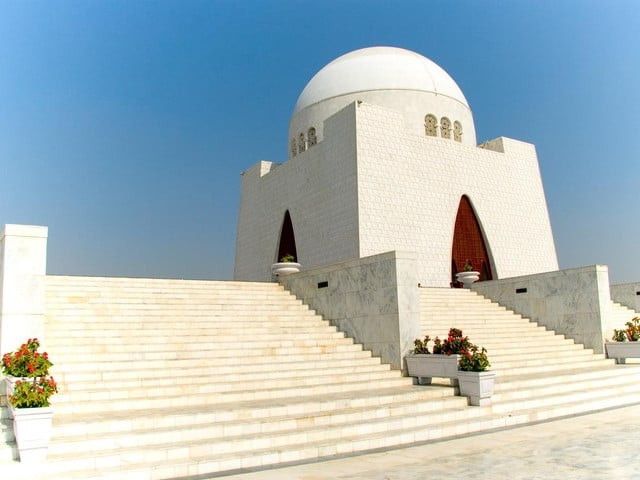
ISLAMABAD: The National Assembly Standing Committee on Finance has approved changes to the Finance Bill 2026 that include an income tax exemption for the Quaid-e-Azam Mazar Management Board and revised tariff proposals for the auto sector, according to the committee report to be presented to the lower house by Finance Minister Muhammad Aurangzeb on Tuesday.
The committee, headed by Pakistan Peoples Party leader Syed Naveed Qamar, also proposed allowing traders to leave the optional fixed income tax regime from tax year 2027, while recommending a series of changes in sales tax, excise duty and minimum tax provisions. Under parliamentary procedure, the report is expected to be adopted unless the National Assembly rejects any of its amendments.
Tax exemptions and trader regime
The report proposes exempting the income of the Quaid-e-Azam Mazar Management Board from tax, a move coming 58 years after the board was established. Nine more entities are set to be added this year to the list of organisations enjoying income tax exemption. The government had originally proposed five organisations, while the committee added four more, including the Mazar board.
Other entities proposed for exemption include the Make-a-Wish Foundation, provincial employees' social security institutions and Workers Welfare Fund organisations.
On the trader taxation scheme, the committee proposed that traders with turnover of up to Rs200 million should be able to opt out of the final tax regime at the time of filing returns for tax year 2027 and onwards. The government had introduced the optional arrangement under which traders could pay 1% of sales as income tax, subject to a minimum annual payment of Rs25,000, in exchange for exemption from audit and inclusion in the digital economy.
In the wording carried in the budget proposal: "Provided that a person having turnover up to Rs200 million may opt out of final tax regime at the time of filing of return for tax year 2027 and onwards."
Auto tariff changes
The committee has proposed substantial cuts in import taxes on vehicles with engine capacity of up to 2,000cc in line with the government's National Tariff Policy. Under the proposal, the maximum import taxes on such cars would fall from 156% to 74%.
For vehicles above 1,800cc, the combined tariff has been proposed at 74%, down from 156%. For imported cars, SUVs and other vehicles with engine capacity of 2,000cc and above, an 86% federal excise duty has been imposed, while vehicles exceeding 3,000cc would face a 92% tax rate.
The committee also proposed lowering the combined tariff for vehicles in the 1,500cc to 1,800cc category from 91% to 57%. For 1,000cc to 1,500cc vehicles, the proposed duty has been reduced from 76% to 52%. In the 850cc to 1,000cc segment, the maximum tariff would fall from 71% to 47%, while for vehicles up to 850cc, motorcycles and vehicle bodies, the proposed maximum tariff has been reduced from 66% to 42%.
For the auto-parts sector, the proposed maximum tariff has been cut from 61% to 45%, including 25% customs duty.
Other fiscal changes
The committee proposed a 1% sales tax on imported coal on the condition that it is exclusively and directly supplied to independent power producers. It rejected a proposal to reduce the minimum income tax rate for terminal service providers to 12%.
It also linked the Rs80 per litre excise duty on petrol solvents with a condition that the levy would not apply to the import or supply of white spirit and solvent oil bought only for in-house consumption, provided both the importer and the recipient hold licences issued by the Department of Explosives.
The panel rejected a proposal to impose late payment surcharges on oil marketing companies for delays in depositing the petroleum levy. It approved sales tax exemptions on wheat and rice bran, and also rejected a proposal to impose fines of up to Rs100,000 for late filing of returns, though it added a condition barring late filers from registering property for six months.
The committee also approved a list of sectors to be charged 0.5% minimum tax. These include pharmaceuticals, fertiliser, cigarettes, sugar, locally manufactured mobile phones, frozen food in canned or packaged form, electronics, beverages and dairy products, pasta, cereals, biscuits, nuts, snacks and similar packaged food items, condiments and baking items in bottled or packaged form, skincare and cosmetics, hair care, oral care, baby care, cleaning agents including laundry detergents, dishwashing soaps and floor cleaners, toilet paper, paper towels, facial tissues, napkins and similar items, trash bags, aluminium foil, air freshener and insect sprays.
The report excluded sales of plates, films, coils, tape and sheets from the goods to be charged sales tax at market price. It also approved a Rs30 per unit sales tax for the steel sector regardless of whether production uses national grid electricity or alternative energy sources, including bagasse power plants.
To extend parity across the aviation sector, the panel recommended tax exemptions for all airlines. However, for carriers other than Pakistan International Airlines, the exemptions would take effect from July 2027. The committee also allowed individuals to pay tax on mobile phones in instalments within one year.
0 Comments
No comments yet. Be the first to join the discussion!


