June 21, 2026
Pakistan mango exports may fall 30pc as Middle East conflict hits trade
Pakistan’s mango exports are expected to drop by at least 30pc this season as conflict-linked disruption in the Middle East hurts demand, closes trade routes and drives up freight costs. Domestic sales have also weakened as inflation squeezes consumers.

June 21, 2026
KARACHI: Pakistan’s mango exports are expected to decline sharply this season as the fallout from the Middle East conflict continues to disrupt trade, raise freight charges and weaken demand in key overseas markets, according to traders and exporters cited by AFP.
The mango season began in June in Sindh, but exporters say the recent preliminary agreement announced by Islamabad between the United States and Iran came too late to materially help this year’s roughly three-month export window. Traders said overseas sales could fall by at least 30pc, while domestic demand has also softened as inflation-hit consumers cut back on non-essential purchases.
Exports and market disruption
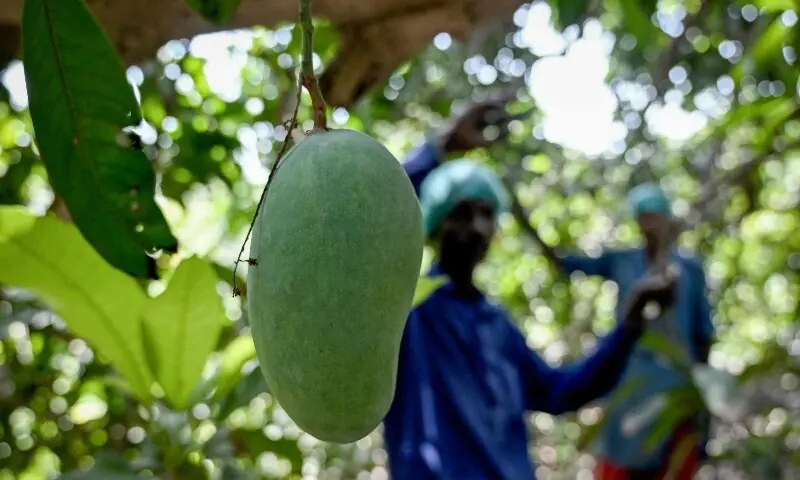
Pakistan produces more than two dozen mango varieties and typically earns about $110 million a year from international sales, making it the world’s fourth-largest mango exporter. In Tando Allah Yar, where the Sindhri variety is a major crop, orchard operators said the season has become financially difficult, with some contractors walking away despite having paid advances on orchard leases.
Mohammad Shakeel, who manages orchards in the area, said losses had mounted to the point that some leaseholders had abandoned their commitments. “So many losses have been incurred, the contractors have even left their advance money,” Shakeel said.
Waheed Ahmed, chief patron of the All Pakistan Fruit and Vegetable Exporter Association, told AFP that nearly four-fifths of Pakistan’s mango exports normally go to the Gulf region, Iran and Afghanistan, all of which have faced conflict-related disruption in recent months. “Almost 80pc of mango export is to the Gulf region, Iran and Afghanistan,” Waheed Ahmed, chief patron of the All Pakistan Fruit and Vegetable Exporter Association, told AFP.
He said total mango exports were likely to fall to about 80,000 tonnes this year, down by around 30,000 tonnes from last season. Ahmed said border closures with Afghanistan and the conflict in Iran and across the broader Middle East had undermined trade flows. “The border to Afghanistan is closed, there is war in Iran… there is war in the entire Middle East.”
He also said the ceasefire-related development this week had not removed the main obstacles facing exporters this season. “The main challenges still remain,” he said.
Freight costs surge, local sales weaken
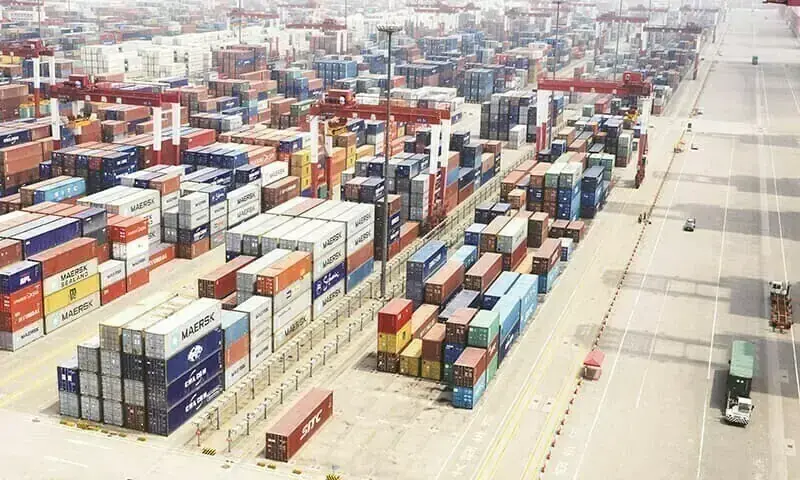
Exporters said shipping costs have risen steeply as maritime disruption around the Strait of Hormuz pushed up energy prices. Ahmed estimated that a 25-tonne container that cost around $1,400 to ship last year now costs between $6,000 and $7,000. “The same freight has increased to $6,000 to $7,000 this year,” he said.
Trade with Afghanistan has also been affected by closed crossings, with hundreds of goods-laden trucks reported to have remained stranded for months.
At home, the larger supply reaching local markets has lowered mango prices, but weaker household purchasing power has limited sales. In Karachi, mangoes were selling at about Rs200 per kilogram, roughly half the level seen last year, according to a customer cited by AFP.
Muhammad Ashad said the drop in exports had made mangoes cheaper, but many consumers still could not afford them. “Mangoes are very cheap this time compared to the last few years… because our export has stopped,” he said. “I am seeing everywhere that there are very good mangoes, but people are still not able to buy them.”
According to a government survey cited by AFP, Pakistan’s inflation rate rose to 10pc in the three months after the conflict began, compared with 5.5pc in the July-February period. Shakeel also said lower local prices had not translated into broader affordability for consumers facing rising living costs. “In the local market the price is low. But not everyone can afford to buy mangoes. Look at the state of the country: expenses are rising… income is low. Should they buy their bread first or our mangoes?”
0 Comments
No comments yet. Be the first to join the discussion!