June 21, 2026
Aurangzeb rejects concerns over GDP figures, calls budget balanced
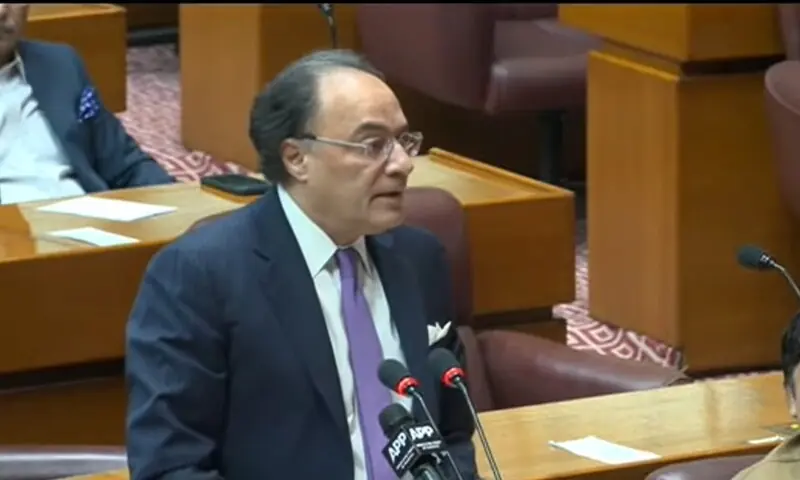
Finance Minister Muhammad Aurangzeb told the National Assembly that Pakistan’s GDP and national accounts are compiled under internationally recognised standards. He also highlighted improved economic indicators and defended the government’s budget and reform agenda.

June 21, 2026
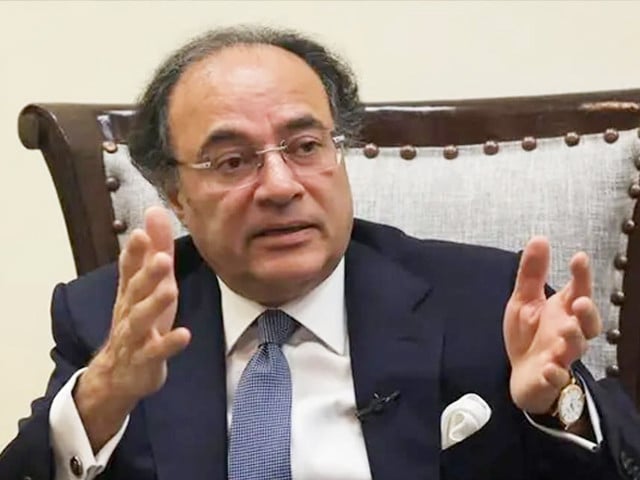
ISLAMABAD: Finance Minister Muhammad Aurangzeb on Saturday defended Pakistan’s gross domestic product calculations and broader economic data in the National Assembly, saying the country’s national accounts are prepared under internationally recognised standards and that there had been no change in the method used to compile them.
Winding up the general debate on the federal budget for 2026-27, Aurangzeb described the government’s fiscal plan as a balanced budget focused on growth and stability. He also said broad agreement across the political spectrum would be necessary to maintain the pace of economic recovery and reforms.
Responding to concerns raised by some lawmakers over alleged inconsistencies in budget papers and national income figures, the minister rejected the allegations and said the Pakistan Bureau of Statistics continues to prepare national accounts under the United Nations System of National Accounts 2008, with 2015-16 used as the base year. He said the reported GDP growth rate of 3.7pc represented real economic activity measured at constant prices in line with international practice.
Aurangzeb said the National Accounts Committee approves the national accounts and includes representatives from the federal and provincial governments, the State Bank of Pakistan, academia and other institutions. He said nominal GDP had been worked out at current market prices and then converted into US dollars using average exchange rates, putting the size of Pakistan’s economy at about $452 billion in FY2025-26. He added that per capita income was calculated using gross national income and population estimates based on the 2023 census.
Economic indicators and external sector
The finance minister said several macroeconomic indicators had improved during the past year. According to him, large-scale manufacturing expanded by around 6.5pc, the strongest performance in four years, while the current account posted a surplus for an 11th straight month.
He said monthly remittances had reached a record $4.25 billion and expressed the view that total remittances for the current fiscal year could surpass $41 billion. Aurangzeb also said information technology exports had risen by about 20pc and were expected to exceed $4.5 billion, while freelancers had brought in $1.6 billion in foreign exchange earnings.
He said the government’s economic strategy was centred on export-led, sustainable and inclusive growth, with the aim of raising productivity and creating jobs.
Tax, agriculture and housing measures
Aurangzeb said the government’s tax reforms were intended to widen the tax net rather than place more burden on existing taxpayers. He said relief had been given to salaried people, small businesses, industry, exporters and the construction sector.
He added that the reform agenda included separating tax policy from tax administration and introducing a modern digital operating model aimed at reducing direct contact between taxpayers and officials. According to the minister, automation, artificial intelligence and faceless systems would improve transparency and help reduce harassment. He said the country had generated around $14 billion in additional tax revenue over the past two years, which he attributed to reforms and the leadership of Prime Minister Shehbaz Sharif.
On agriculture, the minister said Rs300 billion in interest-free financing had been disbursed under the Zarkhez programme for small farmers, benefiting about 750,000 farmers. He said support had also been provided through subsidies and financing for fertilisers, machinery, insurance and cold storage projects.
He further said cooperation with China in the agriculture sector was expanding and that more than 800 Pakistani students, farmers and agricultural graduates had already received training in modern farming methods. Aurangzeb also said the government was promoting low-cost housing through the Apna Ghar programme in an effort to support construction activity and employment.
Relief measures and concluding remarks
The finance minister said the budget included increases in salaries, pensions and minimum wages. He also pointed to digital facilitation for pensioners through facial recognition-based life verification using the Pak-ID app.
According to Aurangzeb, taxes had been cut or removed on essential health-related goods, including contraceptives and life-saving medicines, to improve access to healthcare.
He also said Pakistan had recently played a constructive diplomatic role in helping facilitate dialogue between the United States and Iran, which he said contributed to lowering tensions and preventing escalation.
Paying tribute to parliamentary committees, coalition allies, opposition lawmakers, representatives of the business community and media stakeholders, Aurangzeb said their feedback had contributed to improvements in the budget. He also praised the National Assembly speaker for fiscal discipline steps that, he said, led to savings of around Rs5 billion.
In his concluding remarks, the minister said national consensus was critical to sustaining economic recovery and urged stakeholders to continue backing reforms for long-term stability and prosperity.
0 Comments
No comments yet. Be the first to join the discussion!