June 19, 2026
How Trump’s Iran framework differs from the 2015 nuclear deal
A new US-Iran memorandum differs substantially from the 2015 JCPOA in scope, detail and timing. The framework covers nuclear issues, sanctions relief and the Strait of Hormuz, but leaves key matters for further negotiation.

June 19, 2026
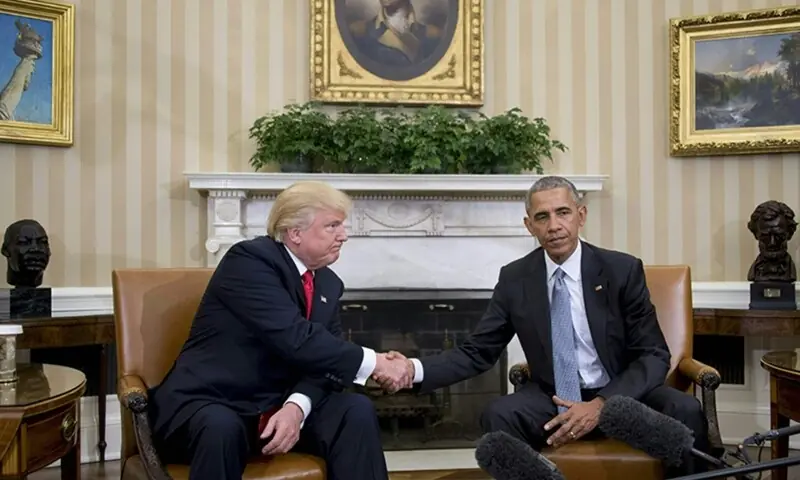
WASHINGTON: A framework agreement signed by US President Donald Trump and Iran differs sharply from the 2015 nuclear accord reached under former president Barack Obama.
Trump has argued that his arrangement with Tehran is better than the earlier deal, while critics contend that, at this stage, it secures less from Iran while offering more in return. The two agreements vary in scope, structure and timing, particularly on nuclear restrictions, sanctions relief and the Strait of Hormuz.
Framework versus final accord
The new understanding is not a completed treaty but a one-and-a-half-page memorandum of understanding made up of 14 points. It was negotiated intermittently over several weeks and has opened a 60-day period for further talks aimed at reaching a broader settlement to end the nearly four-month war.
Major issues still remain unresolved, including Iran’s nuclear programme, sanctions relief and the future status of the Strait of Hormuz. By contrast, Obama’s Joint Comprehensive Plan of Action was a detailed, finalised agreement spanning more than 160 pages and centred specifically on curbing Iran’s nuclear activity through strict conditions and benchmarks. Trump withdrew from that deal in 2018 after repeatedly criticising it.
A difference in the diplomatic format is also evident. Trump pursued a bilateral track with Iran, while the Obama-era negotiations included China, France, Germany, Russia, Britain and the European Union over about two years.
Nuclear commitments
Both agreements contain a written Iranian commitment not to pursue a nuclear weapon. Trump, who presented the nuclear threat as his main justification for going to war, has incorrectly claimed that Tehran had never made such a pledge before.
Under the JCPOA, Iran’s ability to produce weapons-grade uranium was tightly restricted in an effort to lengthen the time it would need to build a bomb. The US government had said Tehran was complying with the accord until Trump exited it.
In contrast, the current memorandum sets out only a broad route for addressing Iran’s nuclear activity and does not include concrete Iranian obligations beyond discussing the issue during the 60-day negotiating period. It points to a possible Iranian readiness to address disagreement over its near-bomb-grade uranium stockpile, but leaves any decision to a future final agreement.
Sanctions, funds and Hormuz
On economic measures, both arrangements involve sanctions relief and access to frozen Iranian assets, but through different mechanisms. Under Obama, some sanctions were relaxed only after a comprehensive settlement had been reached, with additional relief phased in after verified Iranian steps.
Trump’s memorandum, by comparison, provides initial relief at the outset, including immediate US waivers allowing Iran to export oil, while a broader package is left for later negotiation. The framework also creates the possibility of releasing billions of dollars in frozen funds. Another clause envisions a $300 billion economic development fund for Iran to be set up by the United States and its Middle Eastern allies, although the conditions and timeline remain unclear.
Trump had for years attacked Obama over the return of $1.7 billion to Tehran from proceeds of arms sales frozen since 1981. Trump now appears positioned to make available sums far larger than that through his own arrangement.
The Strait of Hormuz marks another major difference between the two deals. The JCPOA was intentionally limited to nuclear matters because the Obama administration believed that adding wider regional disputes could prevent any final accord. The new memorandum, however, is intended as the starting point for a permanent end to the war and therefore places reopening the strait at the centre of the negotiations. Iran wants to keep a management role over the waterway that it did not have before the war, a point that could prove contentious in the next phase of talks.
0 Comments
No comments yet. Be the first to join the discussion!