June 17, 2026
SC issues nationwide compliance directive
The Supreme Court has ruled that its directions under Article 187 are binding on executive and judicial authorities nationwide, including high courts. It also ordered strict compliance with the 60-day trial timeline in Illegal Dispossession Act cases.

June 17, 2026
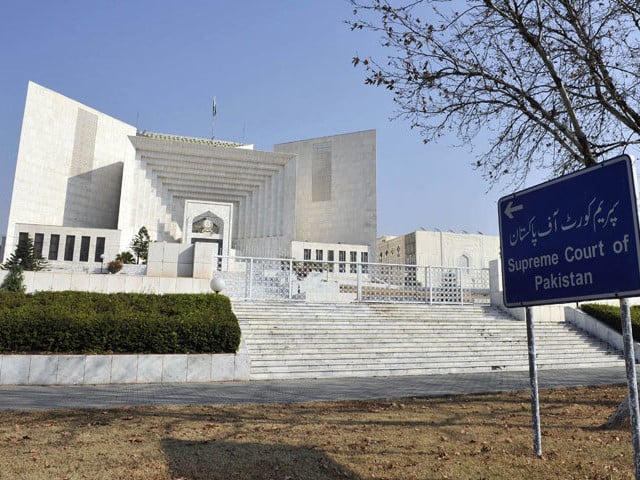
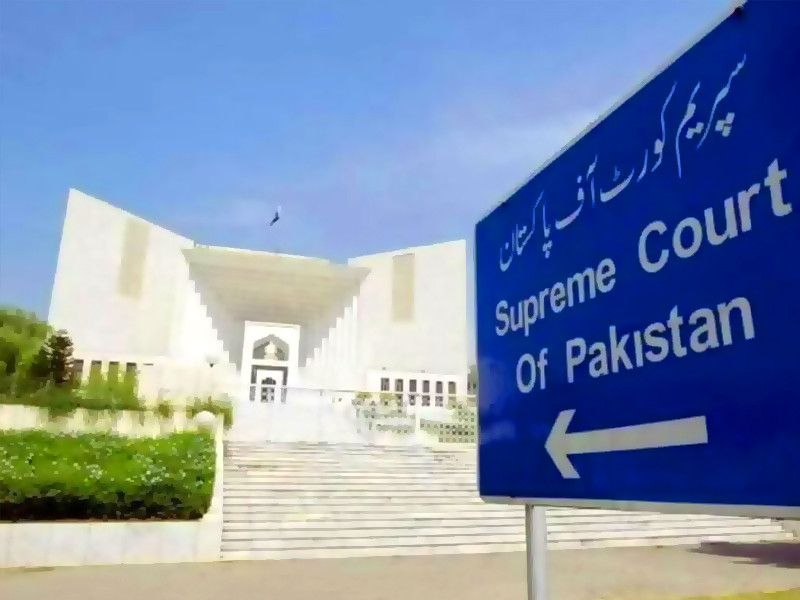
ISLAMABAD: The Supreme Court has held that all executive and judicial authorities across Pakistan, including the high courts, are bound to implement its directions under Article 187 of the Constitution. The observation came in a five-page judgment authored by Justice Jamal Khan Mandokhail while hearing a matter seeking directions for completion of a complaint under the Illegal Dispossession Act, 2005 within the statutory period of 60 days.
A division bench comprising Justice Mandokhail and Justice Malik Shahzad Ahmad Khan said Article 187 empowers the apex court to issue directions, orders or decrees necessary to do complete justice in any matter pending before it. The ruling said this constitutional authority requires executive and judicial bodies throughout the country, including the high courts, to act on the Supreme Court’s directions to ensure effective enforcement of statutory requirements governing judicial process.
According to the judgment, the complaint in the case had been filed in 2016, even though Section 5(2) of the Illegal Dispossession Act, 2005 requires proceedings to be concluded within 60 days of the trial court taking cognisance of the complaint. The court said the trial court had not fulfilled its statutory obligation.
Referring to its constitutional role, the Supreme Court said it was responsible for issuing suitable directions not only to the court concerned but also to courts nationwide exercising jurisdiction under the law so that they comply with specified instructions alongside the procedure already laid down in the Act.
The court directed that every trial court dealing with a complaint under the Illegal Dispossession Act must, after taking cognisance, conclude proceedings within the 60-day limit set out in Section 5(2). It also ordered trial courts to maintain day-to-day order sheets of the proceedings in line with that requirement.
The judgment further said that if a trial cannot go ahead on a scheduled date, the trial court must clearly record adequate reasons for the delay in the order sheet. It added that simple references to the non-availability of witnesses or adjournment requests by counsel would not be treated as sufficient reasons for the purposes of Section 5(2).
The Supreme Court also ruled that adjournments should not be granted as a matter of routine and that any such delay must rest on a justifiable ground. In addition, it directed members of the inspection teams of the respective high courts and directors general district judiciary to periodically monitor all pending cases under the Act before trial courts in their jurisdictions.
The monitoring, the judgment said, should include the date on which the complaint was filed, the date cognisance was taken or charge was framed, the status of proceedings, and, in cases where the 60-day period has been exceeded, the reasons recorded for the delay.
0 Comments
No comments yet. Be the first to join the discussion!