June 15, 2026
Trump says US-Iran deal on track despite Israel blame as Middle East tensions surge
Trump says signing of the US-Iran deal remains on track despite a delay tied to Israeli strikes in Beirut. Iran questions US credibility while reviewing the draft agreement.

US President insists signing still scheduled despite Beirut strike delay, urging Israel and Hezbollah to halt attacks amid fragile talks
Axios reporter says Trump cited hours-long delay in peace deal timing
Iran questions US credibility after renewed Israeli strikes in Beirut, saying draft agreement still under political and legal review
Qatar delegation arrives in Tehran to advance diplomatic efforts as regional and global actors back negotiations
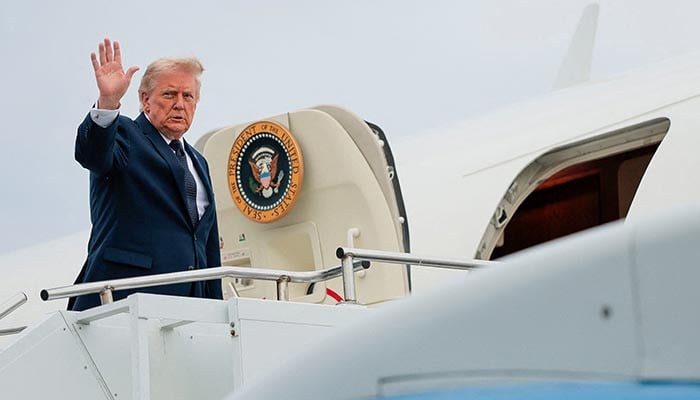
WASHINGTON/BEIRUT/TEHRAN: US President Donald Trump on Sunday said the signing of a long-anticipated US-Iran deal aimed at ending the conflict remained on track, though he blamed Israel for causing delays following fresh regional escalation involving strikes in Beirut and heightened tensions across the Middle East.
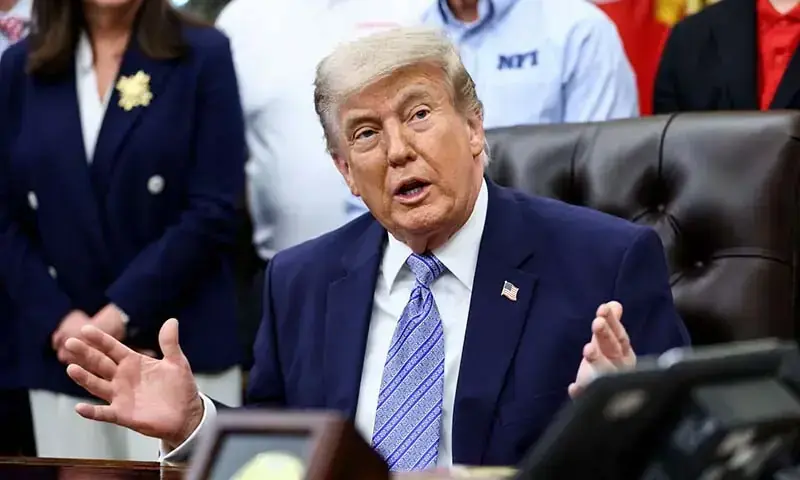
Global Affairs Correspondent for Axios, Barak Ravid, reported that Trump said in a brief interview that the “signing of the US-Iran deal for ending the war is still on track for Sunday despite the Israeli strike in Beirut and the Iranian threat to retaliate.”
🚨🇺🇸🇮🇷President Trump claimed in a short interview with me that the signing of the U.S.-Iran deal for ending the war is still on track for Sunday deapite of the Israeli strike in Beirut and the Iranian threat to retaliate
— Barak Ravid (@BarakRavid) June 14, 2026
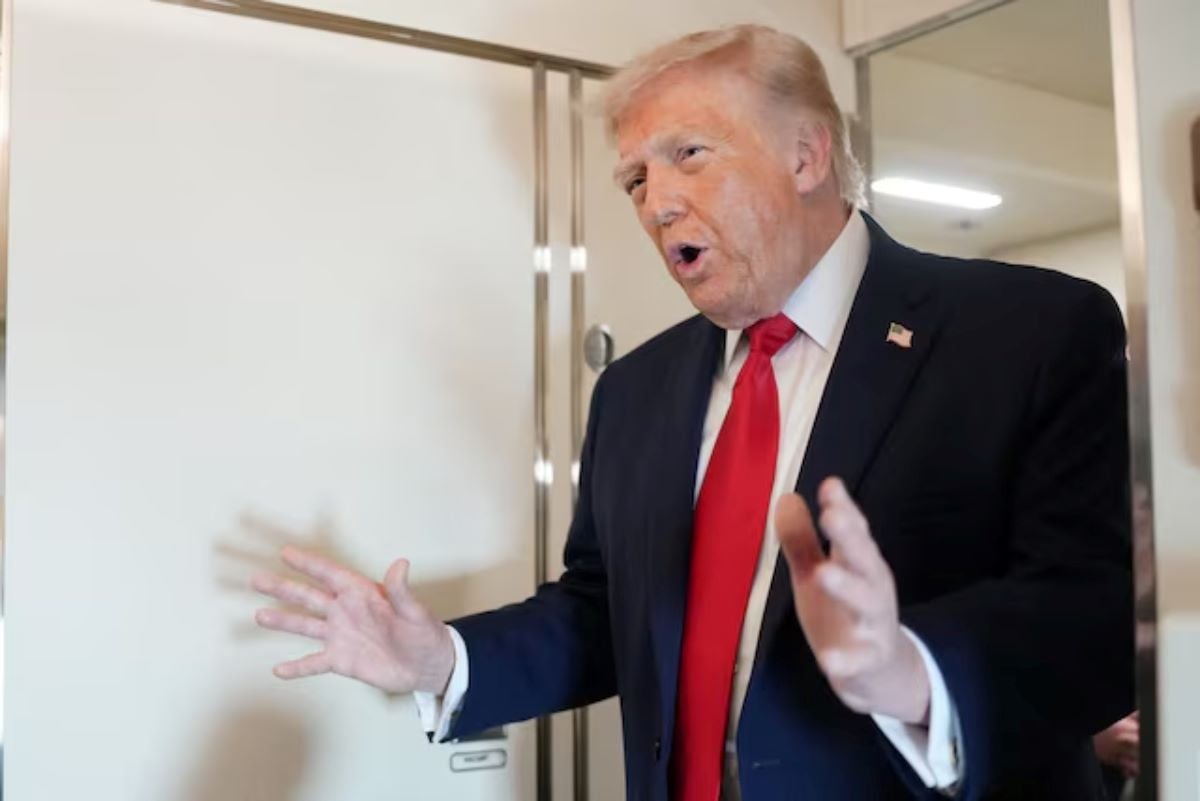
“It shook it up. It delayed the signing by a few hours. It was supposed to be now. Now it is scheduled for a few hours from now,” Trump said during a phone call, according to Ravid.
— Rapid Response 47 (@RapidResponse47) June 14, 2026
Trump on Truth Social: This morning’s attack on Beirut should not have happened, particularly on a special day when we are so close to a Peace Deal with Iran. Israel has the right to defend itself against threats, but the attack it was responding to was very small and… https://t.co/uBNYGO9H8q
— Barak Ravid (@BarakRavid) June 14, 2026
In a post on Truth Social, Trump said Israel had the right to defend itself, but argued that the latest strike was disproportionate and should not derail ongoing diplomatic efforts.
“Israel has the right to defend itself against threats, but the attack it was responding to was very small and meaningless; nobody was hurt, injured, or killed, and it should not disrupt this important process,” he said.
Trump added that the Israeli strike on Beirut should not have taken place at a time when Washington was “very close” to reaching a peace agreement with Iran.
He said a broader deal capable of bringing peace to the region, including Lebanon, was within reach, warning against any actions that could undermine the process.
“There should be no more attacks by Israel anywhere in Lebanon, but there should also be no more attacks by any other party, including Hezbollah, against Israel,” he said.
Trump added that the process could mark the beginning of a “long and beautiful peace,” urging stakeholders: “Let’s not blow it.”
Ghalibaf questions US credibility after Beirut strike
Iran’s Parliament Speaker Mohammad Bagher Ghalibaf on Sunday questioned the United States’ willingness and ability to fulfil its commitments after Israeli strikes reportedly targeted Beirut’s Dahiyeh district.
Israel struck Beirut’s southern suburbs for the second time in a week, in response to what it said was Hezbollah fire at northern Israel, while also carrying out broader strikes in southern Lebanon.
The escalation came despite expectations that a US-Iran deal to end the wider Middle East conflict could be imminent, as Tehran continues to insist that a ceasefire in Lebanon must form part of any broader agreement.
In a post on X, Ghalibaf said the Israeli strikes once again demonstrated that “America either lacks the will to fulfil its commitments or the ability to do so.”
تجاوز صهیونیستها به ضاحیه باردیگر نشان داد آمریکا یا ارادهای برای اجرای تعهدات خود ندارد یا توان آن را. با چراغ سبز نشان دادن به رژیم نمیتوانید امتیاز بگیرید. بازی پلیس بد و پلیس خوب قدیمی شده است.
اگر اراده و توان اجرای تعهدات خود را ندارید، سخن گفتن از ادامه مسیر ممکن نیست.— محمدباقر قالیباف | MB Ghalibaf (@mb_ghalibaf) June 14, 2026
“By giving the green light to the regime, you cannot gain concessions,” he said, describing the US-Israel approach as a “bad cop and good cop” tactic.
“If you lack the will and ability to fulfil your commitments, speaking of continuing the path is not possible,” he added.
Iran says decision on draft deal still under review
Earlier, a source familiar with the matter told Iran’s semi-official Fars News Agency that Tehran had not yet taken a final decision on the proposed memorandum of understanding with the United States.
Source: Iran Yet to Make Final Decision on Proposed Understanding with UShttps://t.co/YP5I6soqIe pic.twitter.com/3jXrrbTsw6
— Fars News Agency (@EnglishFars) June 14, 2026
“Iran has not yet announced its final decision on the proposed memorandum of understanding,” the source said.
“The review of the political, legal, and technical dimensions of the proposals is still ongoing,” he added.
According to Fars, discussions on various aspects of the proposed agreement are continuing at both expert and decision-making levels.
US President Donald Trump had earlier written on Truth Social that a deal with Iran was scheduled to be signed on Sunday.
Prime Minister Shehbaz Sharif, whose government has been mediating between Washington and Tehran, also said the agreement could be finalised within the next 24 hours.
However, Iran later said the agreement would not be signed on Sunday, but could be inked in the coming days.
The Pakistan-mediated diplomatic process has focused on ending hostilities between Iran and the United States, reopening the Strait of Hormuz for maritime traffic, and reaching a consensus on Iran’s nuclear programme.
Iranian officials have repeatedly said that a large portion of the proposed text has already been agreed, while accusing Washington of slowing progress through shifting positions and contradictory statements.
Israeli minister renews hardline threats
Israeli Finance Minister Bezalel Smotrich reiterated his demand on Saturday for the destruction of 10 buildings in Beirut’s Dahiyeh district for every rocket fired at Israel from Lebanon.
In a post on X, Smotrich referred to ongoing US-Iran negotiations and claimed Hezbollah should not be allowed to exploit the situation to target northern Israel.
He said every rocket or drone attack should be met with the bombing of 10 buildings in Dahiyeh, a Hezbollah stronghold in Beirut’s southern suburbs, and demanded immediate implementation.
Meanwhile, the Israeli military said sirens were activated in several communities in northern Israel after rocket fire from Lebanon.
It said rockets targeted Israeli forces operating in occupied areas of southern Lebanon, claiming no injuries were reported.
Israeli media also reported that a drone launched from Lebanon crossed the border, triggering sirens in two communities in northern Israel.
Qatar sends delegation to Tehran
A Qatari delegation headed by an adviser to the country’s foreign minister arrived in Tehran on Sunday to advance discussions on US-Iran negotiations, according to Iran’s semi-official ISNA news agency.
The Iranian agency Mehr also reported that the delegation met Iranian officials to review the status of ongoing diplomatic efforts.
No further details were provided on the content of the discussions.
Cyberattack disrupts Iranian banking services
Iran’s banking coordination council said on Sunday that a cyberattack disrupted services at four major Iranian banks, though no customer data was compromised, state media reported.
The attack targeted shared communications infrastructure used by Bank Melli, Bank Tejarat, Bank Saderat, and the Export Development Bank of Iran.
The council said technical teams implemented protective measures, temporarily affecting some banking services.
It added that no unauthorised access to customer data occurred and no information was deleted, with restoration efforts underway.
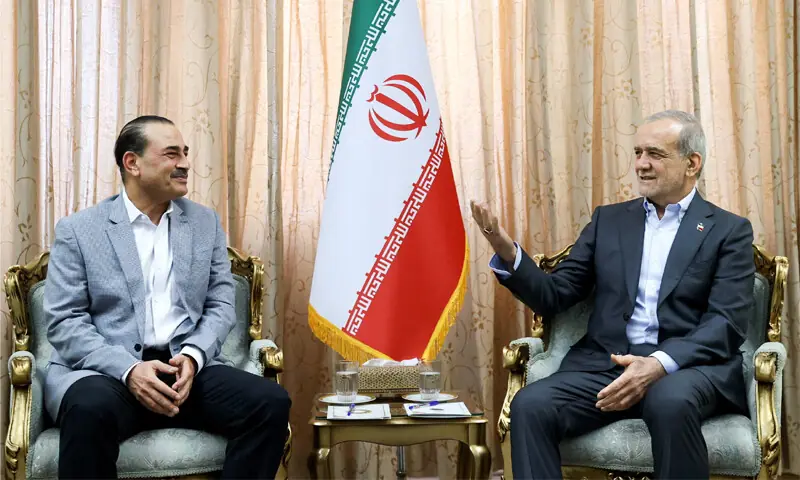
Pezeshkian highlights wartime unity
Iranian President Masoud Pezeshkian said the 12-day war launched by Israel in June 2025 demonstrated national unity and resilience, according to IRNA.
.@drpezeshkian: Iran’s unity in 12-day war forced enemy to ask for ceasefirehttps://t.co/Bfl3VPKXTu pic.twitter.com/yuqj6sSlpa
— IRNA News Agency ☫ (@IrnaEnglish) June 13, 2026
In a message marking the first anniversary of the conflict, he said Israel miscalculated by assuming strikes on senior military figures and strategic infrastructure would destabilise Iran.
He said the resistance of the Iranian people, along with leadership and military preparedness, prevented those objectives from being achieved and ultimately forced a ceasefire.
Pezeshkian said Iranians across political divides stood united, praising citizens for patience during economic hardship and ongoing pressure.
He added that the government continued efforts to address public concerns despite severe challenges.
He stressed national cohesion, defence readiness and public vigilance as essential for future stability.
Qatar and Kuwait back negotiations
Qatar and Kuwait on Saturday expressed support for progress in US-Iran talks and voiced hope for a swift agreement, according to Qatar’s Foreign Ministry.
Qatari Prime Minister Sheikh Mohammed bin Abdulrahman bin Jassim Al Thani and Kuwaiti Foreign Minister Sheikh Jarrah Jaber al-Ahmad al-Sabah discussed the issue during a phone call.
Both sides affirmed support for ongoing efforts to resolve disputes through dialogue and peaceful means.
Wider US-Iran framework remains uncertain
US and Pakistani leaders earlier indicated a possible Sunday signing of a framework agreement to end hostilities, though Tehran remained non-committal on timing.
Trump said the deal would proceed as scheduled, while Prime Minister Shehbaz Sharif said preparations were underway for an electronic signing followed by technical-level talks.
Iranian officials, however, said the signing would not take place on Sunday, though progress remained under review.
Trump also indicated that under the framework, the Strait of Hormuz would be reopened immediately, calling it a critical global trade artery.
Reports suggest negotiations include provisions on sanctions relief, frozen Iranian assets, oil exports and phased discussions on Iran’s nuclear programme.
A US official said Iran would open the Strait of Hormuz and that Washington would lift restrictions in parallel, with further steps including demining operations and broader maritime arrangements.
The deal, according to multiple sources, would involve the release of billions of dollars in frozen Iranian assets and waiver of sanctions on oil exports in exchange for reopening the strait.
Iran has insisted that any agreement must include restoration of access to frozen funds and sovereignty over maritime routes.
The nuclear component would be addressed in follow-up negotiations over a 60-day period, including uranium stockpile management and future enrichment limits.
Hardline elements in Iran have reportedly expressed opposition to the framework, while public demonstrations in some cities reflect internal divisions over the proposed agreement.
Despite political tensions and continued military activity in the region, diplomatic efforts remain ongoing, with multiple international stakeholders—including Qatar, Kuwait, and Pakistan—supporting negotiations aimed at preventing further escalation.
0 Comments
No comments yet. Be the first to join the discussion!