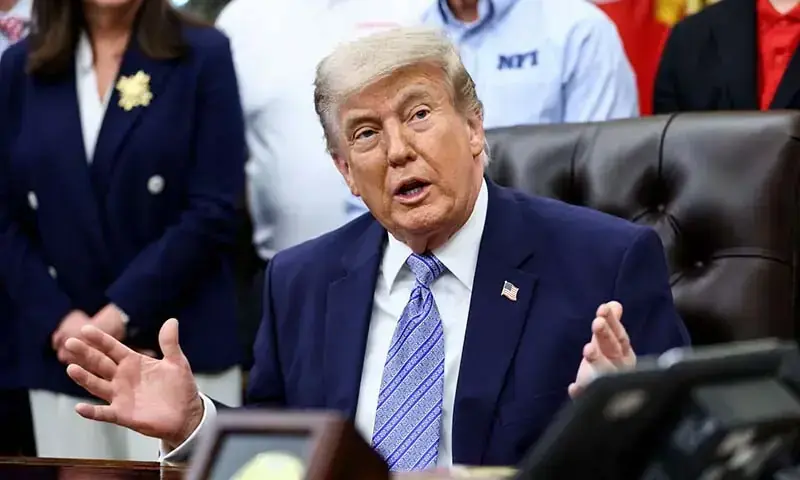
Trump says talks with Iran remain ongoing with deal possible in 2 or 3 days
Donald Trump said the US would declare total victory over Iran within two weeks after Iran and Israel paused attacks. Both sides, however, warned they were prepared to respond if fighting resumed.

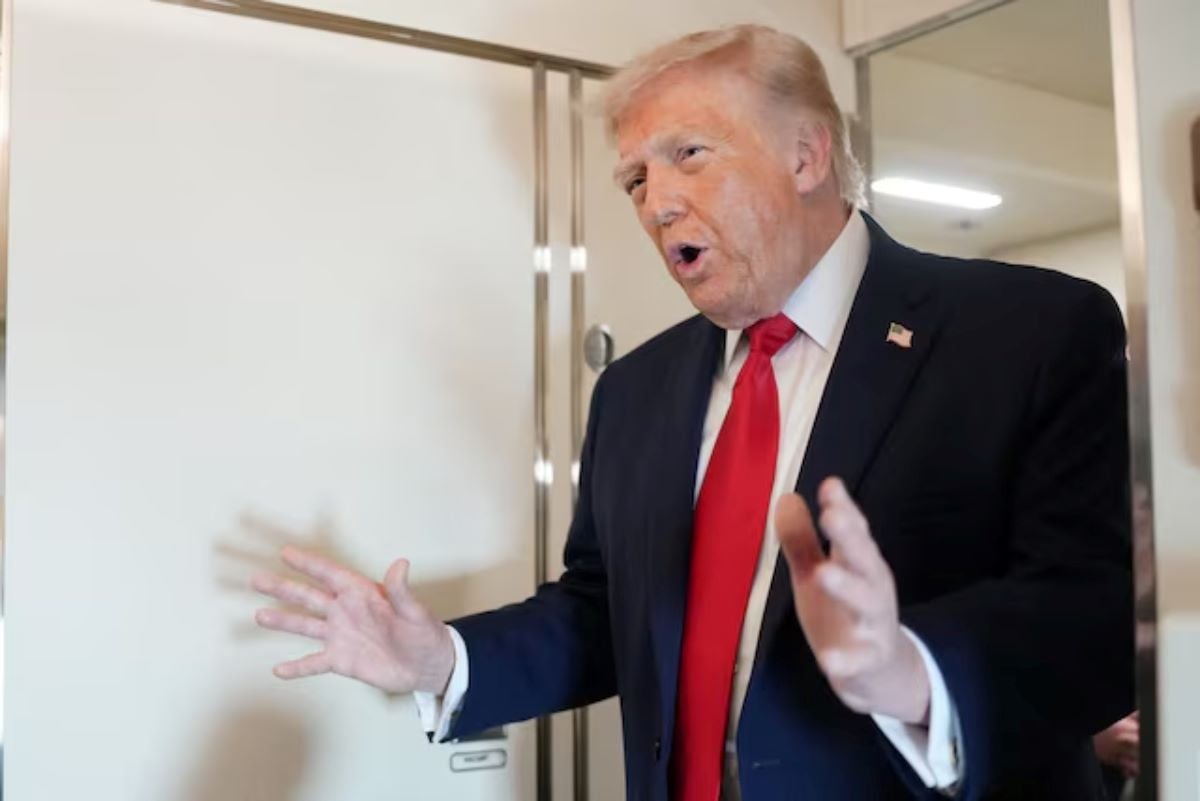
WASHINGTON: Negotiations between the US and Iran remain ongoing, US President Donald Trump said early on Tuesday morning, just hours after Iran and Israel agreed to halt attacks on one another that threatened to shatter a shaky ceasefire.
Trump said the talks with Tehran did not stop during the escalation in violence, signalling that a deal to formally end the war could be reached within "one or two days from now, but I think it's going well."
"They were going back and forth, and now they both agreed through me to stop, and we're in the final throes of what will be a very, very good deal that will not allow in any way, shape, or form nuclear weapons, etc.," the US president told reporters as he prepared to return to the White House after attending an NBA finals game in New York.
"The Strait (of Hormuz) will open up right away, it'll open up immediately upon signing, which could be in two or three days," he added.
Trump says US helicopter pilots who went down in Strait of Hormuz are fine
Two US pilots whose helicopter crashed near the Strait of Hormuz "are fine", Trump said on Tuesday after the New York Times reported the crew of an Apache gunship had been rescued after the aircraft went down near the Iran-controlled waterway.
It was not immediately clear whether the Apache was shot down by Iranian fire, experienced mechanical failure or encountered some other problem, the report said.
The White House, US Department of State, and the US Central Command did not immediately respond to requests for comment from Reuters.
Asked if he knew what brought the helicopter down, Trump said they would issue a report later on Tuesday.
"The pilots are fine," Trump said, speaking on the runway at John F Kennedy International Airport before returning to Washington, DC "Nobody injured."
The incident happened a day after Iran and Israel said they had halted attacks on each other following an appeal from Trump, though Tehran warned it would resume hostilities if Israel continued to hit Hezbollah in Lebanon.
Trump says US will declare 'total victory' over Iran within 2 weeks
US President Donald Trump said on Monday that the United States will declare "total victory" over Iran within the next two weeks, just hours after Iran and Israel agreed to halt the worst escalation in violence since a ceasefire took effect in April.
"We've been a very tough team, and I think we are winning that battle, but you're really going to win it over the next two weeks when we declare total victory," Trump said during a telerally for Sen. Lindsey Graham, a close Republican ally. "It'll be a total victory. It'll happen very soon, and oil prices will come tumbling down."
Earlier Monday, Iran announced an end to its attacks on Israel but warned of a “crushing” response if Israeli military operations in Lebanon continue. The Iranian military said Israel and its allies "should have learned" lessons from Tehran's response.
Regional tensions spiked Sunday when Israel bombed the Lebanese capital of Beirut despite an ongoing ceasefire. The move prompted Iran to launch retaliatory missiles into northern Israel, which in turn triggered waves of Israeli airstrikes against Iranian targets.
Trump intervened early Monday, posting on his Truth Social platform to call on Israel and Iran to stop fighting "immediately." On Monday evening, Israeli Prime Minister Benjamin Netanyahu said in a televised address that the fighting with Iran had stopped "for now" but warned Israel would retaliate if it came under attack.
Iran and Israel say they have halted strikes on each other for now
Iran and Israel said on Monday they had halted attacks on each other after an appeal from Trump, though Tehran warned it would resume hostilities if Israel continued to hit Hezbollah in Lebanon.
The most significant confrontation between the two countries since April threatened to wreck Washington's efforts to reach an agreement with Tehran to end their more than three-month-old war.
Oil prices rose as much as 5% after the flurry of attacks, then fell when Iran's military said its first wave of strikes on Israel was over. The dollar retreated from its highest level in nearly two months.
A source briefed on the matter said Israel had also decided to halt its attacks on Iran.
Tehran had fired missiles towards Israeli territory late on Sunday, calling them retaliation for attacks on Hezbollah on the outskirts of Beirut.
Israel then hit Iranian air defence systems and a petrochemical plant that it said was used to produce ballistic missiles. Iran's Islamic Revolutionary Guard Corps said it retaliated with a strike aimed at a similar Israeli plant in the city of Haifa.
No deaths were reported by authorities on either side.
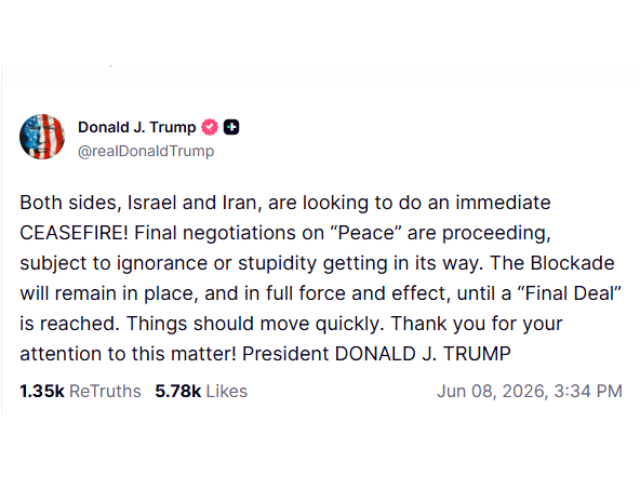
Trump said Israel and Iran both wanted an immediate ceasefire.
"Final negotiations on 'Peace' are proceeding, subject to ignorance or stupidity getting in its way," he wrote on Truth Social.
US and Israeli officials said Trump and Israeli Prime Minister Benjamin Netanyahu spoke on Monday.
In an interview with Axios published on Monday, Trump said he warned Netanyahu that if the Israeli leader went back to war with Iran, he might find himself fighting alone. "I said, 'Bibi, you better be careful, or you will be on your own very soon,'" Trump said.
Israel’s Ambassador to the US Yechiel Leiter pushed back on reports that Trump pressured Netanyahu, telling Fox News’ “Special Report” that conversations between the two leaders were cooperative and accusing journalists of playing up a misleading narrative.
“They have a deep friendship that goes back some 40 years, and sometimes lovers have a spat, and sometimes the tension in the room and on the conversation can get a little heated,” Leiter said.
An Israeli military official said Israel was prepared to continue operations for "as long as it takes", while Iranian officials struck a similarly defiant tone. A military source quoted by the semi-official Tasnim news agency said Tehran was ready for a prolonged conflict and could renew strikes against US interests in the region.
'Extreme suspicion'
UN Secretary-General Antonio Guterres urged all parties to exercise maximum restraint and refrain from any action that could further inflame an already volatile situation, according to spokesperson Farhan Haq.
Iranian Foreign Ministry spokesperson Esmaeil Baghaei said Tehran was exchanging messages with Washington in an atmosphere of "extreme suspicion."
Ebrahim Azizi, head of the Iranian parliament's national security committee, warned that any action against Iranian national security or Iran's allies in the region, including Yemen's Houthis, would be met with a decisive and costly response, Iranian media reported.
Yemen's Houthis pledged in a statement to stop Israeli navigation in the Red Sea, and said they had also fired missiles at Israel.
The Israeli military later said it intercepted a suspicious aerial target from Yemen after hostile aircraft sirens sounded in the Eilat area.
The Houthis have so far largely stayed out of the regional war. They control territory at the mouth of the Red Sea, increasingly important as an alternative route for millions of barrels per day of Middle East oil otherwise blocked by Iran's grip on the Strait of Hormuz.
In Tehran, Iranian media reported explosions, with air defences shooting down a drone over the capital. There were no immediate reports of casualties or major damage.
There were also signs of conditions returning to normal. Flights resumed at Tehran's Imam Khomeini Airport on Tuesday, nearly 24 hours after being suspended following Iran's missile attack on Israel, Iranian media reported.
Lebanese-Israeli talks to resume
Israel has never halted its Lebanon campaign, which has killed thousands of people, saying it should be treated separately from any US-Iranian ceasefire. Hezbollah has also continued its attacks.
Tehran has long said any peace deal with the US depends in part on an end to fighting in Lebanon, which Israel invaded in March in pursuit of Hezbollah fighters who had fired across the border.
The US ambassador to Lebanon, Michel Issa, said on Monday that Lebanese-Israeli negotiations had been scheduled to resume in Washington.
Tehran has continued to block most shipping through the Strait of Hormuz, which before the war carried a fifth of the world's crude oil and liquefied natural gas. Washington has imposed its own blockade of Iranian ports.
Trump has said any peace deal must ensure Iran cannot develop a nuclear weapon. Iran's demands include the lifting of international sanctions, the release of billions of dollars in frozen assets and recognition of its control of the strait.
Comments
No comments yet. Be the first to join the discussion!