

June 15, 2026
MQM-P renews call for an urban province in Sindh
MQM-P chairman Khalid Maqbool Siddiqui has renewed the party’s demand for an urban province in Sindh while defending its role in Karachi’s development. He also raised issues of census, representation, resources and past cases involving the party.

June 15, 2026
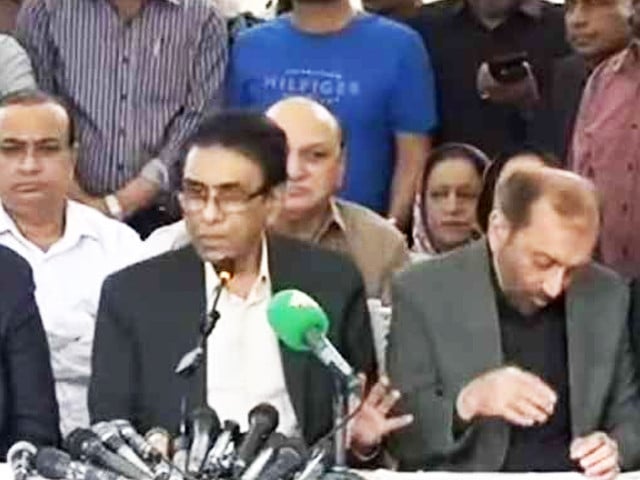
KARACHI: Muttahida Qaumi Movement-Pakistan (MQM-P) chairman Khalid Maqbool Siddiqui on Sunday reiterated his party’s demand for an urban province in Sindh while defending MQM-P’s political role in Karachi and its record in local governance.
Speaking at a ceremony, Siddiqui said MQM-P did not emerge in Karachi without reason, and linked the party’s formation to what he described as longstanding problems faced by the city’s residents.
"If Karachi had no problems, then why did MQM come into existence?" he asked.
He followed that with another rhetorical remark, saying: "Were rivers of milk flowing in the city before us, and were the lion and the goat drinking water together from the same stream?"
Siddiqui said Karachi’s present-day development was largely built during periods when MQM held power in local government. He claimed the party had played the central role in shaping the city’s progress and said many of Karachi’s existing gains were the result of MQM’s governance.
Party grievances and representation issues
The MQM-P chief said his party had consistently raised issues related to census counts, political representation and the distribution of resources for urban Sindh. He said MQM was frequently branded anti-state or ethnic for raising those matters. He also said the party had taken the census issue to court, unlike other political stakeholders.
Revisiting long-held party complaints, Siddiqui said MQM had emerged in opposition to the quota system and was continuing to seek what it considers fair representation for urban populations. He maintained that despite receiving a substantial public mandate at different times, MQM was not allowed to form a provincial government in Sindh or appoint a Muhajir chief minister.
Criticism of governance and development spending
Siddiqui also questioned how federal funds had been spent, alleging that although the Pakistan Peoples Party (PPP) received large allocations, Karachi did not get a fair share for development. He said the 18th Constitutional Amendment had weakened local governance in urban centres and had reduced even basic administrative authority, including the ability to open schools.
On development, he referred to delayed or stalled projects including mass transit schemes, metro bus plans and water supply projects. At the same time, he said MQM-led administrations had earlier launched a number of urban development initiatives, including information technology parks and infrastructure improvement schemes.
Reference to cases against MQM
Siddiqui also spoke about incidents and allegations involving his party, including major criminal cases. He said accusations linked to matters such as the Baldia factory fire, as well as cases involving Hakim Saeed and Amjad Sabri, were not proven in court.
He further alleged that MQM workers and their families had faced political victimisation under different governments and said party members had been subjected to arrests and pressure during various political periods.
0 Comments
No comments yet. Be the first to join the discussion!


