June 14, 2026
Pakistan-European Union strategic relations
EU High Representative Kaja Kallas visited Islamabad, co-chaired the 8th Pakistan-EU Strategic Dialogue, and urged progress on GSP+ obligations. Both sides pledged deeper cooperation in trade, diplomacy, security and climate.
June 14, 2026

A productive visit
The European Union (EU) is an economic and political union of 27 member countries that have common policies, institutions as a single market. Formed to foster peace, security and economic prosperity after the Second World War, it allows free movement of goods, services, capital, and people across the borders.
EU member countries include Austria, Belgium, Bulgaria, Croatia, Czechia, Denmark, Estonia, Finland, France, Germany, Greece, Hungary, Ireland, Italy, Latvia, Lithonia, Luxembourg, Malta, the Netherlands, Poland, Portugal, Romania, Slovakia, Slovenia, Spain and Sweden.
Several countries are in various stages of negotiating accession to become further members of the EU. These include Albania, Bosnia & Herzegovina, Georgia, Moldova, Montenegro, North Macedonia, Serbia, Turkey and Ukraine.
The EU represents around 450 million citizens and its institutions include the European Parliament, European Council, European Commission and the Court of Justice.
The EU officially came into being on Nov 1, 1993 following the enactment of the Maastricht Treaty. However, its roots stretch back to the creation of the European Economic Community which was established by the Treaty of Rome on March 25, 21957.
The EU does not have a single physical headquarters rather its primary administrative and political institutions out of several cities, with the main hub located in Brussels, Belgium.
Pakistan and the EU relations summarily fall i n the categories of trade, political engagement, development cooperation and humanitarian aid. Since January 2014, Pakistan has been benefiting from the Generalised System of Preferences Plus (GSP+) which grants full removal of tariffs on over 66 percent of EU tariff lines.For continuing to benefit from the GSP+, Pakistan is required to demonstrate progress towards the implementation of as many as 27 global conventions related to good governance, human and labour rights, and environmental protection.
The EU member countries import gemstones, minerals and oil from Pakistan as a trading partner. EU was Pakistan's biggest export destination with textiles, medical equipment and leather products being the main items while EU exports to Pakistan on the other hand mainly included mechanical and electrical equipment and also chemical and pharmaceutical products.
The ball was in the hands of those treading the corridors of power in Islamabad to make the best use of the EU High Representative's visit and making concerted efforts for meeting the obligations and continuously availing the benefits accruing from GSP+ trade engagement between Pakistan and the European Union as this augurs well for boosting the national economy's upward trajectory positively, committedly and determinedly.
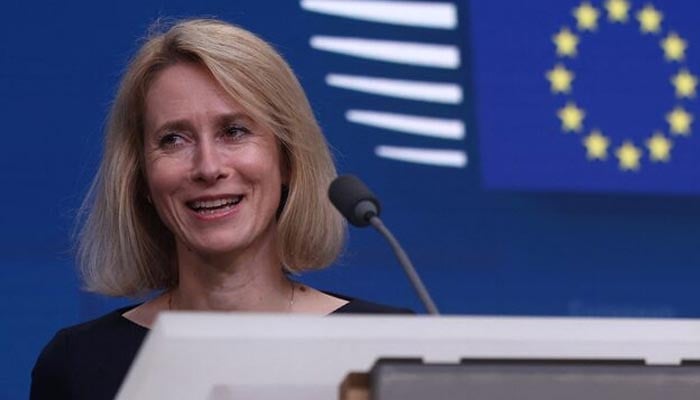
Strategic relations between Pakistan and the European Union (EU) figured quite prominently when European Union High Representative for Foreign Affairs and Security Policy Kaja Kallas visited Pakistan in the first week of June 2026 and held deliberations with Pakistani leaders making the best of her short stay in Islamabad. Kaja Kallas, who is also Vice-President of the European Commission in a major engagement co-chaired the 8th Pakistan-EU Strategic Dialogue with Pakistan's Deputy Prime Minister/Foreign Minister Senator Mohammad Ishaq Dar, and afterwards also addressed a joint press conference.
On this occasion, the visiting EU dignitary described Pakistan as a major regional power and an increasingly important strategic partner while both sides pledged to further deepen cooperation across trade, diplomacy, security, climate resilience and regional peace efforts.
Highlighting economic cooperation, she pointedly stated that the EU remains Pakistan's largest export destination, Pakistan continues to be the largest beneficiary of the EU's GSP+ trade arrangement which has played a significant role in supporting Pakistan's export-oriented industries, particularly the textile sector.She availed the opportunity to caution Islamabad by saying that continued preferential market access under the GSP+ framework remained linked to progress in implementing international conventions such as good governance, environmental protection, labour rights and human rights.
She further stated that beyond trade, both sides were also broadening cooperation in climate resilience, clean energy, digital infrastructure, migration, mobility and education. This was not all as she continued to particularly praise Pakistan's performance in educational exchanges and stated that Pakistani students had once again secured the highest number of Erasmus Mundus scholarships globally for the fifth consecutive year.
The EU senior representative also referred to Pakistan's diplomatic role in reducing tensions between Washington and Tehran describing the host country as a key mediator between the United States and Iran and went on to acknowledge that Islamabad's continuing diplomatic efforts had contributed quite significantly to preventing a wider regional conflict.
Deputy PM Ishaq Dar on this occasion described Kaja Kallas's visit as a significant milestone in Pakistan-EU relations and that Pakistan and the EU have remained in close contact on major international developments, including the Pakistan-India conflict last year and the ongoing US-Iran tensions.
The EU High Representative for Foreign Affairs and Security Policy Kaja Kallas also called on Prime Minister Muhammad Shehbaz Sharif and exchanged views covering different aspects of Pak-EU strategic relations.
The EU Foreign Policy chief hailed Pakistan as a major regional power and key strategic partner, and welcomed Pakistan's mediation in US=Iran negotiations. She appreciated Islamabad's continued efforts in US-Iran dialogue and backed continued diplomatic engagement.
On this occasion, the PM and Ms Kallas pledged stronger strategic partnership and agreed to deepen cooperation in trade, climate resilience, digital infrastructure and security.
GSP+ remained vital for boosting bilateral trade and both sides reaffirmed commitment to stronger economic partnership.
The ball was in the hands of those treading the corridors of power in Islamabad to make the best use of the EU High Representative's visit and making concerted efforts for meeting the obligations and continuously availing the benefits accruing from GSP+ trade engagement between Pakistan and the European Union as this augurs well for boosting the national economy's upward trajectory positively, committedly and determinedly.
The writer is Lahore-based Freelance Journalist, Columnist and retired Deputy Controller (News) , Radio Pakistan, Islamabad and can be reached at [email protected]
View all articles →0 Comments
No comments yet. Be the first to join the discussion!