Pakistan hits back at Delhi and Kabul at UN, defends strikes on terror infrastructure
Pakistan’s envoy at the UN Security Council rejects claims of “huge” civilian casualties from strikes in Afghanistan, saying operations targeted drones, ammunition and militant support facilities.

Envoy Asim Iftikhar says operations targeted drone, ammunition and support facilities of militants
Rejects claims of civilian casualties, calling strikes ‘precise and professional,’ and accusing India of backing TTP and BLA networks
Says Kabul expectations unmet on governance, rights and anti-terror pledges, reaffirming Pakistan’s resolve to defend against cross-border militancy threats
Terms India’s international law stance ‘laughable’ amid Kashmir allegations
UNITED NATIONS: Pakistan strongly rejected Indian and Afghan allegations that Pakistan recently carried out military strikes inside Afghanistan causing “huge” civilian casualties, saying the actions were exclusively directed at terrorist and military support infrastructure used by the Taliban regime to facilitate cross-border attacks.
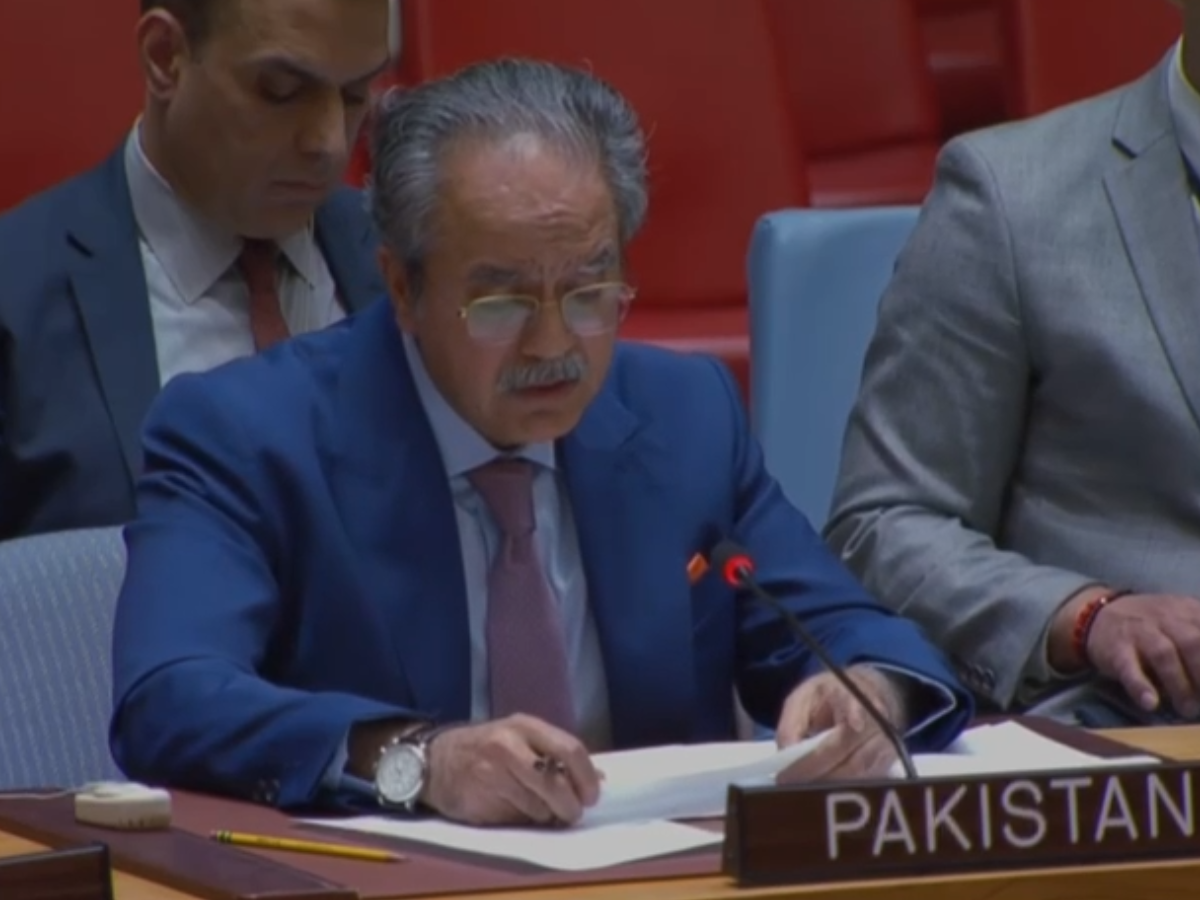
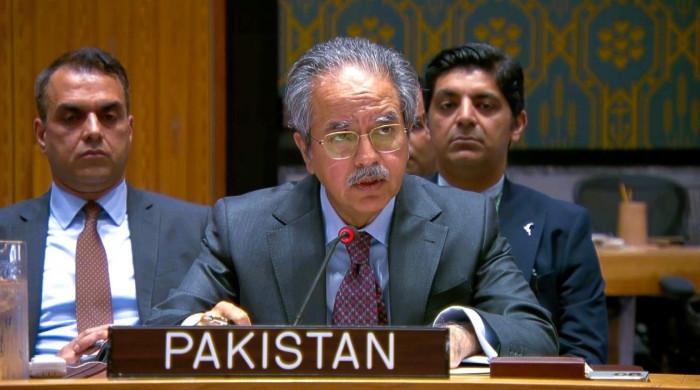
Exercising his right of reply during a UN Security Council discussion on the situation in Afghanistan, Pakistan’s Ambassador Asim Iftikhar Ahmad said Pakistan’s operations, including those conducted in March, targeted drone storage facilities, technical support infrastructure and ammunition depots used by terrorist networks.
He said the strikes were precise, deliberate and professional, adding that no hospital, drug rehabilitation centre or any civilian facility was targeted.
The Indian statement at the session was delivered by Ambassador Parvathaneni Harish, while Afghanistan was represented by Naseer Ahmad Faiq — an appointee of the previous Afghan government, as the Taliban government is not yet recognised by the United Nations. The Pakistani envoy said he does not represent any formal authority.
Responding to Indian remarks highlighting humanitarian and capacity-building assistance in Afghanistan, Ambassador Asim Ahmad said India’s engagement, under the guise of development and aid, was aimed at destabilising Pakistan through support for terrorist groups, including the Tehrik-e-Taliban Pakistan (TTP) and the Balochistan Liberation Army (BLA), which he described as a proxy network used to perpetrate terrorism inside Pakistan.
He said the international community’s expectations from the Taliban regime, now in its fifth year, include inclusive governance, respect for human rights and women’s rights, and a clear commitment that Afghan soil will not be used for terrorism against any country. He noted that concerns had repeatedly been raised in the Security Council over the non-implementation of these commitments.
Criticising India’s position, Ambassador Asim Ahmad said it was “amusing” to observe its “newfound concern” for the Taliban, calling it a policy shift that, according to him, follows Pakistan’s counterterrorism operations against militant hideouts operating inside Afghanistan with alleged external support.
He said India had failed to condemn the TTP and BLA — referred to by him as “Fitna al Hindustan” — despite their involvement in attacks on Pakistani civilians.
“It must be discomforting for India to see its terrorist infrastructure being dismantled by Pakistan’s valiant security forces, who will continue to do whatever is necessary for our self-defence,” he said.
He further termed India’s calls for adherence to international law “laughable,” describing India itself as a “serial violator” of international law.
The Pakistani envoy referred to decades-long allegations of human rights violations in Indian-occupied Jammu and Kashmir, saying India had been engaged in “gross and systematic abuses” there, as documented by international observers.
He also accused India of persecuting minorities, including Muslims, Christians and Sikhs, and criticised what he described as media control and political influence under the ruling BJP government.
Ambassador Asim Ahmad further alleged that India was a “state sponsor of terrorism,” not only in Indian-occupied Jammu and Kashmir and Pakistan, but also elsewhere, including alleged extraterritorial operations in North America.
He said India had violated Security Council resolutions on Jammu and Kashmir and breached the Indus Waters Treaty by placing it in abeyance unilaterally, without legal justification or adherence to treaty provisions.
Referring to India’s engagement with Afghan cricketers, he said New Delhi’s conduct contradicted claims of promoting sportsmanship, citing incidents in international cricket where players refused customary gestures of goodwill.
Pakistan, he said, was fully aware of India’s “motives and designs” and would not allow any attempt to use Afghan territory against its security interests.
“We have stopped them before, and we will do it again, and we will continue to do so,” he added.
Comments
No comments yet. Be the first to join the discussion!