Scorsese’s embrace of AI tools sparks debate in Hollywood
Martin Scorsese’s backing of AI tools and his advisory role at Black Forest Labs have triggered criticism and support in Hollywood. The debate centres on whether AI can assist filmmaking without undermining creative labour.

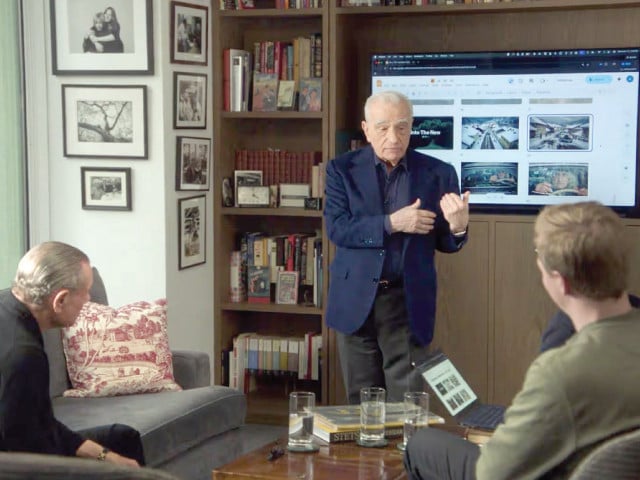
LONDON: Martin Scorsese’s decision to back artificial intelligence tools for filmmaking has stirred debate across the entertainment industry, with supporters describing it as another production aid and critics warning it could damage creative jobs and artistic standards.
The Oscar-winning director, now 83, has joined German AI company Black Forest Labs as an adviser and publicly supported the use of its technology in film production. The move has drawn criticism from artists, filmmakers and fans who argue that AI could reshape the creative process in harmful ways.
Scorsese says AI helps visualise ideas
The dispute centres on Scorsese’s use of Black Forest Labs’ image-generation system to produce storyboards during pre-production. Storyboards are used to map out scenes, camera positions and visual ideas before filming begins. Scorsese said the technology addresses a longstanding difficulty in turning images from his imagination into a format that can be shared more easily with collaborators.
While announcing the partnership, Scorsese said: "For 70 years, I've been creating my own storyboards"
He said the tools help him present concepts more clearly and quickly to designers, cinematographers and others working on a film. Scorsese described the system as: "creatively freeing".
According to him, the technology can speed up pre-production without reducing quality or artistic standards, and may also cut costs and reduce pressure on film crews.
Scorsese placed the move within a broader history of technical change in cinema, pointing to his use of 3D in Hugo and digital de-ageing in The Irishman as examples of filmmakers adopting new methods to widen storytelling possibilities. He said:
"Cinema is a young medium""We have to be open to how it can evolve."
Critics raise ethical and labour concerns
Opposition to Scorsese’s position has come from several artists and industry professionals. Storyboard artist and illustrator Karla Ortiz argued that AI systems are frequently trained on works made by human artists without their permission. She accused Scorsese of working against the same professionals who have helped realise his films over many years.
Other critics voiced concern that broader use of AI could remove roles traditionally performed by artists, designers and visual development specialists. Animation director Samuel Deats also questioned whether such tools were needed for storyboarding at all, saying experienced artists can often sketch visual ideas within seconds. For opponents, the dispute is not only about speed and efficiency but also about ethics, ownership and respect for creative labour.
Industry remains divided
Those in favour of AI in filmmaking argue that it should be seen as another technological development rather than a threat to the industry’s survival. They compare it with earlier innovations including computer-generated imagery, digital editing and motion-capture systems, all of which were initially met with resistance before becoming widely accepted.
Some fans have defended Scorsese by saying he is using AI to accelerate visualisation rather than replace artistic judgment. In that view, technology can support artists while leaving creative decision-making in human hands.
Scorsese is not the only high-profile director to show interest in AI. James Cameron and Darren Aronofsky have also explored its possibilities, while Steven Spielberg has said AI could save filmmakers substantial time when used for practical production work. Others remain opposed, including Guillermo del Toro. Many artists also continue to cite Hayao Miyazaki’s description of AI-generated art as: "an insult to life itself"
The debate around Scorsese’s latest move reflects a wider divide in Hollywood over whether AI will serve as a useful creative assistant or become a disruptive force for artistic professions.
Comments
No comments yet. Be the first to join the discussion!