No progress yet on tariff relief from Chinese power producers: Leghari
Power Minister Awais Leghari says talks with Chinese power producers on concessions and debt reprofiling have not yet produced sufficient results. He said the government has, however, secured Rs3.5 trillion in savings through revised deals with other power plants.

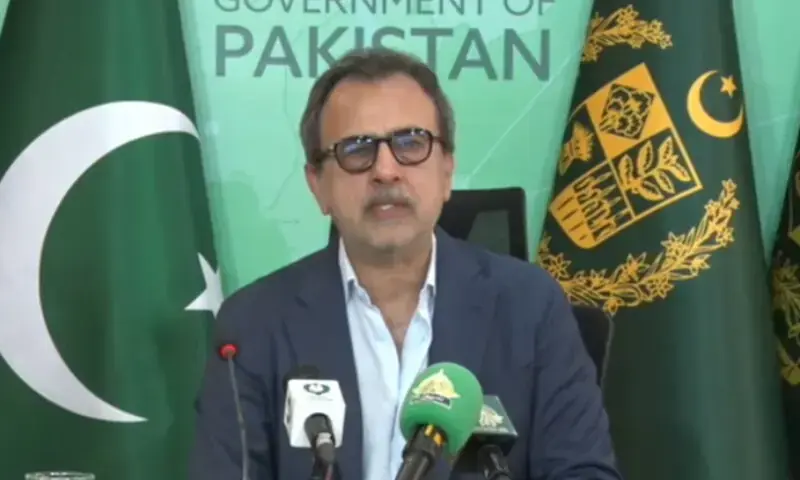
ISLAMABAD: Power Minister Awais Leghari said on Sunday that negotiations with Chinese power producers on tariff rationalisation have not yet produced the kind of result the government is seeking, even as it has secured savings of more than Rs3.5 trillion through revised arrangements with other independent power producers (IPPs) and public-sector plants.
Addressing a press conference, Leghari said the discussions involving power projects set up under the China-Pakistan Economic Corridor (CPEC) were taking place within a specific intergovernmental framework. He said the government had been seeking concessions through debt reprofiling, but the effort had so far not delivered enough progress.
Referring to those talks, he said: “Sufficient outcome has not come out yet.”
He added that any change in the relevant agreements would have to remain within the government-to-government structure because both sides had extended guarantees. Leghari also said investment that came into Pakistan at a time when few investors were willing to enter the market had to be respected, while expressing hope that an improved arrangement would eventually be reached.
Power sector savings and subsidy figures
The minister said earlier renegotiations with IPPs, restructuring of agreements and closure of older plants had led to savings of Rs3.5tr, and said the last of those agreements would run until 2053. In March, the government had informed a parliamentary panel that about Rs3.5tr in savings had been achieved through changes in power purchase agreements with 29 private and some state-owned plants over terms ranging from three to 20 years, with the aim of lowering electricity prices.
Leghari said lower system losses, the transfer of old Genco employees to distribution companies and the use of fiscal space to reduce circular debt had helped bring the power sector’s budgeted subsidy down to Rs890 billion this year from Rs1.287tr last year. He said the subsidy would be reduced further to Rs830bn in the next fiscal year.
Tariffs, industry relief and subsidy registration
The minister said ending cross-subsidy removed a burden of Rs250bn from industrial consumers. He maintained that tariffs had declined across consumer categories over the past two years. According to figures he presented, the average domestic tariff fell 16pc between May 2024 and 2026, while commercial rates dropped 8pc. He said the industrial sector received the largest relief, with its average tariff down 33pc, while tariffs for general services, bulk consumers and agriculture decreased by 10pc, 13pc and 14pc, respectively.
He said the national average tariff had dropped by 20pc to Rs42.26 per unit in May 2026, compared with Rs53.04 per unit two years earlier. On electricity duty, Leghari said his effort to have it removed from bills did not succeed because of opposition from provinces, though he added that lower tariffs had automatically reduced the tax burden’s impact on consumers.
The minister also rejected claims that subsidies for low-end users were being withdrawn, calling the allegations baseless. He said the government had introduced a registration mechanism for consumers eligible for subsidy in view of the growing use of alternative energy, particularly solar power, which had reduced dependence on electricity drawn from the national grid.
According to Leghari, a QR code-based registration system had been launched and had produced encouraging early results, with around two million single-phase consumers registered in about a month. He said subsidy eligibility would be finalised through public consultation and that verified eligible consumers would continue receiving support without interruption. At the same time, he said subsidy would not be available to consumers who kept usage below 200 units through simultaneous solar use and multiple meters.
He further said self-generation through solar power was estimated to rise to 50,000 megawatts over the next 10 years from less than 20,000MW at present, despite the move from net metering to net billing.
Neelum-Jhelum project repairs
Responding to another question, Leghari said the Neelum-Jhelum Hydropower Project had remained out of operation for about a year and a half because of design flaws. He said the Water and Power Development Authority would need another year and a half or so to complete repairs to the project, which he said cost more than Rs500bn.
He said the outage was causing heavy financial losses because cheaper electricity from the project was unavailable and had to be replaced with costlier power.
“Its closure is causing remarkable losses, amounting to billions of rupees, and due to the non-availability of cheap electricity from this project, expensive electricity has to be arranged for,” he said.
Comments
No comments yet. Be the first to join the discussion!