Once disruptive, now diluted: Opposition protest loses force
An opposition protest call on Friday failed to generate major mobilisation, with analysts citing fear of legal action, economic hardship and organisational weakness. They said PTI’s street power has declined since the crackdown that followed protests in 2023 and late 2024.

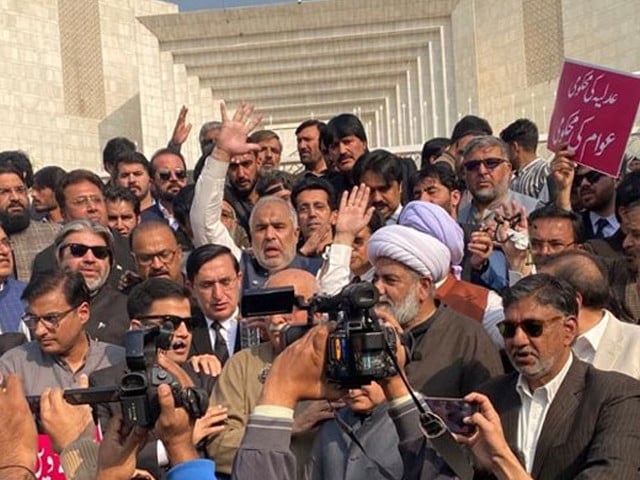
ISLAMABAD: A protest call issued on Friday by opposition parties, including an alliance featuring Pakistan Tehreek-e-Insaf, Jamiat Ulema-e-Islam-Fazl and Jamaat-e-Islami, saw limited mobilisation, with political analysts linking the subdued response to fear of legal action, organisational strain and economic pressures, according to a report by The Express Tribune.
Unlike earlier opposition demonstrations that often prompted authorities to place containers, restrict movement and block roads in advance, Friday’s call passed without broad preventive steps or visible signs of official concern. By the close of the day, the opposition campaign had failed to generate major street activity.
Analysts cite erosion in street mobilisation
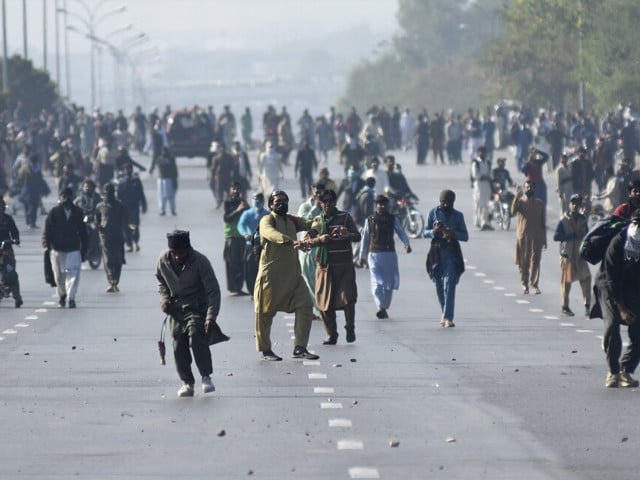
Analysts said the opposition’s ability to bring supporters onto the streets has weakened over time and became more visibly diminished after the November 26, 2024 protest in Islamabad, when PTI workers faced a forceful state response, arrests and dispersal operations. They said subsequent efforts to revive protest politics, including changes in the party’s provincial leadership structure, have not restored the momentum the party previously demonstrated.
Political analyst Raza Rumi said the weak turnout was the result of several overlapping factors rather than a single issue. He said repeated protest cycles, fear created by arrests, surveillance and legal crackdowns over the past two years, along with internal organisational pressure within opposition ranks, had collectively reduced the capacity for street mobilisation.
According to Rumi, many people may still agree with the opposition’s political message but are unwilling to join protests because of the legal and political consequences. He said street movements in Pakistan rely not just on public discontent but also on organisational unity, local-level networks and confidence that protests can lead to meaningful political results.
Referring to PTI, Rumi said the party had previously shown a strong ability to gather crowds quickly, often triggering pre-emptive action by the state before protests even took place. He said the crackdown on PTI leaders, workers and its organisational setup after May 2023 had sharply reduced its ability to organise open mobilisation on the scale seen in the past.
Attributing the shift partly to the state’s assessment, he said authorities may now believe PTI no longer has the same disruptive street capacity, reducing the perceived need for aggressive preventive action. He added that the party’s central challenge was whether it could convert its electoral and online support into a durable ground-level political structure under current conditions.
Economic hardship and fear highlighted
Senior political analyst Hassan Askari Rizvi said the outcome was not unexpected and identified economic hardship and fear of the state as the two main reasons behind the low turnout. "It is not surprising that people are not coming out," he remarked.
Rizvi said worsening financial conditions have made it harder for ordinary citizens, particularly daily wage earners, to take part in demonstrations because missing work means losing income. He also said the state’s approach had become much stricter, noting that where bail in political cases once came within days, it now takes much longer, increasing anxiety among potential participants and their families.
According to Rizvi, there is a broader atmosphere of insecurity, disappointment and fear of the state that is discouraging people from joining protests. He further said that while earlier arrests were generally made under ordinary legal provisions where bail was easier to obtain, stricter laws are now being used more often, making remand easier and bail more difficult.
Even so, Rizvi said weak street participation does not necessarily mean the opposition lacks electoral support, maintaining that voters could still back opposition parties at the ballot box.
View from Pildat president
Separately, Pakistan Institute of Legislative Development and Transparency President Ahmed Bilal Mehboob said street agitation in Pakistan has traditionally not succeeded unless it has covert backing from intelligence agencies. He also said such movements require credible and trusted leadership, which he said is currently lacking.
Mehboob said the government had managed economic pressures relatively well. While inflation continues to affect the public, he said it is often presented to citizens as the outcome of international factors. He also claimed that support for the federal government and the armed forces had risen after recent developments, including what he described as a decisive victory over India and Pakistan’s diplomatic role in facilitating dialogue between Iran and the United States.
He said these developments had created a sense of positivity among the public. In his assessment, the state’s timely use of force against PTI protesters, arrests and lengthy detention periods were among the factors working against agitation. He added that warnings and statements from opposition leaders, including Mahmood Khan Achakzai, were political moves aimed at remaining relevant and signalling activity.
Comments
No comments yet. Be the first to join the discussion!