FPCCI pushes back against govt power strategy
The FPCCI has urged Nepra to reject the IGCEP 2025-35, saying the plan is based on flawed costing and does not ensure affordable electricity tariffs. It also called for major public-sector projects to be funded through the federal budget instead of consumer bills.

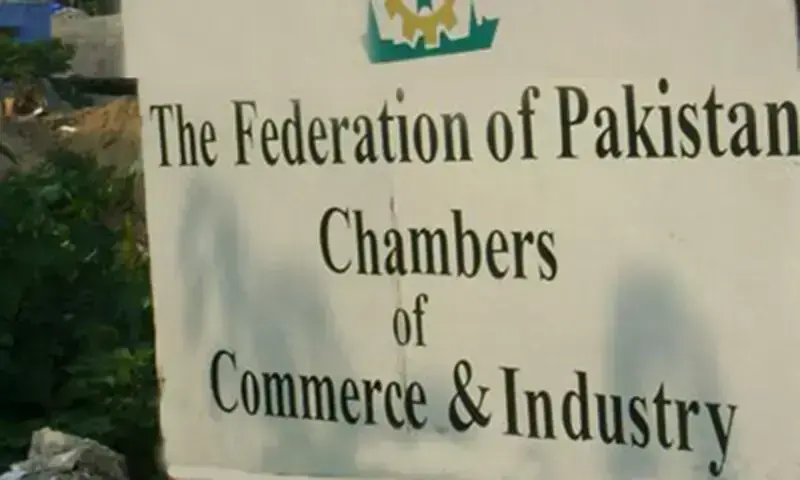
LAHORE: The Federation of Pakistan Chambers of Commerce and Industry has opposed the Indicative Generation Capacity Expansion Plan 2025-35 and submitted its observations to the National Electric Power Regulatory Authority after a public hearing held on May 20.
In a letter sent through its Energy Advisory Committee, the FPCCI said the PLEXOS costing methodology used for the plan was fundamentally defective. It said the model relied on incorrect assumptions, showed a bias toward pre-committed projects with cost optimisation turned off, and did not include $10.6 billion in costs linked to the Transmission System Expansion Plan 2025-35.
PLEXOS is a software platform used internationally by power companies, grid operators and policymakers to model, forecast and optimise energy systems. The FPCCI argued that the plan’s use of least-cost language did not address whether the resulting electricity price would be affordable for consumers.
The federation said no assessment had been carried out to determine whether Rs49 per unit, identified in the model as the cheapest option, was within consumers’ reach. It urged Nepra to make affordability a binding condition in evaluating the plan.
Tariff and project financing concerns
The FPCCI said that even after proposed commitments of more than $57 billion for generation and transmission, the IGCEP did not ensure that consumer tariffs would stay at or below the current level of 12 cents per kWh, or Rs33.38 per unit. According to the federation, if the plan could not achieve that outcome, it would fail to meet its stated objective.
It also raised concerns about Water and Power Development Authority projects, saying they had been structured as 100 per cent pass-through obligations without any ceiling on cost overruns. The federation referred to the Neelum-Jhelum precedent and Wapda’s current tariff petition before Nepra as examples showing that consumers ultimately absorb the full impact of overruns.
Calling that approach unsustainable for new commitments exceeding $10.5 billion, the FPCCI recommended that all committed public-sector projects be designated as strategic under the National Electricity Policy 2021. It named Diamer Bhasha, Dasu, Mohmand, Tarbela Extension-5, CASA-1000 and the C-5 nuclear project in this regard.
The federation said these projects should be financed through the Public Sector Development Plan and the federal budget rather than being passed on to electricity consumers through bills.
Demand assumptions challenged
The FPCCI also disputed the industrial demand growth cited in the IGCEP. It said the increase reflected fuel switching rather than fresh economic activity. According to the federation, its monthly data showed that total industrial energy consumption, including grid electricity and captive gas, had fallen by 9 per cent even though grid usage had increased.
On that basis, it said the GDP-to-electricity correlation model being used for planning was broken and could not serve as a valid basis for future projections.
The FPCCI asked Nepra to reject the current plan and send it back for resubmission. It said a revised version should include corrected demand projections, year-wise rupee tariff forecasts for all scenarios, a binding cap on capacity purchase price at 25 per cent of the consumer-end tariff, and financing of strategic projects through the PSDP.
In its submission, the federation said least cost should not be treated as equivalent to affordability, and maintained that the current framework did not adequately protect consumers from high future tariffs.
Comments
No comments yet. Be the first to join the discussion!