Extra slip fees at cattle market spark disputes
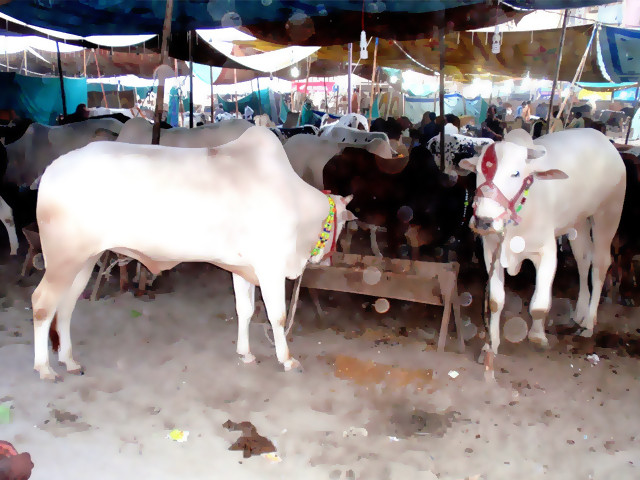
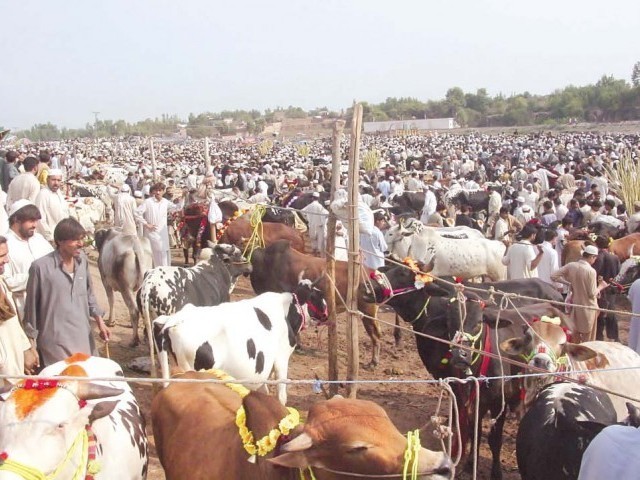
Extra slip charges at Rawalpindi’s Bhatta Chowk cattle market have triggered disputes between buyers, traders and contractor staff. Traders say rising entry fees, transport costs and other expenses have made business increasingly difficult ahead of Eidul Azha.

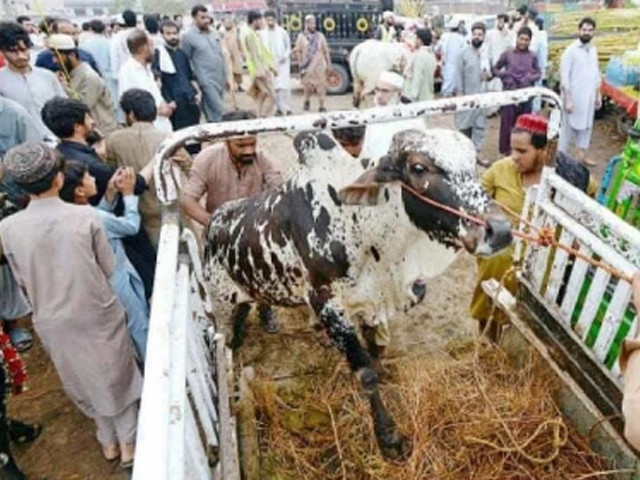
RAWALPINDI: Disputes have broken out at the Bhatta Chowk cattle market in Rawalpindi after the contractor imposed additional slip charges on buyers on top of fees already being collected from livestock traders, according to traders and buyers at the market.
The development comes after what was described in the report as the costliest cattle market auction in the city’s history. Traders said the contractor, after securing the market contract at a very high bid, introduced several extra charges and taxes amid concerns over losses caused by a lower-than-expected arrival of traders.
Under the current arrangement, traders bringing large animals into the market are being charged Rs5,000 per animal, while the entry fee for smaller animals is Rs4,000. Buyers alleged that after purchasing a cow or bull, they are required to pay an additional Rs6,000 slip fee before taking the animal out of the market. Buyers of smaller animals said they are being charged Rs3,000 as an exit slip fee.
These amounts are being collected by armed personnel hired by the contractor, who allegedly stop buyers from removing purchased animals until payment is made. The practice has led to repeated arguments and scuffles between citizens and the contractor’s staff in different parts of the market.
Traders cite rising costs
Livestock traders also complained of mounting business costs, saying entry fees, transport expenses, fodder prices and daily operating charges have made trading extremely difficult this year. Some said they would not return to the Bhatta market next year.
Khuda Bakhsh, a trader from Sargodha, described the range of charges being imposed at the market. "You bring animals to the market and immediately have to pay Rs5,000, Rs4,000 or Rs3,000 in entry charges. Then every evening the contractor's men forcibly collect another Rs1,000 under the heading of security and miscellaneous facility fees." he informed.
He said a 15-by-30 space in the market had been rented for Rs300,000 this year, while larger spaces were priced between Rs500,000 and Rs1 million. He also claimed that the prices of green fodder and straw inside the market were nearly 100 per cent higher than in the open market.
Another trader, Allah Rakha from Khushab, said he had brought 85 goats and 40 bulls to the market. According to him, transport costs alone reached Rs1.1 million, while the rent for market space was Rs400,000, in addition to entry charges amounting to hundreds of thousands of rupees.
"Our own food expenses are unbearable," he said. "For one person, breakfast, lunch, dinner and tea three times a day cost between Rs1,500 and Rs1,700 daily. Even surviving on lentils and chickpeas still costs around Rs1,100 per person."
Officially designated markets and continued roadside sales
The district administration has officially designated eight cattle markets for Rawalpindi district and declared the sale of sacrificial animals outside authorised markets illegal. Authorities have announced a fine of Rs5,000 and confiscation of animals for violations.
Despite the restrictions, sacrificial animals continued to be sold openly in several areas, including Adiala Road, Chakri Road, Pirwadhai, Ghazni Road, Bagh Sardaran, Rawal Road, the one-kilometre stretch behind the High Court, Gulzar-e-Quaid, Dhoke Gangal, Shakrial, Expressway Pindi Zone, Seham, Kalyal, Chak Beli Khan Road and near TB Hospital Road.
Traders said many sellers were now bringing only one large animal and two smaller animals into the official market at a time. After those animals are sold, they said, more livestock is brought in from holding areas outside the market in order to avoid the high fees.
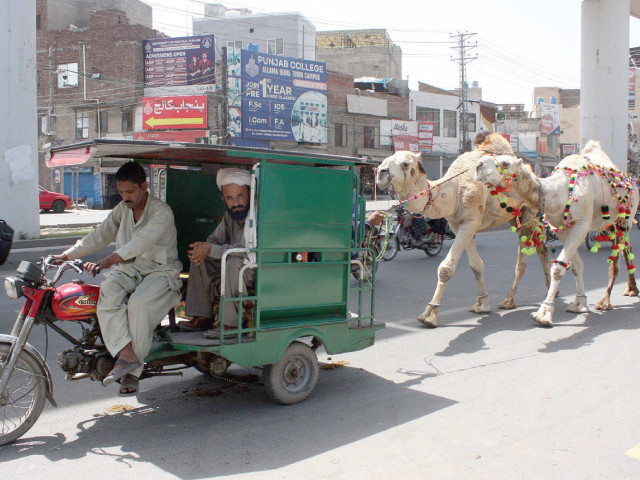
By Friday and Saturday night, desert camels had also started arriving at the Bhatta market for Eidul Azha sacrifice, with traders saying camel prices had risen significantly this year.
Traders at the market summed up their frustration by saying they could no longer bear the burden of taxes, entry fees, transport charges, fodder costs and daily expenses.
"We have had enough," they said.
Comments
No comments yet. Be the first to join the discussion!