Middle East war adds pressure to India’s jobs market
The Middle East conflict is adding pressure to India’s labour market by disrupting Gulf employment and weakening export manufacturing demand. Economists and recruiters say the strain could worsen hiring, wages and job quality for millions entering the workforce.

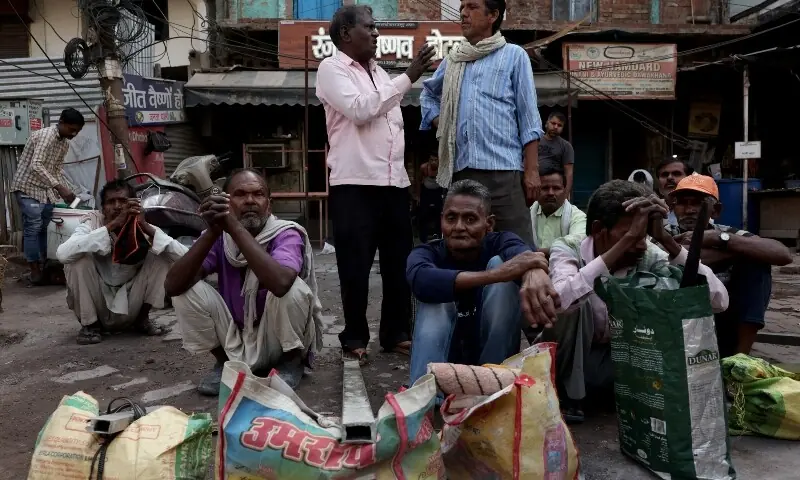
NEW DELHI: The conflict in the Middle East is putting added strain on key sources of employment for Indian workers, affecting both overseas labour opportunities in the Gulf and demand for labour-intensive manufactured exports, according to a report published by Reuters and carried by Dawn.
Work in the Middle East and export-oriented industries such as footwear and garments had for years provided stable incomes to many Indians. The current conflict has hit both areas at once, with some migrant workers returning home and manufacturers facing weaker orders and higher costs.
One such worker, Mohammad Qureshi, had been employed at a jewellery shop in Saudi Arabia until January, where he earned about 30,000 rupees a month. The 32-year-old is now working at his cousins’ tea stall in Kanpur and making roughly a third of that amount after the Iran war disrupted his plans to return to the Gulf. He told the news agency that he had previously been able to save enough to help build a small house and contribute to his sister’s wedding expenses.
Qureshi, who now lives with his mother and elder sister, said he is waiting for a chance to go back.
“Life in Saudi was easy and the money was good,” Qureshi said, standing beside his cousins as customers gathered for tea. “Life is difficult here. I pray the war ends soon so we can go back.”
India’s economy is still expanding at nearly 7 per cent, while urban unemployment stands at 6.6pc. However, economists and recruiters cited in the report warned of weak hiring, slow wage growth and deteriorating job quality for the 6 to 7 million young people entering the workforce each year. They also warned that if the situation is not addressed, it could weigh on consumption and contribute to unrest, including protests seen in north India last month.
Manufacturing hubs under pressure
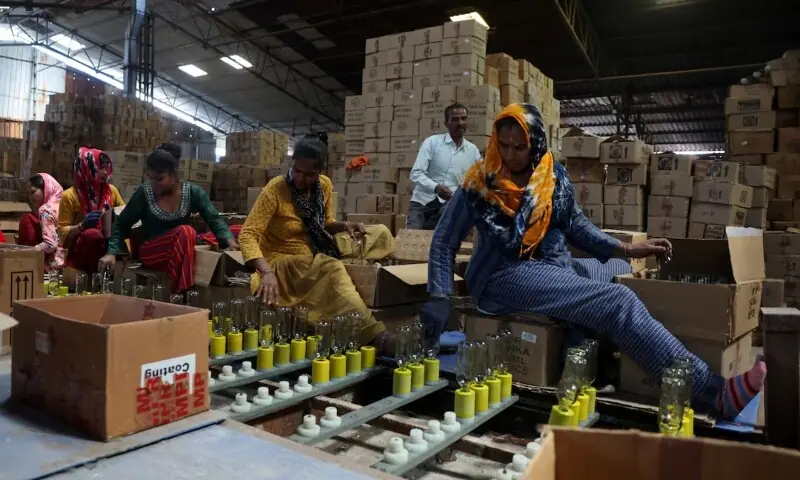
The effects are visible in industrial centres such as Kanpur in Uttar Pradesh. Taj Alam, owner of Kings International, a leather factory that supplies saddlery overseas and sports goods to Decathlon, said the Middle East conflict has raised fuel, gas, logistics and shipping costs while demand has softened.
According to Alam, his factory can process 200 hides a day and once employed more than 500 workers, but is now operating at around half capacity with about half its previous workforce. He said this has reduced the incentive to invest or recruit more staff.
“The outlook will remain bleak until the Strait of Hormuz stabilises,” he said. “Why invest when the future looks uncertain?”
Mukhtarul Amin, vice chairman of the Council for Leather Exports, said Kanpur accounts for about a quarter of India’s $6 billion annual leather exports and directly or indirectly supports around 500,000 jobs. He said firms in the sector are remaining cautious on hiring and investment even as they try to retain workers and avoid layoffs.
Gulf employment concerns
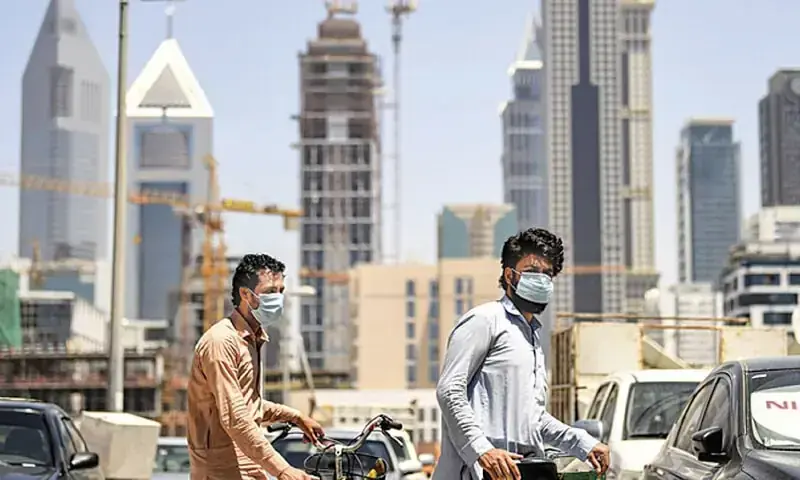
Of nearly 19 million Indians working abroad, around 9 million are in the Gulf. World Bank estimates show growth in Gulf economies slowing to 1.3pc in 2026 from 4.4pc in 2025, raising concerns over employment prospects.
Recruiters told the news agency that hiring has become more uncertain since the US-Israeli strikes on Iran, with employers delaying recruitment and families becoming reluctant to bear migration costs. Gautam Bhatnagar of Hayat Placement Services in Kanpur said opportunities have narrowed both within India and overseas.
“Earlier, we used to place five to 10 candidates every month,” he said. “Now we are lucky if we can place even one or two.”
There are no official figures on how many Indian workers have left the Gulf. However, it cited a foreign ministry official as telling reporters last month that about 1.1 million Indians, including passengers, workers and other travellers, had returned from the region between the start of hostilities on February 28 and the end of April. The ministry did not respond to later queries.
The uncertainty is also affecting Kerala, where remittances from Gulf workers have long played a major role in the local economy. Thomas Cherian, 50, said he had spent 18 years working for a construction company in Saudi Arabia before returning home on leave in December. He was supposed to return in March, but said the company stopped its project and laid off about 600 Indian workers. He added that if he cannot return by the end of June, his visa will expire.
Ajith Kolassery, chief executive officer of NORKA Roots, an agency under the state’s Non-Resident Keralites Affairs Department, said there had not yet been a large-scale return of workers.
“There has been no mass return so far,” said Ajith Kolassery, CEO of NORKA Roots, an agency of the state’s Non-Resident Keralites Affairs Department. “But if the conflict continues, financial stress in Gulf economies could lead to large-scale repatriation, adding pressure to Kerala’s already strained job market.”
Remittances from overseas Indians reached $102.5 billion in April-December 2025, up from $92.4bn in the same period a year earlier. Data for January-March has not yet been released. The Reserve Bank of India did not respond to queries on the impact of the Iran war on remittances.
Broader labour market strain
The issue carries wider implications for Prime Minister Narendra Modi’s government, as India has nearly 400 million people aged 15 to 29 and creating non-farm employment remains a major challenge despite strong economic growth.
K E Raghunathan, national chairman of the Association of Indian Entrepreneurs, said the problem extends beyond a temporary slowdown.
“This is not just a cyclical slowdown,” said K E Raghunathan, national chairman of the Association of Indian Entrepreneurs. “AI, weak global trade and tighter migration conditions are narrowing traditional employment avenues across manufacturing, IT and overseas labour.”
India’s unemployment rate rose to 5.2pc in April from 4.9pc in February, while urban youth unemployment remained much higher at nearly 14pc. Economists also pointed to underemployment, with many educated young people working in low-paid or insecure jobs that do not match their qualifications.
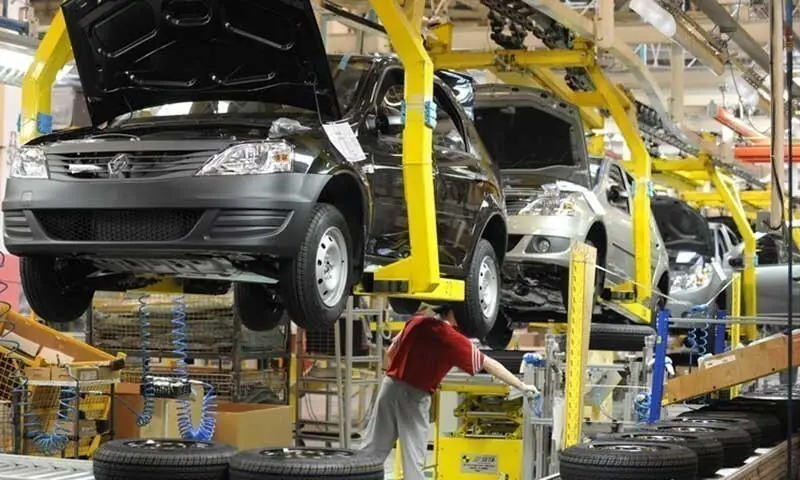
Ram Singh, an economist at the state-run Indian Institute of Foreign Trade, said weaker Gulf job prospects, uncertainty in exports and rising costs were likely to slow new hiring in manufacturing, logistics and trade-linked sectors.
“The bigger worry is weaker wage growth, especially in low-skill and routine white-collar functions vulnerable to AI-automation,” he said. “With a surplus labour market and firms seeking flexibility, this could mean more contractual, gig and informal work.”
Comments
No comments yet. Be the first to join the discussion!