Kicking in the can down the road
The Trump-Xi summit in Beijing avoided a settlement, reflecting deep mistrust and security concerns. Analysts say it aimed to delay a “Thucydides trap” reckoning, not end tensions.

Trying to avoid the Thucydides Trap
AT PENPOINT
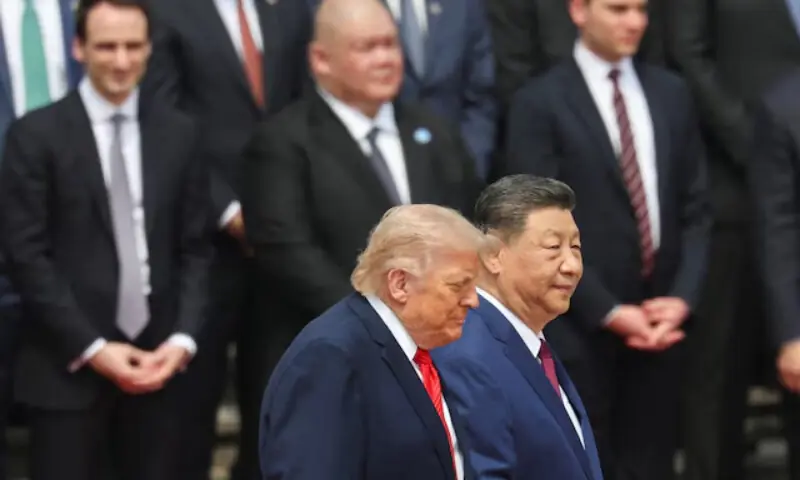
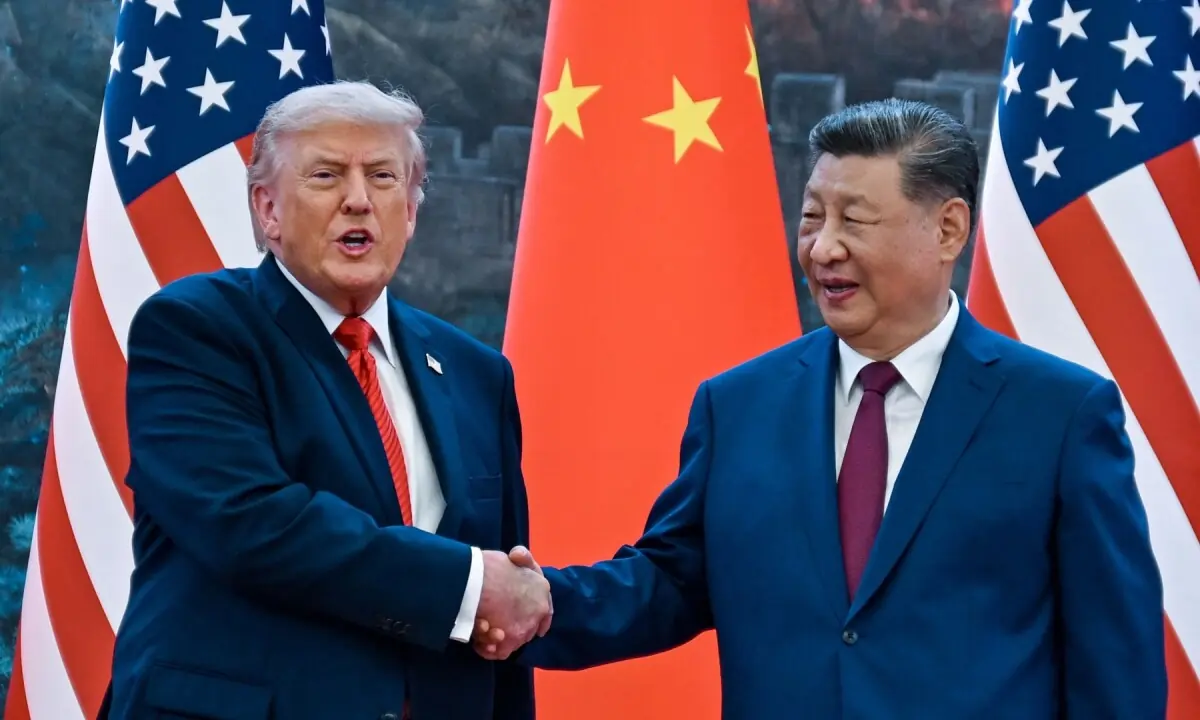
US President Donald Trump and Chinese President Xi Jinping finally had their Summit in Beijing, and it managed to avoid any settlement of the conflict between the two countries. Trump probably disappointed his base by not physically attacking XI, but that was perhaps the only positive to emerge from the meeting.
It probably symbolized the level of trust between the two that all those boarding Air Force One for the return trip, both White House staffers and journalists, were obliged to hand all the small gifts they had received in China, like pens, lapel pins, burner phones or badges. This was not a gesture of disdain, as a security measure, as the White House staff wanted to ensure that there was no planting of miniaturized snooping devices which would allow China to spy on Air Force One. It was an acknowledgement that China was a hostile country which would like to spy on it, and also that China could successfully miniaturize spying devices so that they could be hidden on a lapel pin or burner phone, and power them so that they would last for at least some time.
If there is such deep mistrust that a pre-return purge becomes necessary, why go in the first place? The USA has been engaged in summits even with the USSR during the Cold War, and with China ever since the 1972 Summit with China. A summit means that the two countries either see eye-to-eye, such as Trump’s recent exchange of visits with the UK’s King Charles, or have need of each other.
The USA and China are in such a relationship. While China is indeed trying to supplant the USA, it does not realistically seek to be the sole superpower. That is probably what was behind Xi’s stating at the banquet he hosted for Trump that it was possible for both the USA to become great again, and for China to develop prosperously at the same time.
After the visit, Chinese Foreign Minister Wang Li said that the summit had provided an opportunity for both countries to achieve a broad framework to stabilise ties, expand cooperation, and manage differences amid global uncertainty. That was perhaps the best evaluation of the summit: it was meant to allow the two to evade the so-called ‘Thucydides trap’, whereby a prising power must fight the power that is attempting to rise.
As that October summit has already started looming, it is clear that the meeting in Beijing did not keep the peace permanently, so much as bump the final decision about conflict down the road. The Beijing Summit did not so much end the conflict as put off the final reckoning.
Thucydides wrote The History of the Peloponnesian War between Athens and Sparta, which was caused by the rise of Athens in place of Sparta. Whereas Sparta had been the leading Greek power, the prominent role of Athens in the defence of Greece against the Persian invasion had allowed it to parlay its military anti-Persian alliance into an empire. Sparta didn’t like this, so there was a trial of strength in Sicily first.
It is possible to draw parallels, though they would probably be forced. True, Persians were involved in both cases, but the looming presence of the empire of Darius the Great and then his son Xerxes, cannot be compared with the present-day Iran, which is hardly a world power, and barely a regional one. However, does Athens represent China, the rising power, and Sparta the USA, the existing one?
The Straits of Hormuz are in the calculations of both China and the USA, though there was no true agreement on how to re-open it. China was not committing its naval power to that task, though it did agree on the need to re-open it. China is more directly affected by the closure, for whereas the USA is suffering because the closure means the world oil price is rising, China is facing actual shortages, which in turn means that its impressive economic engine is starting to sputter.
However, Iran is a symbol of the divergence between the two powers. While the USA is bombing Iran, China is supplying it weapons. Trump has said that China has promised to stop, but he has said that before. China is also getting Iranian oil by a land route of railways, which is costlier than the sea route, but does bypass the Hormuz Strait. China is trying to settle the matter, using Pakistan as a party which is on the good side of both the USA and the Gulf Arabs, and Iran. China has ties to the Gulf Arabs (as shown by the peace it brokered between Iran and Saudi Arabia), but not the USA.
China has also gotten a hidden agenda (not at all well-concealed). Iran is thoroughly testing its technology, the warfare is teaching China valuable lessons on how to handle US air and sea power. This has a direct application to any future conquest of Taiwan, whose security the USA guarantees.
China will be assessing how far it can go with the USA militarily. Taiwan also has significance as the world’s largest semiconductor manufacturer, with one company alone, the Taiwan Semiconductor Manufacturing Company the world’s largest independent semiconductor foundry, controlling approximately 70 percent of the global contract chip manufacturing market. It acts as the primary manufacturing partner for tech giants like Apple, NVIDIA, and AMD. These are then finished into the chips that are in everything, ranging from children' s gewgaws to advanced weapons.
From the Hormuz Strait example, China must have realized how important a monopoly on something the whole world wants, can be. Already, China has a quasi-monopoly over rare-earth minerals and their products, with the result that only recently it used this position to make the USA roll back the tariffs it had imposed, by saying that it would impose restrictions on their export to the USA.
The last US domino being presently challenged is the security guarantee to oil production and shipping from the Middle East. The US failure to bend Iran to its will carries worrying implications for Gulf governments. They must be asking whether the USA can any longer be depended on to keep the oil flowing. More importantly, do they have the physical ability to keep the present rulers in power?
The continued oil production is important, because it ensures that the ruling dynasties have the resources to ensure that they can allocate the resources to the citizenry that in turn does not object to the dynasties. Iran has no interest in maintaining the dynasties, and China has less of an inclination to do so than the USA, though if it feels that they will keep the oil flowing, it will do what it can.
However, one of the signs of the times is the flow of visitors towards Beijing. Apart from Trump himself, the Prime Minister of Canada and the Foreign Ministers of both the UAE and Iran paid visits. The Prime Minister of Pakistan is going soon, almost on the heels of a visit from the President. It is not that people are not going to Washington. It seems visitors accept the risk of gratuitous insults from their host as part of the cost of doing business. Xi himself is due in Washington sometime in October, where he will face greater risk of being treated in the sort of cavalier fashion he avoided when he was the host.
As that October summit has already started looming, it is clear that the meeting in Beijing did not keep the peace permanently, so much as bump the final decision about conflict down the road. The Beijing Summit did not so much end the conflict as put off the final reckoning.

Comments
No comments yet. Be the first to join the discussion!