SC issues guidelines to standardise civil pleadings
The Supreme Court has laid down guidelines for trial courts to improve uniformity and quality in civil pleadings. It also accepted a review petition in a long-running property dispute and separately highlighted transparency and procurement reforms within the judiciary.


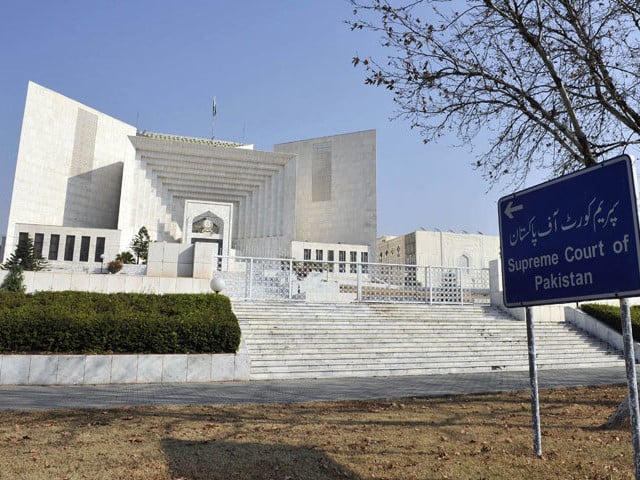
ISLAMABAD: The Supreme Court has issued a set of principles aimed at bringing greater uniformity to civil pleadings, improving their quality and supporting more efficient handling of cases at the trial court level, while also allowing a review petition in a property dispute that had continued for nearly five decades.
In a 26-page judgement authored by Justice Shahid Bilal Hassan, the court said the principles should help address persistent failures to comply with the mandatory procedural requirements of the Civil Procedure Code (CPC), 1908. The judgement was delivered by a two-member bench comprising Justice Hassan and Justice Shakeel Ahmad, which heard a review petition under Article 188 of the Constitution against the Supreme Court’s April 26, 2023 verdict dismissing the appeal of the present petitioners.
The court accepted the review petition filed by Fazeelat Nasreen and others and set aside its earlier April 26 judgement. In the same matter, the Supreme Court held that the original suit filed by the respondents was hopelessly barred by limitation and said the relevant high court had gone beyond its revisional jurisdiction by upsetting concurrent findings of fact recorded by the trial court and the first appellate court.
Directions for trial courts
The judgement says that when a plaint is presented or received, the trial court must first examine whether it contains all particulars required under the CPC and whether it complies with the rules of pleadings and any rules framed by the high court concerned.
It further directs trial courts to assess, at the outset, whether there is any prima facie issue of non-joinder or misjoinder of parties or causes of action, and whether any party is a minor. If a minor is involved, the court must ensure proper representation.
According to the principles laid down by the Supreme Court, the trial court must also determine whether the plaint has been properly signed and verified, whether the matter falls within its jurisdiction or should be returned for presentation before the proper court, and whether the plaint is liable to rejection under the law.
The court also said trial courts should check whether documents attached with the plaint are accompanied by lists in the prescribed form and are otherwise in order, whether the plaintiff has filed an address for service during the proceedings, and whether the plaint includes a statement containing the names and addresses of legal representatives.
The judgement adds that the court should examine whether the suit is barred by limitation and, if it appears to be barred on the face of it, whether the plaint discloses any ground for exemption. It should also verify whether the relief clause is proper and specific, setting out the complete relief sought, and whether the required court fee has been affixed in accordance with the law.
Written statements and legal drafting
On written statements, the Supreme Court said the trial court should examine whether the defence has been filed on or before the first hearing. Adjournments for this purpose, it said, should be granted only for sufficient cause. The principles further state that the period for filing a written statement should not ordinarily exceed 30 days, and failure to do so would attract consequences in accordance with law.
The written statement, the judgement says, must be accompanied by all documents in the possession or power of the defendant on which reliance is placed, along with a list of documents not in such possession but intended to be relied upon.
The Supreme Court also observed that it would be useful for these principles to be incorporated into the teaching of civil procedure and legal drafting at law colleges so that future lawyers enter the profession with the necessary skills from the outset of their careers.
It further suggested that bar councils may consider preparing and issuing standardised or model formats for plaints, written statements and other key pleadings. The court clarified that such formats cannot replace the application of legal mind required in each case, but may serve as templates to help ensure proper structure, compliance with legal requirements and inclusion of necessary particulars.
In-house training at Supreme Court
Separately, the Supreme Court reaffirmed its commitment to transparency in public spending, integrity in procurement and institutional quality management through specialised in-house training on Public Procurement Regulatory Authority rules and Standardisation and Quality Management Systems.
Addressing a ceremony held at the conclusion of the training sessions at the Supreme Court, Chief Justice of Pakistan Yahya Afridi said transparent procurement practices, standardised administrative systems and strong quality management mechanisms were necessary for institutional integrity, accountability and efficient use of public resources.
He also said modern judicial institutions must adopt internationally recognised governance and management standards to strengthen public trust and improve service delivery.
Comments
No comments yet. Be the first to join the discussion!