June 28, 2026
Supreme Court urges lower courts to weigh market realities in property disputes
The Supreme Court has said lower courts should consider current economic realities when deciding property disputes. It also ruled that a buyer who misses the agreed payment deadline cannot seek specific performance of a sale agreement.

June 28, 2026
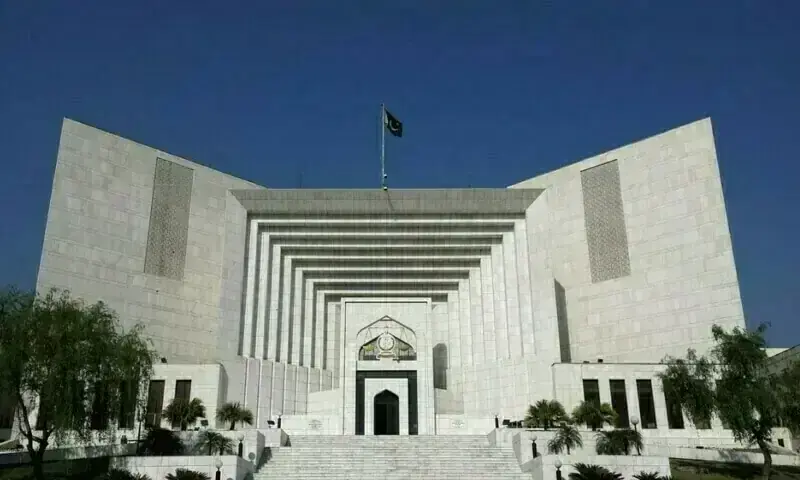
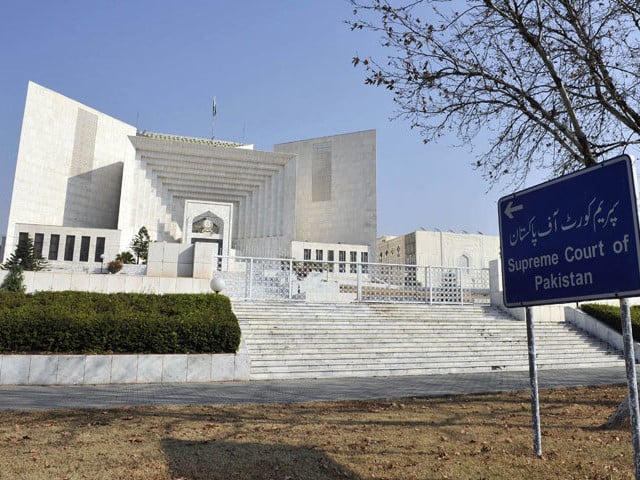
ISLAMABAD: The Supreme Court has said courts deciding property cases should read sale agreements in view of present-day economic conditions, noting that real estate prices now rise far more sharply than they once did. The observation came in a judgement by Justice Miangul Hassan Aurangzeb while the court dismissed a civil appeal in a dispute over property in Sialkot district.
A two-member bench comprising Justice Shakeel Ahmad and Justice Aurangzeb upheld a Lahore High Court ruling issued on March 4, 2020, which had rejected a suit for specific performance filed by Sialkot-based purchaser Amjad Javed against seller Maqsood Ahmad. The bench also held that a buyer who does not pay the remaining sale amount within the agreed period cannot seek enforcement of the property agreement.
The case related to a property in Revenue Estate Urban Chowinda in Pasrur tehsil, Sialkot district. Under an agreement executed on March 11, 2014, the purchaser paid Rs800,000 as earnest money, while the remaining Rs6.48 million was to be paid by July 27, 2014. The agreement also provided that if payment was not made within the stipulated time, the earnest money would stand forfeited.
The Supreme Court noted that the appellant did not deposit the balance amount of Rs6.4 million despite being given two opportunities by the trial court, which then refused a further extension. On Jan 20, 2015, the trial court dismissed the suit for specific performance under Order XVII, Rule 3 of the Code of Civil Procedure, 1908.
Specific performance and readiness to pay
In the judgement, Justice Aurangzeb said a person seeking the equitable remedy of specific performance must show continuous readiness, willingness and ability to fulfil his own part of the contract. He said that where a plaintiff fails to deposit the outstanding sale amount within the time fixed by the trial court, that failure indicates the plaintiff was not serious in pursuing the remedy.
The judgement explained that a suit for specific performance must satisfy the requirements laid down in Forms 47 and 48 in the First Schedule to the Code of Civil Procedure. Form 47 requires a plaintiff or seller to state that he has been and remains ready and willing to specifically perform the agreement on his part, of which the defendant has had notice. Form 48 requires a plaintiff or purchaser to plead that he is still ready and willing to pay the purchase money to the defendant.
Referring to the appellant’s pleadings and conduct, the verdict stated: "Although the petitioner has pleaded that he is ready and able to pay the balance sale consideration, his failure to comply with the direction for the deposit of the balance sale consideration ipso facto renders him without a cause of action to seek the relief of specific performance."
"The appellant’s conduct suggests speculative litigation and abuse of equitable jurisdiction. The appellant had filed the suit for specific performance with no intention to pay the balance sale consideration to the respondents or deposit the same in the court," the judgement further said.
The Supreme Court said the appellant’s failure to comply with court directions for deposit of the remaining amount showed a lack of readiness and willingness to pay. It also held that the deposit of Rs6.4 million on Jan 24, 2018, nearly three and a half years after the payment date fixed in the agreement, did not improve the appellant’s case because the contractual deadline had long expired.
0 Comments
No comments yet. Be the first to join the discussion!