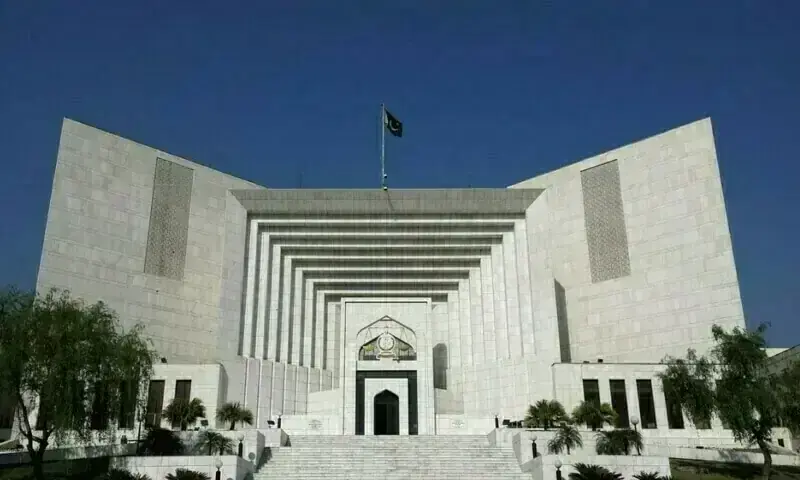
Oral agreements for land require "clearest evidence" to be binding, Supreme Court rules
Apex court blocks land transfer in Okara murder settlement, ruling oral "blood money" deals cannot bypass strict proof


ISLAMABAD – The Supreme Court of Pakistan has established that a party seeking to enforce an oral agreement for the sale of immovable property carries a heavy burden to demonstrate mutual consensus through "clearest and most satisfactory evidence". In a recent judgment, the court overturned three lower court rulings that had authorized the transfer of 32-Kanal of land in Okara based on a decades-old verbal settlement.
The judgment, authored by Justice Shahid Bilal Hassan, emphasized that oral agreements are highly susceptible to "dishonest improvements". To prevent fraud, the court ruled that all essential terms must be detailed in the initial legal pleadings rather than being added later during testimony.
The legal battle originated from a suit filed by the respondents, who claimed that an oral agreement was reached in 1992 following the defendant's acquittal in a murder case involving their father. They asserted that:
* A reconciliation committee or "Jirga" decided the defendant, Ghulam Ali, would transfer 32-Kanal of land situated at Chak 40/4-L, Okara, to them.
* Possession of the land was delivered to them at that time.
* The defendant refused to formally transfer the title after securing ownership rights in 2016.
While the Trial Court, District Judge, and Lahore High Court had previously decreed the suit in favor of the respondents, the Supreme Court found the claim lacked the necessary legal foundation.
The court identified several "foundational deficiencies" in the case that violated established legal principles:
* Lack of Precision: The legal plaint did not specify the exact date, time, or place the alleged oral agreement occurred.
* Vague Terms: The respondents failed to spell out the exact terms, conditions, or the specific "settled consideration" (price) for the land.
* Witness Requirements: The names of witnesses in whose presence the bargain was struck were not disclosed in the initial pleadings.
The bench, which included Justice Shakeel Ahmad, clarified that "mere prolonged possession" does not establish ownership if the underlying sale agreement is not fully proved. The court noted that allowing oral testimony to fill gaps in the original court filings constitutes an "impermissible improvement" that cannot be judicially recognized.
By allowing the appeal, the Supreme Court set aside the previous decrees and dismissed the suit, reinforcing that the "device of oral agreement" must not be abused by litigants to obtain property through deceit or fraud.
Would you like me to list the specific past Supreme Court precedents the justices cited to justify overturning the concurrent findings of the lower courts?
Comments
No comments yet. Be the first to join the discussion!