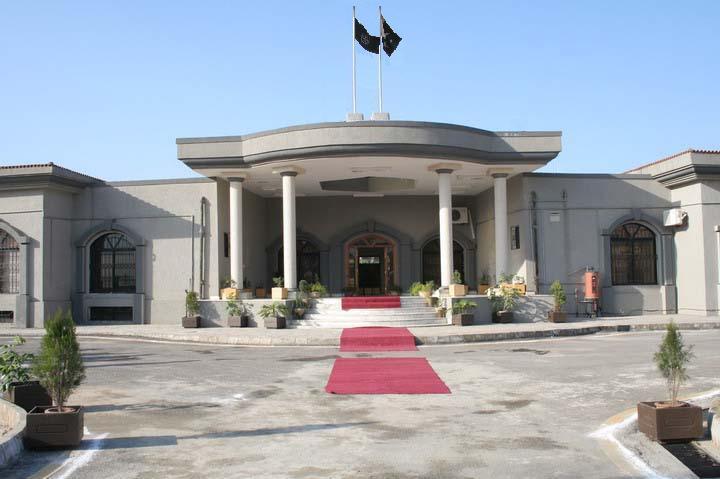
IHC takes up plea against tax ombudsman powers filed by FBR
The Islamabad High Court has issued notices on an FBR and Revenue Division petition challenging 43 suo motu proceedings initiated by the Federal Tax Ombudsman. The hearing has been adjourned until June 8.


ISLAMABAD: The Islamabad High Court has issued notices to the respondents on a petition filed by the Federal Board of Revenue and the Revenue Division challenging suo motu proceedings initiated by the Federal Tax Ombudsman in dozens of matters.
The case was heard by a single bench led by Justice Khadim Hussain Soomro. The petitioners, represented by Hafiz Ahsaan Ahmad Khokhar, questioned the ombudsman’s assumption of jurisdiction in 43 suo motu proceedings launched during 2022–2023.
According to the petition, the Federal Tax Ombudsman invoked Section 9(1) of the Federal Tax Ombudsman Ordinance, 2000, to begin a wide range of proceedings which, the petitioners argued, did not fall within the statutory meaning of maladministration under Section 2(3) of the law.
The counsel for the petitioners told the court that instead of dealing with administrative failings or abuse of authority, the proceedings moved into areas tied to tax assessment, liability determination, appellate functions, audit systems, withholding tax compliance, digital tax mechanisms and the FBR’s internal regulatory processes.
The petitioners argued that such matters are specifically excluded from the ombudsman’s jurisdiction under Section 9(2) of the Ordinance, which bars intervention in issues relating to assessment, adjudication and determination of tax liability where remedies such as appeal, review or revision are available under the Income Tax Ordinance, 2001.
They contended that the ombudsman’s exercise of jurisdiction in these matters was coram non judice, ultra vires, and without lawful authority, making the proceedings void ab initio.
The petition also challenged consolidated presidential orders dated December 17 and 21, 2025, issued under Section 32 of the Ordinance. According to the petitioners’ counsel, although the President acknowledged the existence of a jurisdictional bar under Section 9(2), the observation that the ouster clause was not absolute was legally inconsistent, self-contradictory and contrary to the plain wording of the statute.
The counsel argued that where Parliament has expressly excluded jurisdiction, no executive authority can dilute, reinterpret or partly negate that exclusion. The petitioners further maintained that both the ombudsman’s recommendations and the presidential orders were affected by legal defects, including misreading, non-reading and misconstruction of Sections 2(3), 9(1) and 9(2) of the Ordinance.
They submitted that the proceedings did not involve any actionable maladministration as defined in Section 2(3), which requires elements such as negligence, abuse of authority, undue delay or failure to act by public officials. Instead, they said, the impugned actions concerned policy-related fiscal matters and statutory tax processes governed by a complete adjudicatory framework under tax laws.
The petitioners also argued that the proceedings undermined the independence, finality and statutory sanctity of tax adjudication mechanisms, including decisions by Commissioners Inland Revenue (Appeals) and other competent forums. In their view, the Federal Tax Ombudsman had created a parallel oversight structure and crossed into areas reserved for tax authorities under the law.
Challenge to implementation orders
A key part of the petition concerns implementation orders issued by the ombudsman during 2025–2026 to operationalise earlier recommendations. According to the petitioners, those directives went beyond advisory recommendations and sought enforcement through audits, compliance monitoring, scrutiny of institutional records, verification of financial transactions and directions affecting ongoing tax proceedings.
The petitioners said these actions amounted to direct interference in statutory and quasi-judicial functions vested exclusively in Inland Revenue authorities and appellate forums established under the law.
On these grounds, the Revenue Division and FBR asked the court to declare the presidential orders dated December 17 and 21, 2025, along with the ombudsman’s recommendations dated November 27, 2023, October 24, 2023, and December 15, 2023, illegal, without lawful authority and of no legal effect.
They also sought to have all recommendations linked to the 43 suo motu proceedings initiated during 2022–2023 set aside, along with all consequential implementation orders issued during 2025–2026.
The petitioners further requested the court to declare the entire proceedings ultra vires, coram non judice, and void ab initio, and to restrain any enforcement or coercive action under the impugned framework.
After hearing the arguments, the Islamabad High Court issued notices to the respondents and adjourned the hearing until June 8.
According to the petitioners’ counsel, the matter is now set for adjudication and is expected to determine the constitutional contours of the Federal Tax Ombudsman’s jurisdiction vis-à-vis statutory tax authorities, as well as the legal validity of enforcement measures undertaken under the impugned regime.
Comments
No comments yet. Be the first to join the discussion!