Punjab to examine overlapping and outdated provincial laws
Punjab will review overlapping and outdated laws after concerns raised in the provincial assembly over contradictions, administrative confusion and unnecessary litigation. The exercise will also examine obsolete colonial-era legal provisions.

LAHORE: Punjab is set to review the duplication of laws after concerns were raised that the province’s legislative framework has expanded over decades without meaningful consolidation or a systematic reassessment, creating overlapping and outdated legal provisions that complicate governance, administration and public dealings.
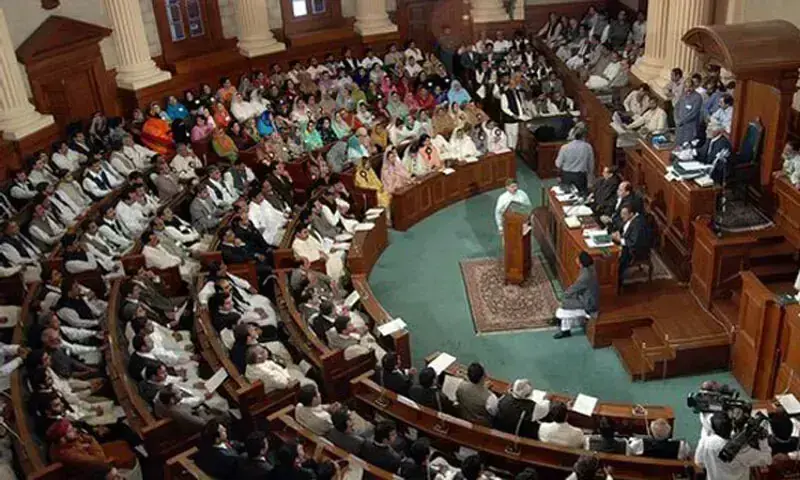
A government official told Dawn on Friday that Punjab Assembly Speaker Malik Ahmad Khan had directed the law department and the parliamentary law reforms committee to take up the issue of duplication, ineffectiveness, redundancies and laws that are no longer applicable. The official said the speaker had also acknowledged the matter on the floor of the house and issued directions in this regard.
This is a serious matter and should be taken up by the law reforms committee and the law secretary for removal of this anomaly, the speaker was quoted as saying.
The issue was raised by Pakistan Tehreek-i-Insaf lawmakers, who said several provincial laws govern identical or substantially similar subjects, leading to contradictions, administrative confusion and avoidable litigation among departments.
Concerns over overlapping jurisdictions
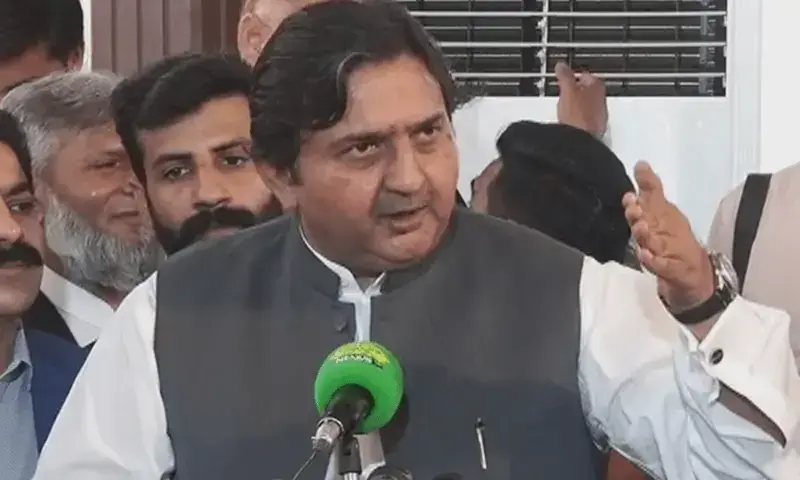
PTI senior lawmaker Rana Aftab Ahmad said that in a number of sectors, different statutes and regulatory systems are operating at the same time, often giving more than one authority powers over the same subject. He said this weakens institutional clarity and creates room for arbitrary interpretation and misuse of authority.
In many sectors, different statutes and regulatory mechanisms operate simultaneously, often empowering multiple authorities over the same matter. This duplication not only weakens institutional clarity, but also opens the door to arbitrary interpretation and misuse of authority. Citizens, businesses and even government officials frequently struggle to determine which law prevails, leading to delays in implementation, conflicting decisions, and rising legal disputes before the courts, Rana Aftab Ahmad said.
He cited local governance, encroachments, municipal regulation and urban management as examples where multiple laws are often applied at the same time, including the Punjab Local Government Act, development authority laws, municipal regulations and special administrative notifications.
As a result, overlapping jurisdiction between local governments, deputy commissioners, development authorities, and special agencies often creates uncertainty regarding enforcement powers and accountability, he added.
Rana Aftab also said environmental regulation in Punjab is being administered through a mix of provincial environmental laws, local government rules, industrial regulations and sector-specific administrative directions. According to him, businesses and industries often have to deal with inspections and compliance demands from several authorities working under parallel legal structures. He said legal experts argue that such duplication discourages investment and adds unnecessary bureaucratic obstacles.
Obsolete laws and parallel institutions under scrutiny
The review is also expected to cover obsolete colonial-era laws and procedural frameworks that remain in force despite major constitutional and administrative changes. Many regulatory provisions still reflect governance models designed for a centralised colonial administration rather than a modern democratic system.
Opposition lawmakers Sardar Muhammad Ali Khan, Zulfiqar Bhatti and Ahmad Bhatti said these outdated laws contribute to excessive discretionary powers, procedural delays and administrative inefficiency. They also questioned the growing creation of special authorities and parallel institutions through separate legislation when similar functions are already being carried out by existing departments.
According to the lawmakers, instead of strengthening current institutions, new authorities are often created with overlapping mandates, separate enforcement powers and independent administrative structures, resulting in duplication of public spending and institutional confusion.
The lawmakers further said contradictory provisions in different provincial laws frequently end up in prolonged court cases.
In many instances, one department acts under a special law, while another relies upon a separate statute governing the same subject, forcing courts to repeatedly interpret questions of jurisdiction and legislative intent, Rana Aftab said.
This not only burdens the judiciary, but also delays relief for ordinary citizens, he added.
Rana Aftab said the growing overlap in legislation raises wider constitutional and governance concerns and maintained that excessive duplication of laws contributes to regulatory overreach, unnecessary bureaucratic expansion and inconsistent enforcement mechanisms.
In several cases, separate authorities and departments exercise parallel powers under different laws on the same subject, creating confusion regarding jurisdiction and accountability. There is now increasing demand for the Punjab Law Department to undertake a comprehensive legislative audit to identify obsolete statutes, contradictory provisions, and overlapping legal frameworks currently operating in Punjab, said Rana Aftab.
Comments
No comments yet. Be the first to join the discussion!