June 29, 2026
Punjab's proposed law draws outrage over 'colonial-era' provisions
A proposed Punjab law granting broad powers to act against alleged habitual offenders and anti-social behaviour has sparked criticism from politicians, lawyers and activists. Critics say it expands executive authority without prior court conviction or adequate safeguards.

June 29, 2026
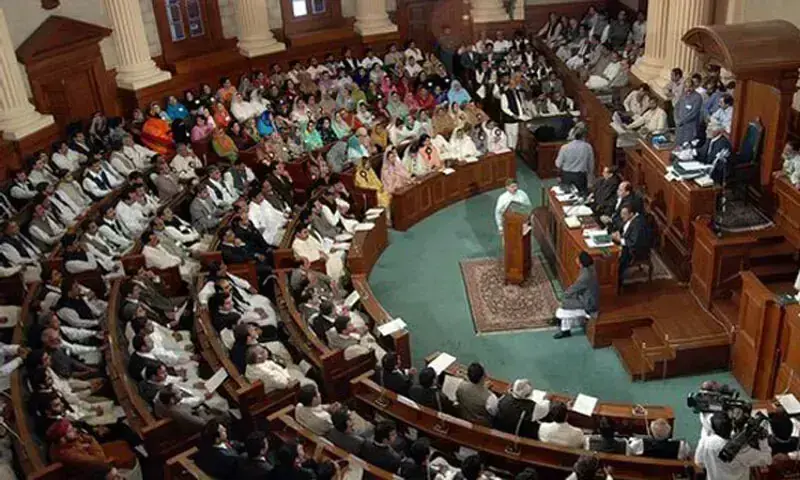
ISLAMABAD: A proposed Punjab law that would allow authorities to act against people designated as habitual offenders or involved in anti-social behaviour has triggered strong criticism from opposition figures, lawyers, activists and commentators, with critics saying it grants sweeping powers to the executive without requiring a prior criminal conviction.
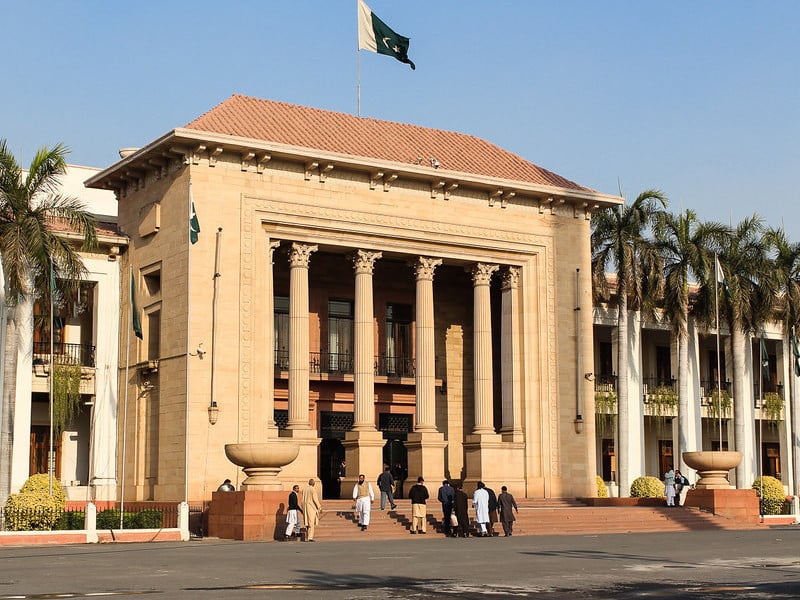
The Punjab Control of Habitual Offenders and Anti-Social Behaviour Bill, 2026 has already been referred to the Punjab Assembly Standing Committee on Law. The draft law would empower the executive to freeze bank accounts, attach property, take down a person’s online presence, confiscate phones and subject individuals to electronic surveillance on the basis of an intelligence committee’s assessment of their conduct.
Criticism over scope of powers
Yousuf Nazar, former head of Citigroup’s emerging markets investments and author of The Gathering Storm, described the bill on X as one of the most dangerous legislative proposals seen in Pakistan in recent years. He said the measure would let executive committees led by police and intelligence officials classify citizens as habitual offenders or anti-social and penalise them before any court conviction.
"It gives executive committees dominated by police and intelligence officials the power to brand citizens as ‘habitual offenders’ or ‘anti-social’ and punish them without first securing a criminal conviction"
Nazar said the bill’s powers included freezing bank accounts, attaching property, seizing electronic devices, imposing electronic surveillance, restricting travel documents and targeting social media accounts and online content, without the state first proving guilt in court beyond a reasonable doubt. "The powers are breathtaking. Bank accounts can be frozen. Property can be attached. Electronic devices can be seized. Electronic surveillance can be imposed. Travel documents can be restricted. Social media accounts and online content can be targeted. None of this requires the state to prove guilt beyond a reasonable doubt in a court of law before these sanctions take effect," he lamented.
He further argued that the concern was not only the breadth of the powers but also the bodies exercising them. According to Nazar, the proposed law includes vague categories such as spreading misinformation, using abusive language in public and causing annoyance alongside organised crime and drug offences, while also allowing the executive to widen these categories through subordinate legislation. He said citizens could face sanctions on the basis of intelligence reports, police records or repeated arrests, even if no court had found them guilty.
"This is not the rule of law. It is rule by executive discretion. In plain, it is goonda raj by the SHO of a local police station," he added.
Nazar also said the legislation would allow the executive to do more than investigate alleged wrongdoing, enabling severe penalties before guilt is established by an independent court. He warned that judicial oversight under the proposal appeared largely limited to reviewing executive action after harm had already occurred.
"No democratic government should be asking Parliament for powers of this magnitude. They undermine the presumption of innocence, weaken due process and concentrate extraordinary authority in bodies that are neither independent nor accountable in the way courts are. The inevitable result will be selective enforcement, political abuse and the chilling of dissent"
Political and civil society response
Usama Khilji, director of Bolo Bhi, termed the bill outrageous and said it reflected what he described as an escalating pattern of draconian measures by the current regime.
"We’re witnessing the slide down a very slippery slope of draconian measures by the current regime; this must be resisted"
Former Sindh governor and Awaam Pakistan leader Muhammad Zubair listed the bill’s provisions in a post on X and commented that the current administration was the most authoritarian in the country’s history.
"This must be the most authoritarian regime in our history."
PTI Information Secretary Sheikh Waqas Akram, in a statement shared on the party’s X account, said the draft law violated constitutional protections including due process, presumption of innocence, personal security, freedom of expression and property rights.
"a profound affront to constitutional guarantees of due process, presumption of innocence, security of person, freedom of expression, and the right to property"
Akram said that in a system already affected by delays and police overreach, the bill would permit punitive administrative measures based on allegations that had not been proven, creating the risk of political victimisation of opponents, journalists, activists and ordinary citizens. He also said it revived colonial-era methods of repression.
"repressive colonial instruments like the Criminal Tribes Act of 1871, which arbitrarily labelled communities as criminals and subjected them to surveillance and punishment without trial""It intensifies these legacies under the guise of tackling modern challenges […] Its provisions rely on administrative fiat, surveillance, and pre-emptive punishment that contradict claims of progressive governance"
Speaker’s reaction in assembly
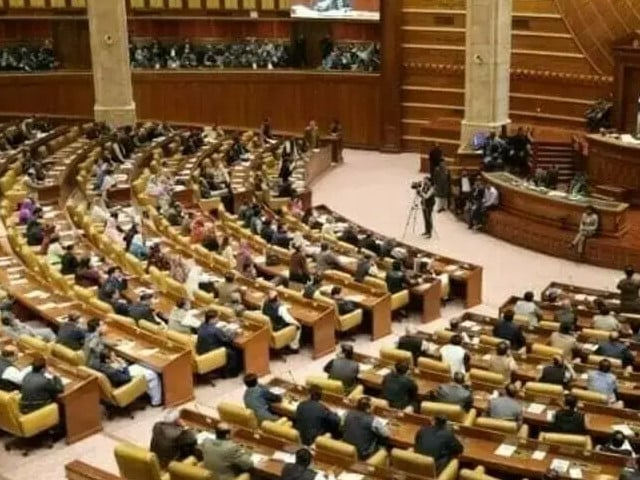
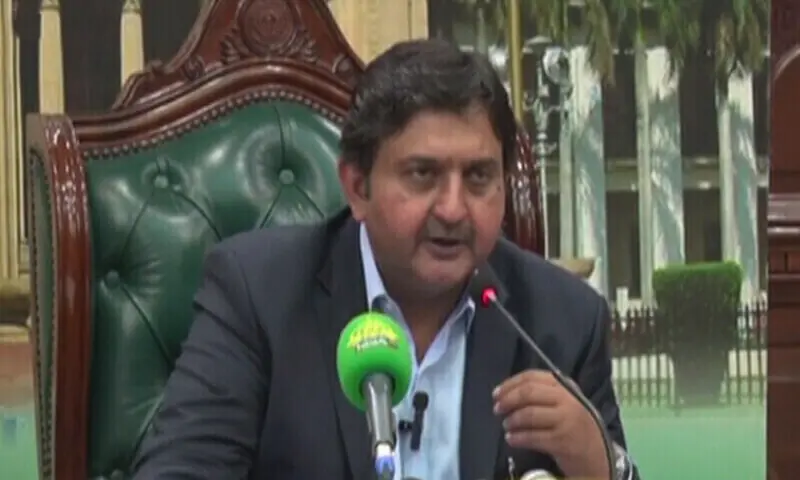
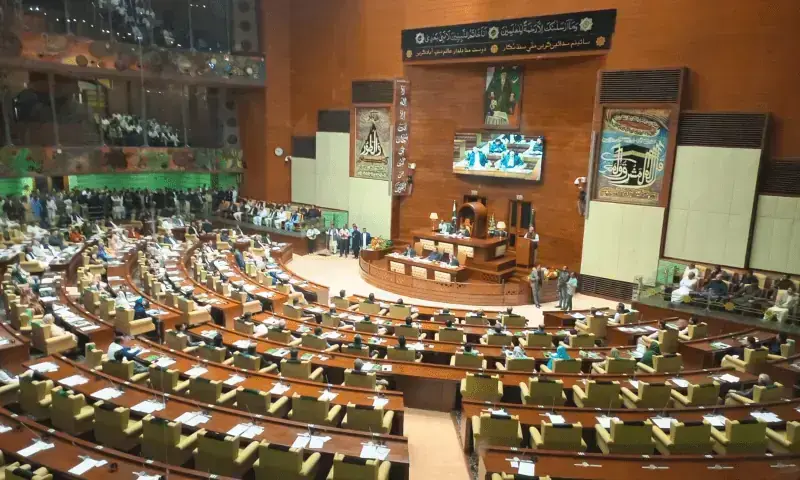
During Sunday’s Punjab Assembly session, Speaker Malik Ahmad Khan appeared surprised when it emerged that the bill had passed through the Standing Committee on Law without his knowledge. He was visibly annoyed and warned the assembly secretariat of strict action, asking why he had not been informed when the legislation was first introduced on June 8.
Journalist Asad Ali Toor, sharing an observation and a video clip of the session on X, said even the speaker was shocked that the provincial government was seeking to introduce a law he described as more draconian than measures that could not have been enforced during the British Raj.
Legal concerns
Lawyer Taimur Malik said in a post on X that the draft was attracting criticism because it appeared to expand executive authority without equivalent legal safeguards. He said vague definitions such as anti-social behaviour could open the door to misuse of power, and that measures including digital surveillance, biometric collection, freezing bank accounts and blocking CNICs should be permitted only under clear legal standards, judicial oversight and effective rights of appeal.
0 Comments
No comments yet. Be the first to join the discussion!