June 29, 2026
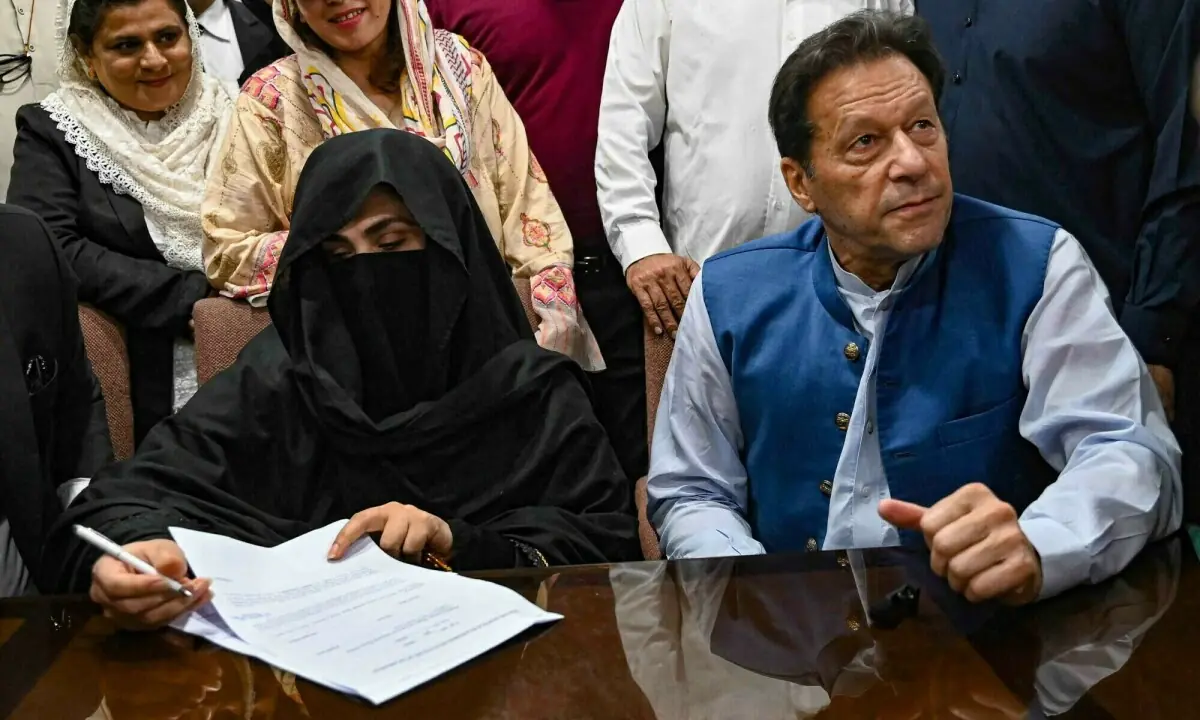
Imran Khan and Bushra Bibi move SC against IHC ruling in £190m case
Imran Khan and Bushra Bibi have moved the Supreme Court against the Islamabad High Court’s refusal to suspend their sentences in the £190 million case. Their petition seeks immediate release and challenges the legal basis of the IHC order.

June 29, 2026

ISLAMABAD: Pakistan Tehreek-e-Insaf (PTI) founder Imran Khan and his wife Bushra Bibi have approached the Supreme Court against an Islamabad High Court (IHC) order in the £190 million case, seeking suspension of their sentences and their immediate release.
The move comes after the IHC last month turned down their petitions for suspension of sentence in the corruption case, observing that their main appeals had already been fixed for hearing. The new petition argues that despite admitting the appeal as maintainable, the high court did not address what it described as key aspects of the matter.
In the petition filed before the apex court, the couple contended that the rejection of the plea for suspension of sentence without a preliminary review of the evidence was legally flawed. It further argued that courts are permitted to examine the merits of a case while deciding whether a sentence should be suspended.
The petition also stated that during the trial, bail had been granted and the allegations had been termed baseless. It further claimed that the National Accountability Bureau (NAB) repeatedly sought adjournments, which prolonged the appeal process and caused delay in the dispensation of justice.
According to the petition, both Imran Khan and Bushra Bibi have faced serious health concerns during incarceration. It stated that Imran developed an eye condition in detention and was shifted outside jail for treatment. The plea argued that keeping them imprisoned despite serious health issues amounted to injustice.
The filing also said the PTI founder suffered severe mental distress due to solitary confinement. It further maintained that the manner of his arrest was unlawful and irresponsible, and referred to a previous higher court order that had directed his release on the basis of illegal detention.
On jurisdiction, the petition argued that the proceedings were politically motivated and carried out in the name of accountability. It said amendments to the NAB law give the constitutional court jurisdiction to hear final appeals, but maintained that there was no reference in the appeal to approaching the constitutional court, making the suspension of sentence matter maintainable before the Supreme Court.
The petition has asked the Supreme Court to set aside the IHC order, suspend the sentences and order the immediate release of both Imran Khan and Bushra Bibi.
An accountability court in Islamabad had earlier sentenced Imran Khan to 14 years in prison and imposed a fine of Rs1 million. Bushra Bibi was awarded a seven-year prison term along with a fine of Rs500,000. The court had also rejected a request that their sentence suspension pleas be taken up first for release on bail pending a decision on the main appeals.
Al-Qadir Trust case
The Al-Qadir Trust case, also referred to as the £190 million case, concerns allegations that Imran Khan and others in 2019 adjusted Rs50 billion, equivalent to £190 million at the time, which had been sent by Britain’s National Crime Agency (NCA) to the Pakistani government during his tenure as prime minister.
The amount is linked to the assets of a property tycoon seized by the NCA during the PTI government. At the time, the British agency said the funds were to be transferred to the Government of Pakistan and described its settlement with the Pakistani property tycoon as a civil matter that did not amount to a finding of guilt.
NAB filed the reference in December 2023 and charges were framed against Imran Khan and Bushra Bibi on February 27, 2024. The allegations state that a settlement with the British agency was reached and approved by then prime minister Imran Khan on December 3, 2019, without disclosure of the details of the confidential agreement.
0 Comments
No comments yet. Be the first to join the discussion!