

Transport contributes about 30pc of Sindh emissions, SEPA roundtable told
A SEPA roundtable on Sindh’s worsening air quality heard that transport accounts for about 30pc of provincial emissions. Officials called for urgent, data-driven action and stronger coordination across sectors.

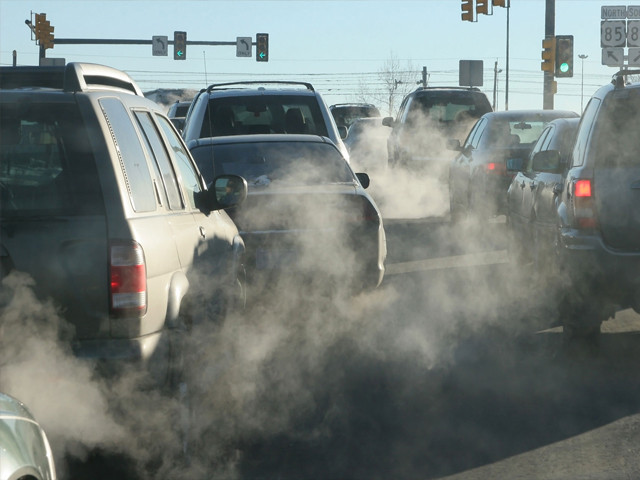
KARACHI: A roundtable convened by the Sindh Environmental Protection Agency on worsening air quality in the province ended on Monday with participants broadly agreeing that urgent action was needed, backed by data and stronger coordination among government institutions, industry and civil society.
The discussion was organised by SEPA and focused on the factors driving deteriorating air quality in Sindh, as well as the policy gaps that officials said must be addressed to improve the situation.
Officials stress multi-sector response
Secretary for Environment, Climate Change and Coastal Development Zubair Ahmed said air pollution should not be viewed as a problem linked to only one sector. He said transport was responsible for around 30 per cent of emissions in the province, with motorcycles and municipal operations identified among the main contributors.
Ahmed said any effective policy response would require accurate, sector-specific measurement of emissions. He said precise quantification was necessary before targeted interventions could be designed and implemented.
He also highlighted other sources that he said had not received enough policy attention. These included improper waste disposal practices and methane emissions originating from rural areas.
The secretary’s remarks underscored the need for a broader approach to air quality management, with attention not only on transport and industry but also on waste and rural emissions.
Industrial compliance remains a concern
SEPA Director General Waqar Hussain said one of the most serious barriers to improvement remained the consistently low level of compliance among industries. His comments pointed to enforcement challenges that continue to affect efforts to reduce pollution.
The roundtable concluded with what participants described as broad consensus on the need for immediate and evidence-based measures. Officials and stakeholders also agreed that closer coordination would be essential if the province is to make progress on air quality.
The meeting brought together government, industry and civil society representatives, reflecting the view expressed during the discussion that the issue cuts across multiple sectors and cannot be addressed through isolated measures.
Officials at the roundtable emphasised that future action should be informed by clearer emissions data and stronger institutional cooperation. The discussion also drew attention to the role of motorcycles, municipal activity, waste disposal and methane emissions from rural areas in shaping Sindh’s air quality challenge.
The session ended with agreement on the need for urgent action, while also signalling that any durable response would depend on better measurement, stronger enforcement and coordination across sectors already identified during the meeting.
Comments
No comments yet. Be the first to join the discussion!


