

Calm in the crosshairs
A year after a brief but intense India-Pakistan air conflict, familiar escalation patterns are returning. The piece warns that unverified claims and inflammatory rhetoric could spark dangerous confrontation.

India is at it again
A year has passed since the skies of South Asia were lit by drones and the deafening roar of fighter jets. In May 2025, India launched what it believed would be a swift punitive strike against Pakistan, built upon unverified allegations and driven by a wave of hyper-nationalist fervour. What followed was not the spectacle New Delhi had anticipated. Pakistan responded with precision, discipline and overwhelming defensive clarity that altered the military calculus of the region within days. The conflict, brief but intense, forced India to turn toward Washington and other international capitals, urging urgent diplomatic intervention to halt a spiral it could no longer control.
That episode should have been a sobering lesson for the region. It should have reminded policymakers that in a nuclear neighbourhood, miscalculation is not a theoretical risk but a pathway to catastrophe. Yet, barely a year later, familiar patterns are re-emerging. Once again, accusations are being levelled without evidence. Once again, inflammatory rhetoric is replacing sober diplomacy. Once again, the drums of escalation are being tested, as if the memory of May 2025 has already faded from institutional memory.
History is often unkind to those who fail to learn from their own near-disasters. In 2025, Pakistan demonstrated a model of calibrated response that many military observers quietly acknowledged as a case study in restraint under pressure. When its airspace was violated, it defended it. When drones crossed into its territory, they were neutralized. When military installations were threatened, they were protected with accuracy that avoided civilian harm and prevented uncontrolled escalation. The objective was never vengeance. The objective was to re-establish deterrence without opening the gates of total war.
India, by contrast, found itself confronting an outcome it had not anticipated. The narrative of quick dominance collapsed under operational realities. Economic markets trembled and international pressure mounted. Global powers, alarmed at the prospect of escalation between two nuclear states, intervened diplomatically. It was India that sought de-escalation through external mediation, a quiet but telling admission that the path it had chosen was unsustainable.
That reality remains relevant today.
Pakistan’s position has not changed. It seeks peace, stability, and regional economic recovery. It understands the cost of war not from textbooks, but from decades of lived experience. From 1965 to 1971, from Kargil to the long war against terrorism, Pakistan has buried its sons and daughters in numbers that defy comprehension. Over 80,000 lives lost to violence have etched into the national psyche a deep understanding of what conflict truly means. This is why restraint is not weakness but a memory, a maturity born of sacrifice.
Pakistan has chosen its path with calm, preparedness and resolve. In the crosshairs of tension and threat, it stands steady, proving that true strength is not in rushing toward conflict, but in maintaining clarity and restraint. The hope is that wisdom, not pride, shapes what comes next, so that calm, not chaos, defines the region’s future.
The troubling aspect of the current situation is the repetition of a dangerous script. Allegations without transparent evidence. Media rhetoric that inflames public opinion. Political narratives that convert complex security challenges into simplistic blame games. Military posturing presented as political strength. These elements together form a volatile mixture that can once again push the region toward unnecessary confrontation.
The world cannot afford to treat this as routine South Asian tension. A conflict between Pakistan and India is not confined to borders. It disrupts global trade routes, destabilizes financial markets, threatens millions of civilians, and raises the spectre of nuclear risk that the international system is ill-prepared to handle. The events of May 2025 served as a warning shot not only to the region but to the world. And yet, the warning appears to be fading from memory.
Pakistan today stands where it stood a year ago, calm but vigilant. Its message is consistent. It does not seek conflict. It does not benefit from instability. It does not wish to revisit the horrors of war. But it will not accept aggression disguised as accusation. It will not allow its sovereignty to be compromised. And it will not hesitate to defend itself with the same clarity it demonstrated last year if compelled to do so.
The difference between 2025 and now is that the element of surprise is gone. Both sides know the costs. Both sides know the limits. Both sides know how quickly escalation can outrun political control. This knowledge should act as a stabilizing force. If it does not, then it becomes an indictment of leadership rather than circumstance. Diplomacy must not be an afterthought activated only when missiles are airborne. It must be the first instrument, not the last resort. Communication channels between military and civilian leadership must remain open and active.
At a time when the world is already strained by tensions between the USA and Iran, soaring fuel prices, and uncertainty around the Strait of Hormuz, the region can ill afford another avoidable crisis born of accusation and provocation. War is often romanticized by those who have never witnessed its consequences. But those who have seen cities darken, markets empty, and families displaced understand that there is no glory in devastation, only loss that lingers for generations.
Pakistan has chosen its path with calm, preparedness and resolve. In the crosshairs of tension and threat, it stands steady, proving that true strength is not in rushing toward conflict, but in maintaining clarity and restraint. The hope is that wisdom, not pride, shapes what comes next, so that calm, not chaos, defines the region’s future.
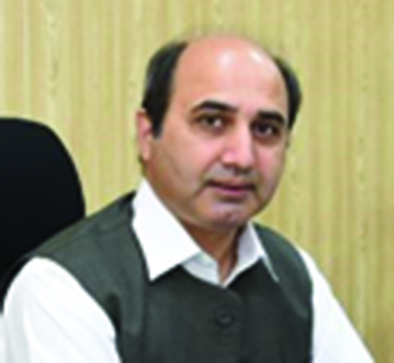
The writer has a PhD in Political Science, and is a visiting faculty member at QAU Islamabad. He can be reached at [email protected] and tweets @zafarkhansafdar
View all articles →Comments
No comments yet. Be the first to join the discussion!


