From Hormuz to CPEC: Reimagining Pakistan’s Energy Security
The Strait of Hormuz closure disrupts global oil flows and highlights Pakistan’s reliance on imported fuel through a single chokepoint. CPEC could reimagine energy security via Gwadar reserves and new regional corridors.

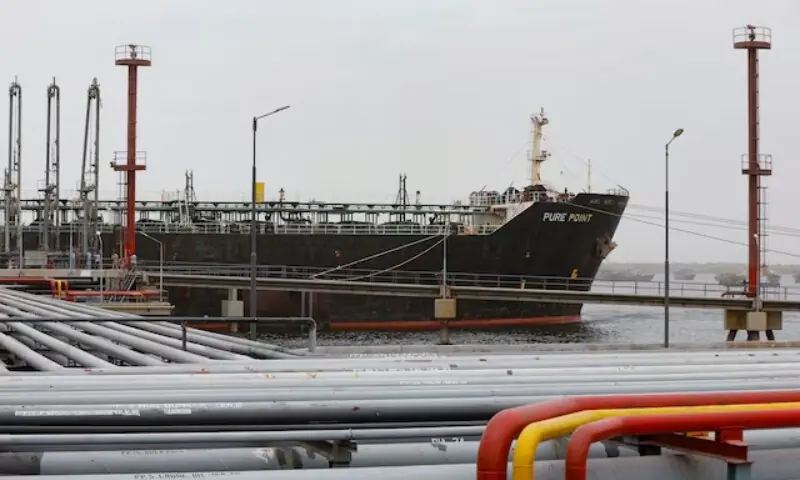
The ongoing war involving US, Israel, and Iran has triggered one of the most serious disruptions in global energy markets in recent years. For the past two weeks, the Strait of Hormuz — the world’s most critical oil chokepoint — has effectively been closed to commercial energy traffic. Nearly one-fifth of global oil trade normally flows through this narrow maritime corridor. Its disruption has once again exposed the fragility of the global energy system and, more importantly, Pakistan’s deep structural vulnerability to external shocks.
Pakistan’s energy economy is heavily dependent on imported fossil fuels. Oil alone accounts for around 54 percent of the country’s fossil fuel imports, and the country imports approximately 80 to 85 percent of its petroleum requirements. Almost half of these imports pass through the Strait of Hormuz, meaning that any disruption along this route can quickly translate into domestic fuel shortages, higher transport costs, and inflationary pressure across the economy.
This crisis highlights a fundamental structural weakness: Pakistan’s energy security relies heavily on a single maritime supply corridor. The typical energy flow pattern is straightforward — crude oil and liquefied natural gas shipped from Gulf producers reach Pakistani ports such as Karachi Port and Port Qasim through the Strait of Hormuz. While this system functions efficiently during stable geopolitical conditions, it becomes highly vulnerable during regional conflicts.
In this context, the China–Pakistan Economic Corridor (CPEC) presents an opportunity not merely for infrastructure development but for reimagining Pakistan’s energy security architecture. If approached strategically, CPEC could help diversify energy supply routes, strengthen domestic resilience, and reduce exposure to volatile global energy markets.
One of the most immediate strategic opportunities lies in developing Gwadar Port as a regional energy logistics hub. Gwadar’s geographic location near the mouth of the Persian Gulf places it close to major global shipping routes. By developing large-scale oil storage facilities and strategic petroleum reserves at Gwadar, Pakistan could build emergency buffers against short-term supply disruptions. Currently, Pakistan’s petroleum reserves typically cover only a few weeks of consumption, far below the 90-day strategic reserves maintained by many industrial economies. Expanding storage capacity would significantly enhance the country’s ability to withstand temporary supply shocks.
Beyond maritime infrastructure, Pakistan must also rethink its position within the broader Eurasian energy landscape. Central Asia possesses vast hydrocarbon and hydropower resources, yet Pakistan remains largely disconnected from these energy systems. The primary barrier to direct connectivity has historically been the unstable security environment in Afghanistan, which complicates cross-border infrastructure projects.
An alternative approach worth exploring is the development of energy corridors linking Pakistan with Central Asia through western China. China already maintains extensive pipeline infrastructure connecting Central Asian energy producers to its western regions. Expanding regional connectivity under the broader framework of Belt and Road Initiative could eventually allow oil and gas pipelines to extend southward toward Pakistan. While technically challenging due to terrain and infrastructure requirements, such a corridor could diversify Pakistan’s energy supply routes and reduce dependence on maritime imports.
Electricity connectivity presents another promising opportunity. Central Asian countries possess substantial hydropower potential, particularly in the mountainous regions of Tajikistan and Kyrgyzstan. These countries generate surplus hydropower during the summer months when river flows are high. Coincidentally, Pakistan experiences peak electricity demand during the same period due to cooling loads. Strengthening regional transmission infrastructure could allow Pakistan to import surplus hydropower from Central Asia during the summer season, improving both energy affordability and grid stability.
While international connectivity is essential, Pakistan’s energy resilience must also be strengthened domestically. Many parts of Balochistan, Khyber Pakhtunkhwa, and Gilgit‐Baltistan remain underserved by the national electricity grid due to dispersed populations and challenging terrain. Extending the central grid to these regions is often economically unviable. Instead, hybrid renewable-based microgrids and smart grids can provide a practical solution. By combining locally available resources such as solar, micro-hydropower, and wind with battery storage systems, decentralized energy systems can deliver reliable electricity to remote communities while reducing reliance on imported fuels.
The transport sector represents another critical frontier in Pakistan’s energy transition. Oil dominates transport energy consumption, making the sector a major driver of the country’s petroleum import bill. Electrifying mobility could significantly reduce oil demand over the long term. Expanding charging infrastructure, encouraging local assembly and manufacturing of electric vehicles, and establishing clear regulatory frameworks are essential steps to accelerate this transition.
The next phase of CPEC, often described as CPEC 2.0, focuses more strongly on B2B investment and industrial cooperation. This shift creates opportunities to attract investment into Pakistan’s emerging electric mobility sector, including battery manufacturing, EV assembly plants, and charging networks. Such investments would not only reduce oil imports but also support domestic industrial development.
At the same time, Pakistan must carefully reconsider the future composition of its power generation mix. The country has already invested heavily in fossil-fuel-based power plants, including several projects dependent on imported fuels. Expanding additional imported coal-based power generation would further expose the energy system to international price volatility and supply disruptions. Instead, future investments should prioritize renewable energy, grid modernization, and storage technologies.
Ultimately, the current crisis surrounding the Strait of Hormuz illustrates a broader lesson: energy security cannot rely on a single supply route or a narrow set of energy sources. Diversification — across supply corridors, energy technologies, and domestic resources — is essential for building resilience in an increasingly uncertain geopolitical environment.
For Pakistan, the strategic significance of CPEC lies not only in roads and ports but in its potential to connect the country with emerging Eurasian energy networks while strengthening domestic energy systems. By investing in strategic storage, regional connectivity, decentralized renewable systems, and electrified transport, Pakistan can gradually transition from a fragile import-dependent model toward a more diversified and resilient energy future.
In an era where geopolitical conflicts can disrupt global energy flows overnight, rethinking Pakistan’s energy security is no longer a policy choice — it is a national imperative.
The writer specializes in Energy Policy and Management. He works at CPEC Center of Excellence, PIDE and can be reached at [email protected]
View all articles →Comments
No comments yet. Be the first to join the discussion!