Pakistan’s dependence and possible alternatives
With 80% of its crude oil trade passing through the Strait of Hormuz, Pakistan faces energy insecurity, higher import bills, and inflation risk amid US-Iran tensions. The article explores alternatives and preparedness.

The Hormuz Strait
Globalization had adopted liberalization policies where economies were opened up and linked to the global market. The dependency of one economy on another has reached such an unprecedented level that a small shock in one corner of the world jolts the global market and hence affects countries economically.
In this scenario, the Middle East crisis is a glaring example. What this dependency escalates is when 20-percent of the world’s oil passes through a small water passage and there is a possible blockade of this choke point. This further sends unexpected shock waves to the global market.
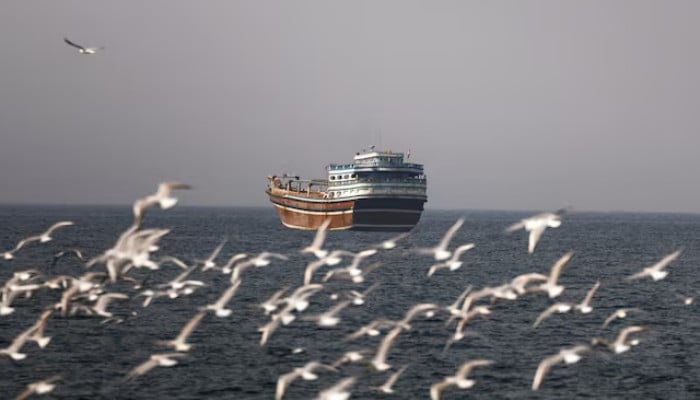
The Strait of Hormuz, a small narrow passage of water, connects the Gulf of Oman to the Persian Gulf. Though small in size, it plays a significant role in the international arena. Since the beginning of the US-Israel-Iran war, the partial blockade of this passage has upset the whole world. The USA, despite being the superpower, has bowed down in front of this water body.
First, the USA asked for help from various countries, including its main rival, China, to open the Strait. When it failed to do so, the US President gave up and said, “go get you own oil” from the Strait of Hurmuz. Furthermore, President Trump was so frustrated by the closeing of the Strait that he used vulgar and offensive language in his tweet regarding the opening of the Strait of Hurmuz.
Besides, the significance of the Strait could be evident from the fact that even Mr. Trump warned that if the Strait remained closed, “the whole civilization will die”. Thanks to Pakistan and some other countries whose diplomatic efforts have averted the eradication of a civilization by bringing about an agreement between the USA and Iran.
In short, no one denies the significant diplomatic victory of Pakistan in the Middle East crisis. Even the former Italian Prime Minister Paolo Gentiloni suggested a Nobel Peace Prize to Pakistan for this inconceivable ceasefire between the USA and Iran. So, Pakistan has played a key role in bringing down the temperature of the war in the Middle East. However, due to the unexpected and uncertain nature of US President Donald Trump, the war may escalate anytime. Therefore, Pakistan needs to concentrate on the issues unfolding due to the US-Iran war.
This Strait is so vital for Pakistan’s economy that around 80 percent of its crude oil trade passes through it. The partial closing of the Strait led to serious ramifications in the form of energy insecurity and rise in the price level in the country. Some of the immediate consequences are as follows:
Energy insecurity; the reliance of Pakistan over the imported oil for the production of electricity has made Pakistan overly dependent on strait of Hurmuz. This small passage has a greater value for Pakistan oil importation. The supply of oil disruption could generate energy poverty in Pakistan, the effects of which has already felt by the country in the shape of rise in oil prices in the country. According to a PIDE research, the middle east war could trigger the global oil price and it may soar to 150-dollar per barrel under sheer disruption. Consequently, the Pakistan monthly import bill can climb up to 5-billion dollars.
Import bill: the closing of the Dtrait has the potential to multiply the import bill of the country because there is a positive correlation between change in the global oil price and Pakistan import hardship. A PIDE study shows that each 10-dollar rise in oil prices in the global market could inflate Pakistan’s petroleum import bill by $2 billion annually.O
Inflation; the immediate effect of the closure of Hormuz Straitband oil shock in the global oil market is the rise in price levels. Inflation may balloon in Pakistan and can reach17 percent if the war prolongs (PIDE research). Though the state bank of Pakistan has maintained the interest rate at 10.5 percent to cope with uncertainties, it is not sufficient alone to keep inflation at a lower level.
Along with these, transport, agriculture mechanization, and industrial inputs costs may deteriorate in Pakistan in the upcoming days. Before these issues could create an unprecedented harm to the economy, addressing them becomes inevitable for the government.
Solution; as the saying goes, every lock has a key, similarly the dependency of Pakistan over the strait of Hurmuz needs to be minimized by taking some critical steps. The foremost is the diversification of oil import markets and routes. Pakistan needs to find new markets for the importation of its exports such as Russia to minimize its leaning on the Middle East for the importation of crude oil. Similarly, alternative routes to the Strait of Hurmuz need to be explored. Pakistan can and has been exploring the Red Sea route for crude oil import.
Furthermore, it is a high time for Pakistan to concentrate on exploring the domestic renewable energy sources for energy production. It will reduce dependence on other countries for oil import and also bring stability in the energy market. For this, a rational tax policy towards renewable energy materials is needed.
Moreover, Pakistan has the lowest petroleum reserve capability compared with its peers. It has only 10 to14 days of petroleum reserve capacity while India maintains 65 to 70 days. It needs to be increased up to 40 to 50 days, although the recommended petroleum reserve potential is 90 days. For this, investment in infrastructure along with strong political commitment is needed.
In short, no one denies the significant diplomatic victory of Pakistan in the Middle East crisis. Even the former Italian Prime Minister Paolo Gentiloni suggested a Nobel Peace Prize to Pakistan for this inconceivable ceasefire between the USA and Iran. So, Pakistan has played a key role in bringing down the temperature of the war in the Middle East. However, due to the unexpected and uncertain nature of US President Donald Trump, the war may escalate anytime. Therefore, Pakistan needs to concentrate on the issues unfolding due to the US-Iran war.
Comments
No comments yet. Be the first to join the discussion!