

May 1, 2026
Fuel shock deepens as govt pushes petrol close to Rs400 mark
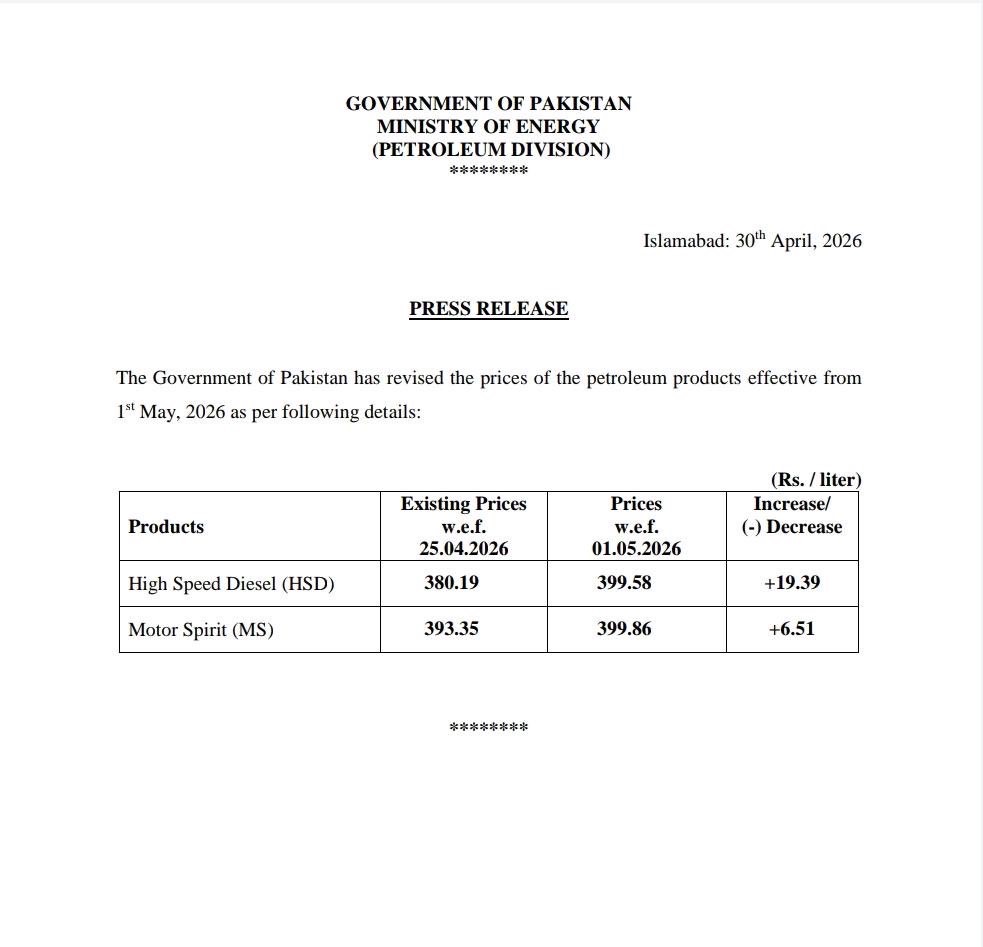
Pakistan’s government raised petrol by Rs6.51/litre and HSD by Rs19.39/litre for May 1, pushing both near Rs400 amid Strait of Hormuz disruption. Officials deny pump closures as panic buying sparks queues.

May 1, 2026

Petrol up Rs6.51/litre, high-speed diesel rises by Rs19.39/litre for next week
New rates hit Rs399.86 (petrol) and Rs399.58 (HSD) from May 1
Govt rules out fuel shortage, rejects rumours of petrol pump closures
Panic buying seen in major cities as consumers rush to secure fuel
ISLAMABAD: The government on Thursday announced a sharp increase in petroleum prices, raising petrol by Rs6.51 per litre and high-speed diesel (HSD) by Rs19.39 per litre for the next week, pushing both fuels close to the Rs400 mark amid an intensifying fuel crisis triggered by the blockade of the Strait of Hormuz.
The revised rates reflect mounting pressure on Pakistan’s energy import bill as global supply routes remain disrupted due to tensions linked to the closure of the Strait of Hormuz.
According to a notification issued by the Petroleum Division, the new price of petrol has been set at Rs399.86 per litre, while high-speed diesel stands at Rs399.58 per litre after an increase of Rs6.51 and Rs19.39 per litre respectively. The new prices will be effective from May 1, the notification said.
Petrol is primarily used in private transport, small vehicles, rickshaws and two-wheelers, and has a direct impact on household budgets, particularly for middle- and lower-middle-income groups. High-speed diesel is widely used in the transport sector and for large generators, making it a key driver of freight costs and inflation.
The latest price adjustment comes after a virtual interaction between the International Monetary Fund (IMF) and Pakistani officials, during which Islamabad informed the Fund that the country was well placed to meet its petroleum levy target of Rs1.468 trillion, according to sources privy to the development.
Both sides reportedly agreed to keep the primary budget balance target “sacrosanct” and to achieve it at all costs, even if further cuts in the Public Sector Development Programme (PSDP) become necessary, the sources added.
No closure of petrol pumps
Earlier, the Petroleum Division rejected reports suggesting the closure of petrol pumps from May 1, terming them baseless.
In a statement, the division said there was no truth in claims of fuel station closures and assured that the supply of petroleum products would remain uninterrupted.
یکم مئ سے پیٹرول پمپس کی بندش کی خبر میں صداقت نہیں ۔پیٹرولیم مصنوعات کی فراہمی بلا تعطل جاری رہے گی۔ایسے پروپیگنڈے سے عوام میں بے چینی پھیلانے سے گریز کیا جائے ۔مشرق وسطی جنگ کے آغاز سے ہی پیٹرولیم سپلائی بلا تعطل برقرار رکھی گئ ہے۔مستقبل میں بھی سپلائی یقینی بنائی جائے گی
— Petroleum Division, Ministry of Energy (@Official_PetDiv) April 30, 2026
It urged the public not to be misled by what it described as “negative propaganda” aimed at creating panic, adding that fuel supply has remained stable since the beginning of the Middle East conflict and would continue to be ensured.
Despite official assurances, reports of an expected price hike triggered panic buying in several cities, including Islamabad, where citizens rushed to petrol stations, resulting in long queues and congestion.
The district administration termed reports of fuel shortages as “mere rumours” and said sufficient stocks were available at all fuel stations.
وفاقی دارالحکومت کے پیٹرول پمپس پر شہریوں کے رش کے حوالے سے ضلعی انتظامیہ اسلام آباد کی جانب سے شہریوں کے لیے اہم پیغام:
"شہر کے تمام پیٹرول پمپس پر پیٹرول کا سٹاک وافر مقدار میں موجود ہے، کل سے پیٹرول کی عدم فراہمی کے حوالے سے زیر گردش خبریں محض افواہیں ہیں، کوئی فیول پمپ آپ…— DC Islamabad (@dcislamabad) April 30, 2026
“If any fuel pump provides less petrol than your requirement, inform us immediately,” the administration said, sharing a control room number for public complaints.
Similar rush was reported in Lahore, where long queues of vehicles were seen at fuel stations amid speculation of price increases, leading to traffic disruptions in several areas. In some cases, petrol pumps temporarily halted supply due to the rush.
Inflationary pressure mounts
With the latest revision, fuel prices have surged further into record territory, adding to inflationary pressures already weighing on consumers and transporters across the country.
Officials said the increase comes in the backdrop of the ongoing international energy shock, which has significantly disrupted oil shipments and pushed import costs higher.
The development is expected to directly impact transport fares, freight charges and overall inflation, as both petrol and diesel remain key components of Pakistan’s domestic pricing structure.
0 Comments
No comments yet. Be the first to join the discussion!


