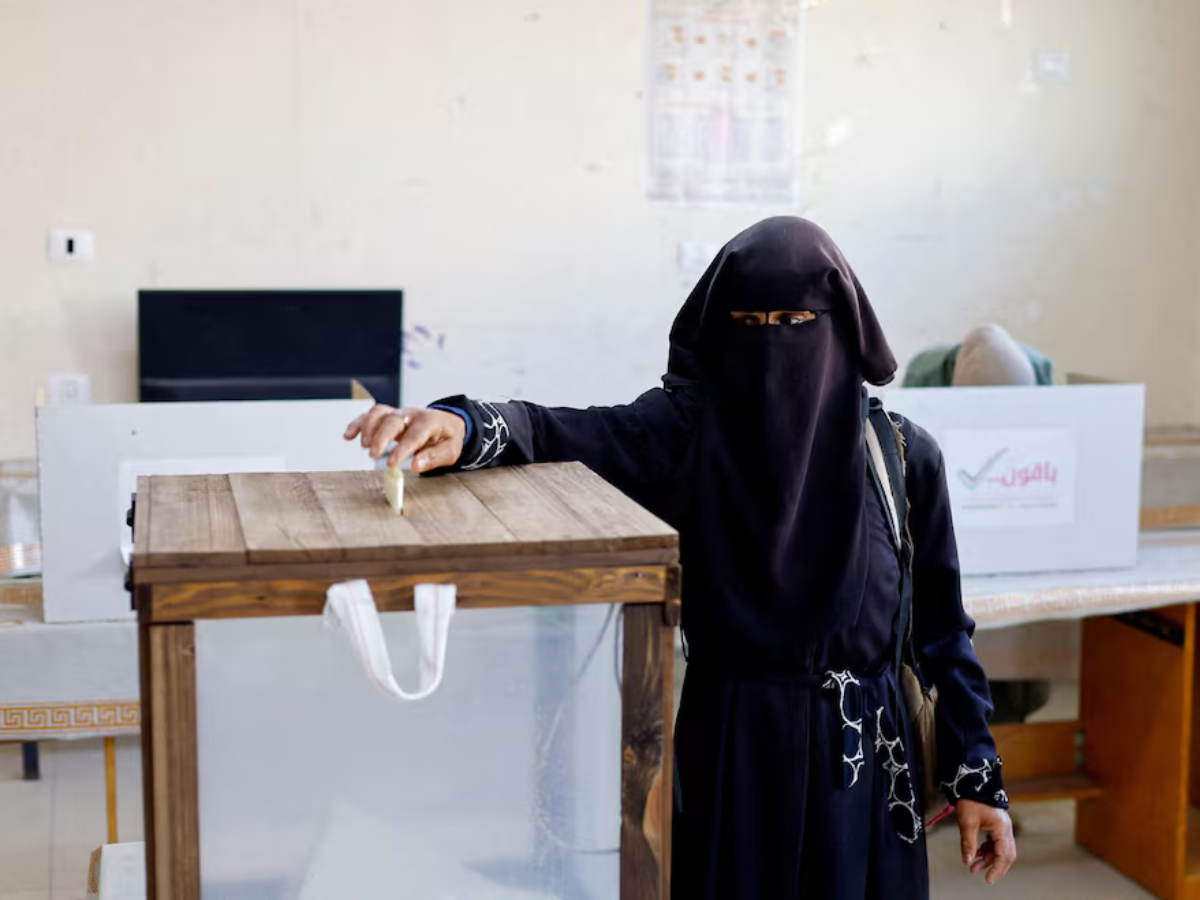
Palestinians cast ballots in municipal polls in West Bank and part of Gaza
Palestinians in the West Bank and Gaza’s Deir el-Balah voted in municipal elections on Saturday, the first since Israel’s invasion of Gaza. The polls come amid a narrow political field, criticism of the Palestinian Authority and widespread war damage in Gaza.

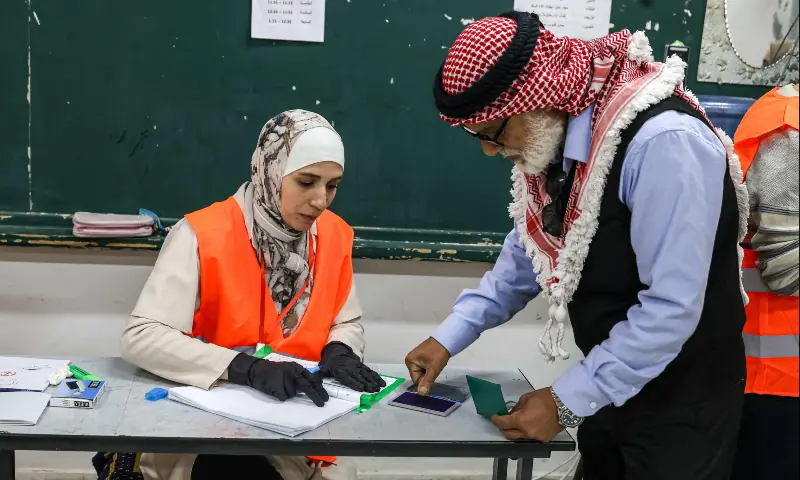
Jerusalem: Palestinians in the occupied West Bank and in Gaza’s Deir el-Balah area began voting on Saturday in municipal elections, the first such vote since Israel’s invasion of Gaza.
According to the Ramallah-based Central Elections Commission, nearly 1.5 million people are registered to vote in the Israeli-occupied West Bank, while another 70,000 are registered in the central Gaza area of Deir el-Balah. Polling stations opened at 7am. Voting in the West Bank is due to continue until 7pm, while polling in Deir el-Balah will end at 5pm so that ballot counting can take place in daylight because of the lack of electricity in the war-hit territory, the commission told AFP.
Footage from Al-Bireh in the West Bank and Deir el-Balah showed election staff at polling stations as voters arrived to cast their ballots.
The contest is taking place in a restricted political environment, with most electoral lists either linked to President Mahmoud Abbas’s Fatah movement or made up of independent candidates. There are no lists affiliated with Hamas, which controls nearly half of the Gaza Strip. In many cities, Fatah-backed slates are competing against independent lists led by candidates from factions including the Popular Front for the Liberation of Palestine.
Municipal councils oversee essential local services such as water, sanitation and infrastructure, but they do not pass legislation. With no presidential or legislative elections held since 2006, municipal bodies have become among the few democratic institutions still functioning under the Palestinian Authority’s administration.
The Palestinian Authority has faced broad criticism over corruption, stagnation and declining legitimacy. Western and regional donors have increasingly linked financial and diplomatic backing to visible reforms, especially in local governance, as national elections remain on hold.
Voters express mixed expectations
Some voters said they saw the elections as a chance for limited local change, while others voiced deep scepticism about their impact.
“We must see change every four years through elections… We can’t change the situation but we hope to replace people… people who might be better and help develop the community,” said Khalid Eid, 55, after voting in Al-Bireh.
In Tulkarem, businessman Mahmud Bader said he would still vote despite having little confidence in the outcome.
“Whether candidates are independent or partisan, it has no effect and will have no effect or benefit for the city,” he told AFP on Friday.
“The [Israeli] occupation is the one that rules Tulkarem. It would only be an image shown to the international media — as if we have elections, a state or independence.”
Deir el-Balah chosen for Gaza vote
Gaza is holding its first vote since the 2006 legislative elections. Political scientist Jamal al-Fadi of Cairo’s Al-Azhar University told AFP that the Palestinian Authority was conducting elections only in Deir el-Balah “as an experiment (to test its own) success or failure, since there are no post-war opinion polls”.
Fadi said Deir el-Balah was selected because it was among the few places in Gaza where “the population has remained largely in place and not been displaced” during more than two years of conflict between Hamas and Israel.
The elections commission’s spokesman Fareed Taamallah told AFP that polling staff for the Gaza vote had been recruited from civil society organisations and that “a private security company” had been hired to protect polling centres.
UN coordinator Ramiz Alakbarov praised the election commission for arranging what he called a “credible process”.
“Saturday’s elections represent an important opportunity for Palestinians to exercise their democratic rights during an exceptionally challenging period,” Alakbarov said in a statement issued before the polls.
In Deir el-Balah, 24-year-old Mohammed al-Hasayna said the vote carried symbolic value even amid the devastation of war.
“We are an educated people with strong determination, and we deserve to have our own state,” he told AFP.
“We want the world to help us overcome the catastrophe of war. Enough wars — it is time to work towards rebuilding Gaza.”
Two years of Israeli bombardment since October 2023 have left large parts of Gaza in ruins and killed more than 72,000 people, while studies suggest the overall death toll may be higher. Public infrastructure, sanitation services and the health sector are struggling to function.
Comments
No comments yet. Be the first to join the discussion!