Islamabad locked down, offices, schools move online as Red Zone sealed ahead of US-Iran talks
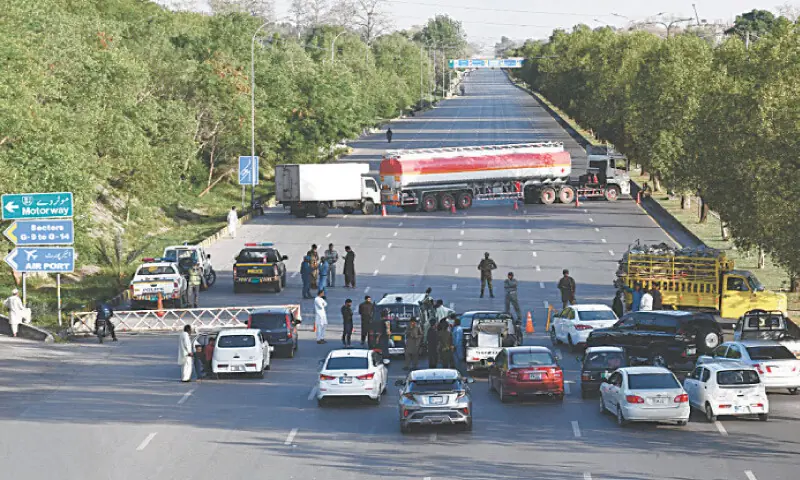
Islamabad sealed the Red Zone ahead of US-Iran talks, shifting ministries and schools to work-from-home, suspending entry, and halting heavy transport. Security forces deployed checkpoints and tightened movement across the twin cities.

Work-from-home orders issued for ministries in Red Zone with schools, offices shut, while entry to diplomatic zone suspended
Heavy and public transport halted across twin cities, 18,000 personnel deployed for high-security arrangements
Motorways, key arteries partially closed for traffic control as diplomatic activity intensifies
Citizens advised to follow advisories and stay updated through ITP’s social media, radio channel
ISLAMABAD: Islamabad police on Monday rolled out an updated traffic and security plan ahead of the expected arrival of foreign delegations in the federal capital, as authorities sealed off the Red Zone and shifted government operations within the area to remote working arrangements ahead of the anticipated second round of US-Iran talks.
According to an official notification, all ministries, divisions, and federal government offices located within the Red Zone will operate from home on Monday, April 20. However, officers and secretariat staff have been directed to remain on standby and report to office at short notice if required.
The Cabinet Secretariat issued the directive late Sunday night.
Separately, the Islamabad Capital Territory District Magistrate Irfan Nawaz Memon announced that entry into the Red Zone will remain suspended on April 20, ordering all public and private offices and schools within the area to adopt work-from-home arrangements to avoid inconvenience.
An Islamabad Police spokesperson said licensing services will continue only at Police Facilitation Centres in F-6, Gulberg Greens, and the Diplomatic Enclave, while other centres, including the Faizabad Traffic Headquarters, will remain closed until further notice.
Citizens have been advised to follow official advisories and stay updated through Islamabad Traffic Police WhatsApp channels, social media platforms, and ITP FM 92.4.
Transport disrupted across twin cities
On Sunday, authorities suspended heavy and public transport across Islamabad, with Rawalpindi Deputy Commissioner Hassan Waqar Cheema also confirming a similar ban on all private, public, and goods transport services as a precautionary measure.
The sweeping restrictions severely disrupted daily life in Islamabad and Rawalpindi, where passengers were left stranded at bus terminals. Many travellers turned to railway stations as an alternative.
Railway services came under pressure due to increased demand, with heavy crowds reported at stations. The Karachi-to-Peshawar Khyber Mail was delayed by three hours, although passengers continued to arrive in large numbers.
The Metro Bus Authority also announced the complete suspension of the Red Metro Bus Service from Saddar Station in Rawalpindi to Pak Secretariat Station in Islamabad until further notice.
Security tightened for high-level diplomacy
Authorities said the measures are part of comprehensive security arrangements for the expected diplomatic engagement, aimed at ensuring safety and maintaining order during high-level talks.
Security has been significantly tightened across the capital, with Islamabad Police personnel barred from using mobile phones while on duty and instructed to wear anti-riot gear.
Islamabad Police, Pakistan Rangers, and the Frontier Corps will jointly man checkpoints. Around 18,000 personnel, including reinforcements from Punjab, have been deployed, with elite commandos, snipers, and rapid response units placed on high alert.
Rawalpindi Police have also been placed on high alert, deploying over 10,000 personnel and establishing more than 600 special pickets. Senior officers, including SSP Operations Malik Tariq Mehboob, are supervising field operations.
Movement restrictions and closures
Authorities have ordered the complete closure of hostels, hotels, and guest houses in sensitive areas, with legal action warned for violations. Closure of seminaries near high-security zones is also under consideration.
The Red Zone and Extended Red Zone remain fully closed to all traffic. The Islamabad Expressway between Koral and Zero Point has also been shut, while Srinagar Highway may be closed intermittently.
Heavy traffic entry into Islamabad from all directions has been prohibited.
Alternative traffic routes have been designated for residents of G-5, G-6, G-7, F-6, and F-7 via Ninth Avenue and Margalla Road, while multiple diversions have been issued for commuters between Islamabad and Rawalpindi, including routes via Korang Road, Bani Gala, Murree Road, and Rawal Road.
Heavy traffic between GT Road and Peshawar or Lahore will be diverted via Taxila Motorway, Chakri Interchange, Chak Beli Road, and Rawat GT Road.
Citizens have been advised to strictly follow diversion plans and stay updated through official police channels.
Motorways partially closed
Several motorways leading to Islamabad, including M1, M2, and M3, have been closed for public transport, though they remain open for private vehicles.
A spokesperson for the Lahore administration confirmed that the M2 Lahore–Islamabad motorway has been restricted for public transport only, following federal government instructions for “foolproof security arrangements.”
Officials said similar restrictions apply to M1 and M3 motorways.
Diplomatic backdrop
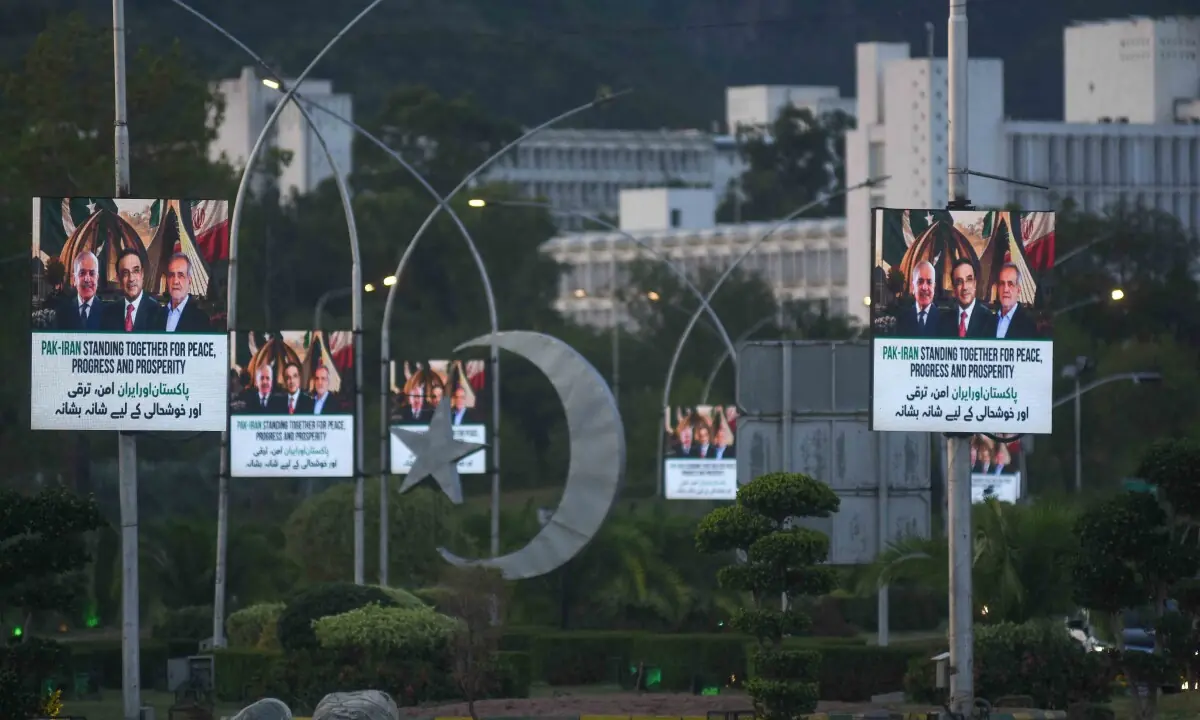
Security arrangements have intensified ahead of the anticipated second round of US-Iran talks in Islamabad.
Pakistan previously hosted the first round of direct US-Iran negotiations on April 11–12, which ended without agreement but without collapse, while the two-week ceasefire brokered earlier remains in place and set to expire on April 22.
US President Donald Trump earlier signalled optimism over ongoing diplomatic efforts, though tensions persist over key issues including maritime security and the Strait of Hormuz.
Iran has meanwhile maintained its position on regional maritime access and sanctions-related disputes.
Power supply assured
Meanwhile, the Islamabad Electric Supply Company (IESCO) has assured uninterrupted electricity supply during the diplomatic engagements.
IESCO Chief Executive Officer Engineer Chaudhry Khalid Mahmood said grid stations and feeders are being monitored round the clock and staff have been fully mobilised.
“We will ensure continuous power supply during this major event,” he said.
Comments
No comments yet. Be the first to join the discussion!