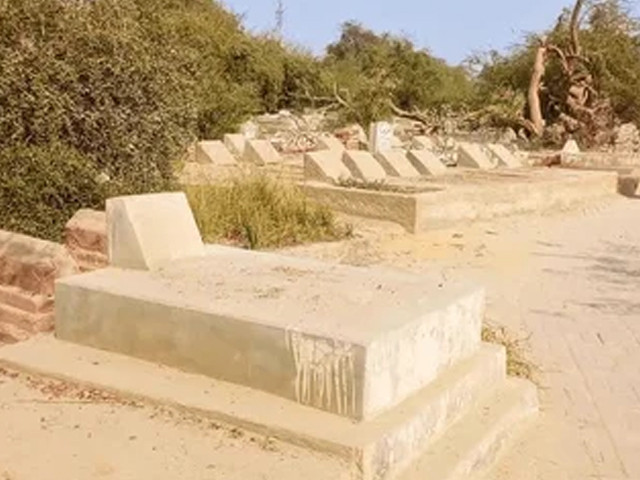
Sindh-wide protests held against continuing ‘honour killings’
Rights activists held rallies, demonstrations and street theatre across Sindh against continuing killings in the name of karo-kari. Protesters demanded justice in recent cases and stronger enforcement of laws protecting women.

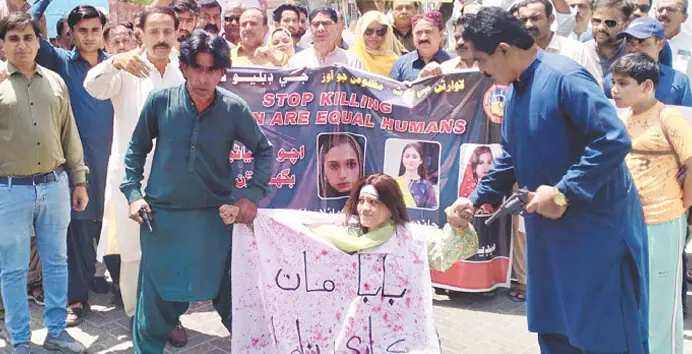
HYDERABAD: A rights group, Civil Society for Truth, Peace and Justice, organised rallies, demonstrations and street theatre in several districts of Sindh on Sunday to protest violence against women in the name of karo-kari and to demand justice in recent cases.
In Hyderabad, protesters gathered at the local press club, where activists from civil society organisations, writers and media workers joined the demonstration. The protest was held following the alleged honour killings of Khalida Chandio and Shumaila Chandio, as well as the alleged suicide of medical student Fahmida Laghari.
Zafar Hakro, Altaf Koti, Niaz Vighio, Ghulam Sarwar Hingoro and others called for justice for the victims. Awami Tehreek leader Noor Katyar, Sindh Sufi Forum President Dr Badar Channa and PML-F leader Rafiq Magsi also addressed participants.
A street theatre performance featuring Aqeel Qureshi, Neha Sahar and Amir Pahore was staged as part of the protest to denounce the practice.
Speakers said killings under the karo-kari custom were continuing across Sindh, citing the deaths of Khalida Chandio in Tando Masti and Shumaila Chandio in Hala. They also referred to Fahmida Laghari, saying she had been harassed to such an extent that she took her own life and that her death should therefore be treated as murder.
They said tribal jirgas had been banned and that the Sindh government had enacted laws related to harassment of women, but these measures were not being implemented. They also said anti-harassment committees in educational institutions were inactive.
The protesters demanded strict punishment for those responsible and effective enforcement of laws meant to protect women.
Marches and demonstrations in other districts
In Larkana, journalists, writers and civil society activists marched from the local press club to Jinnah Bagh Chowk, where they held a demonstration under the banner of the same rights group.
Addressing the gathering, Zafar Abro, Razzaq Massan, Abdul Qadir Jagirani, Syed Javed Shah, Dr Sakeena Gaad, Athar Soomro, Ashraf Kalhoro, Sattar Hulio, Dr Mazhar Mughal, Sheeba Mughal and others said women in Sindh were being killed under what they described as the barbaric custom of karo-kari.
They said victims were buried without proper Islamic funeral rites and added that such incidents were increasing across the province. They also condemned what they described as continued harassment of female students in educational institutions, saying several young women had been pushed to take their own lives and that no effective action had been taken against those responsible.
The speakers demanded that FIRs in honour killing cases be registered on behalf of the state and that those convicted be given the harshest possible punishment. They also called for immediate measures to protect female students in educational institutions.
In Jacobabad, the group held a rally from the local press club to DC Chowk. Zain Sarki, Mohammad Hashim Brohi, Abdul Nabi Magsi, Abdul Ghani Khoso, Abdul Majeed Sarki of STP, Syed Ali Shah and others addressed the participants. They held police negligence responsible for recent honour killing incidents and said the accused had still not been arrested.
Another protest march took place in Dadu, where writers, media workers and activists from political parties, nationalist groups and social organisations assembled at New Chowk before marching to the local press club. People from other segments of society also joined.
The participants were addressed by Wali Chandio, Prof Mohammad Irfan Kalhoro, Raja Rafique Panhwar, Mohammad Bakhsh Korai, Akbar Panhwar and Gulan Bhand. They condemned the rise in honour killings and said Sindh had become a killing field for women.
They said the failure to enforce relevant laws had allowed such killings to continue and added that institutions meant for women’s protection had remained inactive. Along with the cases of Khalida Chandio, Shumaila Chandio and Fahmida Laghari, they also highlighted the killing of Naheed Solangi in the Mitho Machhi area of Mehar taluka. They alleged that the real killers were at large while innocent people had been jailed under the influence of powerful individuals.
Comments
No comments yet. Be the first to join the discussion!