Punjab dog bite cases top 1.3 million as stray dog control remains ineffective
Punjab has reported over 1.3 million dog-bite cases and more than 2,100 deaths in five years amid a rising stray dog population and vaccine shortages. Official efforts including sterilisation and shelter projects have produced limited results.

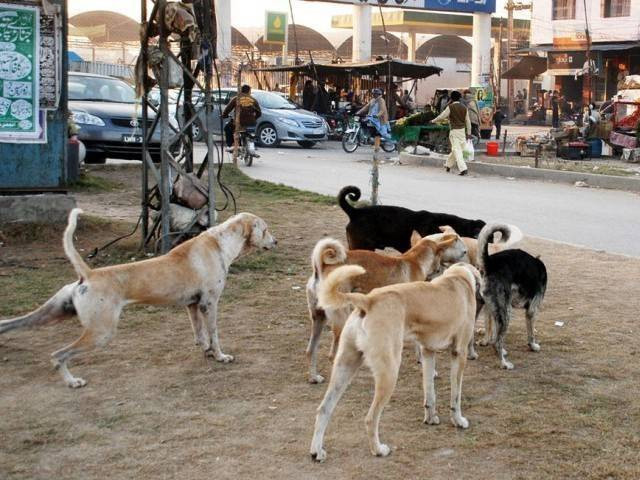
LAHORE: Despite official restrictions on culling, the stray dog crisis in Punjab continues to escalate, with an estimated population of around 2.5 million dogs contributing to over 1.3 million bite cases and more than 2,000 deaths over the past five years, underscoring persistent gaps in public safety measures.
Authorities had halted culling operations following a 2025 court order, after which district-level Dog Control Cells were restructured into Dog Control and Animal Birth Control Cells. However, these units have largely remained inactive for the past one and a half years, leaving a vacuum in effective population control measures.
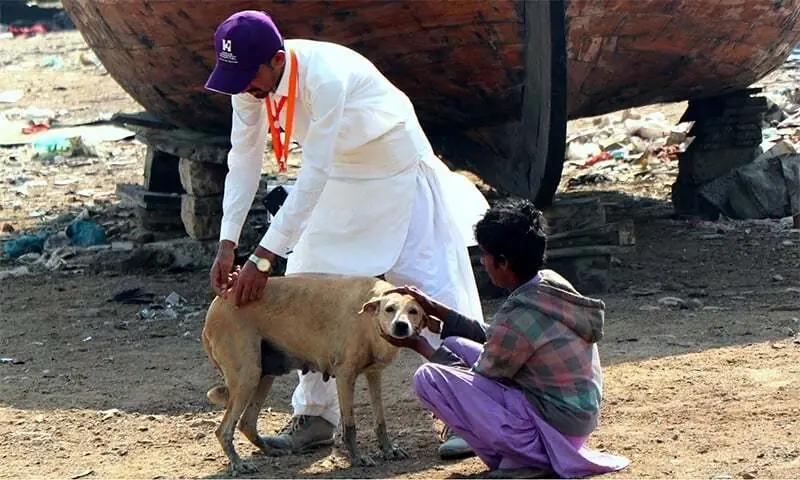
Before the ban, culling was routinely carried out across districts, with Dog Control Cells operating on annual budgets worth millions of rupees. Following the policy shift, the government moved towards TNVR (Trap-Neuter-Vaccinate-Return) programmes, but officials acknowledge that the initiative has yielded minimal results on the ground.
A major programme worth Rs900 million was launched to manage stray dogs in major cities, yet authorities failed to effectively capture, sterilise or relocate animals to shelters. Although some shelters were constructed at a cost exceeding Rs15 million, their impact has remained negligible.
Data reveals a sharp rise in both dog-bite incidents and stray dog populations across the province. Between 2021 and March 2026, more than 1.3 million bite cases were reported, including over 500,000 in just the last two years. In the first half of 2025 alone, approximately 150,000 cases were recorded.
Fatalities linked to dog bites and delayed vaccination have also remained significant, with annual deaths ranging between 200 and 400. In total, over 2,100 people have lost their lives in the past five years. Year-wise figures show a steady increase, from 180,000 cases in 2021 to over 200,000 in 2022, nearly 300,000 in 2023, and continued growth through 2024 to early 2026.
Health department data indicates that while anti-rabies vaccines are generally available in hospitals, critical injections such as Rabies Immunoglobulin (RIG) are frequently in short supply. Between 2024 and March 2026 alone, more than 575,000 people were affected by dog bites, with treatment challenges reported due to these shortages.
District-level data shows Dera Ghazi Khan reporting the highest number of cases at 33,990, followed by Multan with 29,713, Rahim Yar Khan with 28,590, Rawalpindi with 27,570, and Rajanpur with 26,770. Other affected districts include Mianwali (22,961), Kasur (20,750), Muzaffargarh (17,749), Faisalabad (10,350), and Bhakkar and Khushab (7,855), while Lahore, Sheikhupura and Nankana Sahib have also reported several thousand cases each.
Raising alarm over the situation, Mohammad Nasir Iqbal Khan, Central Chairman of the International Human Rights Movement, stressed the need for immediate action, stating that unchecked stray dog populations were posing serious risks to citizens, including women and children. He cited incidents such as the death of eight-year-old Mehr Bano during Eidul Fitr following a dog attack as evidence of the growing threat.
Qaiser Sharif, Vice President of the Public Aid Committee of Jamaat-e-Islami Lahore, criticised the provincial government for failing to effectively address the issue despite allocating substantial funds. He suggested that non-governmental organisations could play a role in managing the stray dog population to reduce attacks on the public.
In response, a spokesperson for the Punjab Local Government department said the government was acting in line with court directives, emphasising that culling was no longer permitted under the Animal Birth Control Policy. The official maintained that efforts were being made to control the population through sterilisation programmes.
However, the scale of the challenge remains significant. Experts estimate that over one million anti-rabies vaccine doses are required annually, yet supply gaps persist, particularly for RIG injections. Districts with high incidence rates — including Dera Ghazi Khan, Rahim Yar Khan, Faisalabad, Muzaffargarh, Rajanpur, Rawalpindi, Gujranwala, Kasur, Lahore and Multan — continue to face shortages, especially in rural and smaller tehsil hospitals, complicating treatment and increasing risks for affected populations.
Comments
No comments yet. Be the first to join the discussion!