When the law fails the voiceless
Punjab faces a grave stray dog crisis, with over 50,000 dogs killed annually. This article examines the systemic failure of authorities to uphold animal protection laws.

Punjab’s stray dog crisis
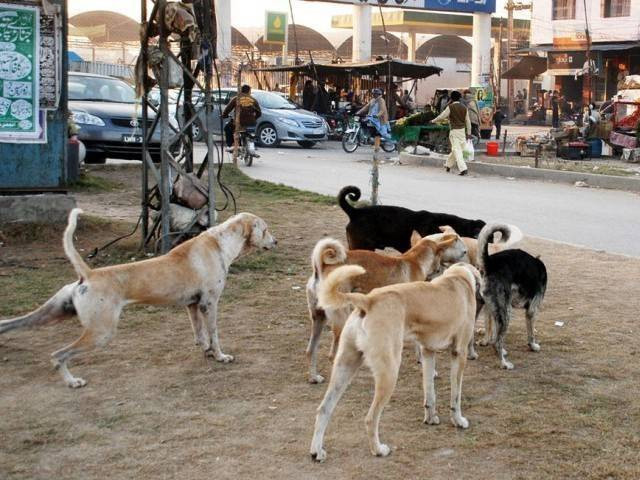
More than 50,000 stray dogs are killed every year in Pakistan through poisoning and shooting carried out on official orders, according to estimates by the Organisation for the Protection of Animals. This figure is not an anomaly; it reflects a deeper and persistent national failure to protect animal life. Pakistan ranks among the worst performers globally, categorised as “E” under the Animal Protection Index, a designation reserved for countries with little to no meaningful legal protection for animals and a systemic disregard for their welfare.
Nowhere is this failure more visible than in Punjab, where indiscriminate dog culling has resurfaced despite being expressly restricted and, in several instances, prohibited by repeated court orders. What is unfolding is not a policy vacuum but a far more troubling reality: the open defiance of law by the very authorities tasked with upholding it.
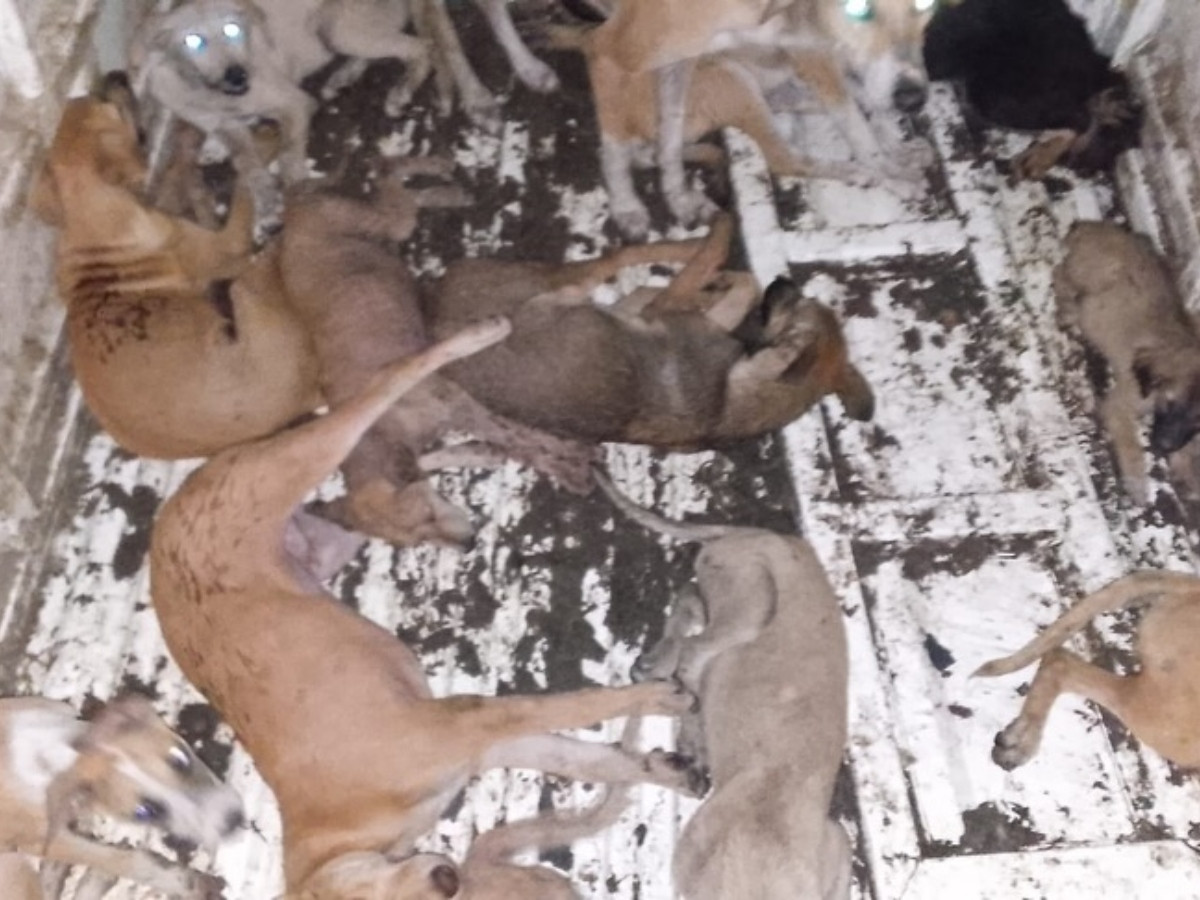
Behind the statistics lie scenes that have become disturbingly familiar: poisoned carcasses lifted by waste management authorities, dogs shot in public view, and mother dogs killed alongside their puppies. These acts are routinely justified in the name of public safety or rabies control. Yet they persist not because the law permits them, but because the law is being ignored.
At the heart of this issue lies a fundamental constitutional question: whose lives does the Constitution protect?
Pakistan’s right to life jurisprudence has evolved beyond mere physical existence for a long time. Through judicial interpretation, Article 9 has come to encompass dignity, environmental integrity, public health, and quality of life. Yet when it comes to stray animals, this expansive constitutional vision abruptly collapses, treated as though it were optional.
This contradiction was confronted directly by the Islamabad High Court in Islamabad Wildlife Management Board v. Metropolitan Corporation Islamabad (PLD 2021 Islamabad 6), where the Court held that life is sacred and not confined to human beings alone. Recognising animals as sentient beings with intrinsic worth, the Court linked animal welfare directly to Article 9, holding that the human right to life is inseparable from the protection of animals, plants, and the environment.
The Court further clarified that cruelty under the Prevention of Cruelty to Animals Act, 1890, is not limited to overt acts of violence. It includes any act or condition that causes unnecessary pain, suffering, or deprivation, whether through neglect, confinement, or indiscriminate killing. Animal welfare, the Court emphasised, is not a matter of administrative discretion; it is a constitutional obligation of the State.
The Constitution is clear. The courts have repeatedly shown the way. The question now is whether the executive will comply, because when court orders are ignored, and cruelty is allowed to persist, it is not only animals who suffer. It is the rule of law itself that is left wounded on the street.
Punjab, notably, is not without a legal framework to address stray dog populations. The Animal Birth Control Policy, 2021, was formulated precisely to move away from cruel and ineffective culling practices. The Animal Birth Control Policy, 2021, was formulated precisely to move away from cruel and ineffective culling practices. It acknowledges that stray dogs may pose public health concerns, while affirming that population control must be humane, scientific, and legally regulated.
This framework was tested in Anila Umair v. Federation of Punjab (W.P. 3787/2024), where the Lahore High Court was asked whether authorities could carry out blanket culling operations without distinguishing between harmless and aggressive dogs. The Court’s answer was unequivocal: only incurably ill or mortally wounded dogs, diagnosed by a qualified veterinarian, may be euthanised and even then, strictly in accordance with humane procedures prescribed under the Policy.
The Court highlighted that once a policy governing stray dog control is in place, authorities are bound to implement it in its true letter and spirit. Any deviation, the Court held, gives rise to a fresh cause of action.
Despite this clarity, local governments continued business as usual.
The consequences of this disregard were laid bare in Eiraj Hassan & Others v. Government of Punjab (W.P. 17741/2025), where the Lahore High Court found that local authorities were still engaging in mass killing of dogs, including healthy animals, often without veterinary supervision and in direct violation of the Animal Birth Control Policy. The Court categorically held that stray dogs cannot be culled arbitrarily, including those merely suspected of rabies; that euthanasia may only be performed by a qualified veterinarian appointed by the competent authority; and that healthy dogs must be sterilised and vaccinated, not killed.
Pursuant to this judgment, the Government of Punjab issued binding directives on 22 April, mandating strict compliance across the province. These directives are legally enforceable.
Yet by January 2026, the Rawalpindi Bench was compelled to issue a stay order in WP 9/26 after reports emerged of dogs being targeted by municipal authorities. The Court made it clear that any ongoing culling in Rawalpindi would amount to contempt of court.
At this stage, the issue is no longer ambiguous in law. It is institutional non-compliance.
The continued reliance on mass culling is often defended as a necessary response to rabies. This argument does not withstand scrutiny. Globally, three approaches are used to manage stray dog populations: mass culling, sheltering and adoption, and Catch–Neuter–Vaccinate–Return (CNVR). Pakistan has historically relied on culling despite overwhelming evidence that it does not work. Studies from Albania, Armenia, Moldova, and Ukraine demonstrate that culling fails to control dog populations or reduce rabies transmission, instead creating a “vacuum effect” where killed dogs are rapidly replaced.
Culling also produces serious environmental and public health consequences. Poisoning contaminates ecosystems, harms wildlife, and forces children to grow up watching suffering they cannot understand. But beyond toxins in the soil and water, we must also ask: what are we teaching our children when dogs are publicly shot and left to bleed to death in front of them? These scenes not only kill animals, but they also normalise violence and leave lasting trauma.
By contrast, the CNVR approach endorsed by the World Health Organisation and the World Organisation for Animal Health is recognised as the most humane and effective strategy for stray dog management. Countries with comparable economic and social conditions have successfully adopted it. Turkey’s “Never Kill Policy,” Bangladesh’s vaccination-led rabies control
programme, and CNVR initiatives in Indonesia and Sri Lanka demonstrate that humane solutions are not aspirational; they are achievable.
Punjab already has this policy. What it lacks is the will to implement it.
The continued killing of stray dogs in Punjab is not merely an animal welfare issue. It is a constitutional failure, a public health risk, and a direct challenge to judicial authority. A State that normalises cruelty, disregards court orders, and treats life as expendable undermines its own constitutional foundations.
The Constitution is clear. The courts have repeatedly shown the way.
The question now is whether the executive will comply, because when court orders are ignored, and cruelty is allowed to persist, it is not only animals who suffer. It is the rule of law itself that is left wounded on the street.
Comments
No comments yet. Be the first to join the discussion!