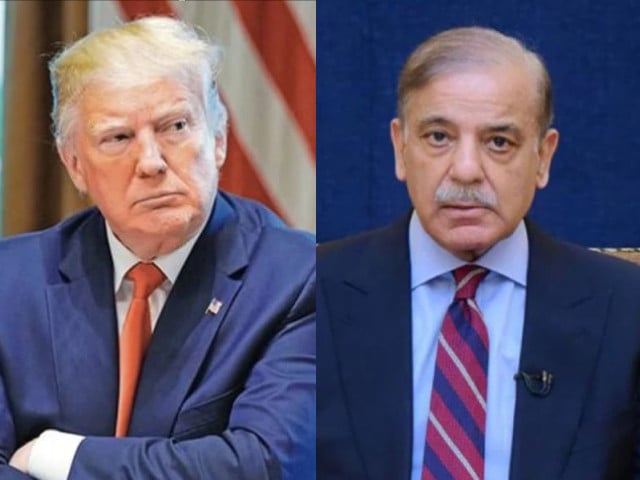
‘Make-or-break’ moment amid global spotlight as PM hails US–Iran talks historic
Prime Minister Shehbaz Sharif calls the upcoming US–Iran negotiations in Islamabad a “make-or-break” moment, urging prayers for lasting peace and crediting Pakistan’s mediation for a fragile ceasefire.

Premier Shehbaz urges nation to pray for success of Islamabad negotiations amid intensified efforts for lasting peace
Says dialogue has replaced war as Gulf tensions ease, crediting Pakistan’s mediation in securing fragile ceasefire
Lauds FM Dar, Field Marshal Asim Munir for ‘historic’ diplomatic role in dousing flames of war and bringing the warring parties to dialogue
Pakistan announces Visa-on-arrival facility for foreign delegates, journalists attending Islamabad Talks
Vance signals optimism ahead of high-stakes negotiations as Iranian delegation arrives
ISLAMABAD: Prime Minister Shehbaz Sharif on Friday described the upcoming US–Iran negotiations scheduled in Islamabad on Saturday (tomorrow) as a “make-or-break” moment, calling it a “proud occasion not only for Pakistan but for the entire Muslim world,” and urging the nation to pray for their success amid intensified efforts to transform a fragile ceasefire into lasting peace.
In a televised address to the nation late Friday night, the prime minister said he was speaking at a “historic moment” when dialogue had replaced the “language of war in the Gulf region.”
"آج میں آپ سے ایک تاریخ ساز موقع پر بات کر رہا ہوں، ایسے موقع پر جب اللہ تعالیٰ کے فضل و کرم سے یہاں جنگ نہیں بلکہ امن کی باتیں ہو رہی ہیں۔ وہ فریقین جو کل تک جنگ میں آمنے سامنے تھے اور خطہ تباہی کا منظر پیش کر رہا تھا، آج الحمدللہ دونوں فریقین بات چیت کے ذریعے معاملات طے کرنے پر… pic.twitter.com/jTsSYwwH4x
— Government of Pakistan (@GovtofPakistan) April 10, 2026
“This stage is equivalent to a make-or-break situation, and the entire nation should pray for the success of the negotiations,” he said, adding that parties which had been engaged in conflict had now agreed to resolve their disputes through dialogue.
The remarks came as Islamabad prepares to host high-stakes talks between Washington and Tehran following a conflict that began on Feb 28, when joint US–Israeli strikes triggered hostilities that spread across the Gulf region, disrupting global energy markets and key shipping routes, including the Strait of Hormuz.
براہِ راست: وزیرِ اعظم محمد شہباز شریف کا قوم سے خطاب https://t.co/dVNyZVaQ8O
— Government of Pakistan (@GovtofPakistan) April 10, 2026
Pakistan has positioned itself as a mediator, facilitating engagement between both sides after advocating a two-week ceasefire earlier this week.
PM Shehbaz said both sides had agreed to resolve their issues through dialogue and thanked the leadership of the United States and Iran for accepting Pakistan’s invitation to hold talks in Islamabad.
He reiterated his gratitude to Iran and the US for agreeing to the two-week ceasefire proposal and for participating in talks aimed at restoring peace.
He said Pakistan hosting these negotiations was “not just a proud moment for Pakistan but for the entire Muslim world.”
The prime minister added that Pakistan’s leadership had successfully persuaded both sides to agree to a temporary ceasefire and come to the negotiating table in Islamabad.
“For this, I laud Deputy Prime Minister and Foreign Minister Ishaq Dar for working day and night with sincerity. I particularly commend Field Marshal Asim Munir and his team, who played a key and historic role in dousing the flames of war and bringing the warring parties to dialogue,” he said, adding that history would remember their services in “golden words.”
He noted that while the temporary ceasefire was a major breakthrough, the more difficult phase would be achieving a long-term ceasefire and resolving issues through sustained diplomacy—calling it a true “make-or-break” stage.
Highlighting the economic impact of the Middle East conflict, the prime minister spoke of a “devastating storm of inflation” and recalled his earlier commitment to pass on the benefit of falling global oil prices to the public.
He said international oil prices had recently declined and noted that although he was advised not to pass on the full relief immediately to help recover Rs129 billion spent by the government to cushion price shocks, he rejected the proposal.
“I immediately rejected that recommendation,” he said, adding that it was his moral and political responsibility to transfer the benefit to the people.
He said the government’s fiscal discipline and resource management had also contributed to reducing petrol and diesel prices.
“Because wheat harvesting has begun, it is important to reduce costs for farmers; otherwise, their hard work will be wasted and food prices will rise,” he said, before announcing a reduction in petrol and diesel prices.
Pakistan offers visa-on-arrival for delegates attending Islamabad talks
In a related development, Deputy Prime Minister and Foreign Minister Ishaq Dar on Friday announced that Pakistan will provide visa-on-arrival facilities to delegates attending the US–Iran talks in Islamabad.
He said Pakistan welcomes all delegates, including journalists from participating nations, travelling for the “Islamabad Talks 2026,” and requested airlines to allow boarding without prior visas.
He added that immigration authorities in Pakistan would issue visas on arrival.
Foreign Office spokesperson Ambassador Tahir Andrabi also confirmed that Pakistan has extended visa-free travel facilitation for delegates and journalists from participating countries—namely Iran and the United States—for the duration of the talks, clarifying that the arrangement does not apply to third-country nationals.
Iranian delegation arrives in Islamabad for ceasefire talks
An Iranian delegation arrived in Islamabad late Thursday for talks aimed at resolving the conflict with the US, according to officials familiar with the matter.
The delegation is led by Foreign Minister Abbas Araghchi and Parliament Speaker Mohammad-Bagher Ghalibaf.
Pakistan is set to host talks between US and Iranian delegations on Saturday after a two-week ceasefire was secured earlier this week. Vice President JD Vance is expected to lead the US delegation.
US and Iranian technical teams have already arrived in Islamabad, sources said.
Pakistan, along with Türkiye, China, Saudi Arabia and Egypt, helped secure the two-week ceasefire between Washington and Tehran following weeks of escalation after US and Israeli strikes on Iran and subsequent retaliation.
Under the ceasefire arrangement, both sides agreed to meet in Islamabad to work towards a more durable peace framework.
Vance hopeful of positive outcome as he departs for Islamabad talks
US Vice President JD Vance said the United States was looking forward to negotiations with Iran and expressed optimism ahead of his departure for Pakistan.
.@VP departs for Islamabad, Pakistan: "As @POTUS said, if the Iranians are willing to negotiate in good faith, we're certainly willing to extend the open hand. If they're going to try to play us, then they're going to find that the negotiating team is not that receptive." pic.twitter.com/9nNDGsMmId
— Rapid Response 47 (@RapidResponse47) April 10, 2026
“We’re looking forward to the negotiation. I think it’s going to be positive,” he said, adding that the US approach would depend on whether Iran engages in good faith.
“If they’re going to try to play us, they’ll find the negotiating team is not very receptive,” he added.
Pakistan is set to host one of the most consequential diplomatic engagements in recent history, as senior US and Iranian leaders arrive in Islamabad for high-stakes talks following weeks of conflict that left thousands dead and strained the global economy.
The American delegation will include Vice President JD Vance, along with senior envoys Steve Witkoff and Jared Kushner, while the Iranian delegation will be led by Parliament Speaker Mohammad Bagher Ghalibaf and Foreign Minister Abbas Araghchi.
Islamabad has been placed under tight security arrangements, with key routes sealed, enhanced surveillance, and an undisclosed venue selected for the negotiations.
Officials said Pakistan’s role as mediator has intensified following weeks of escalation in the Gulf region, with diplomatic efforts involving multiple regional partners.
Pakistan had earlier hosted a quadrilateral meeting with Türkiye, Saudi Arabia and Egypt, while also jointly advancing a five-point peace initiative with China aimed at stabilising the broader Middle East region.
Hopes pinned on talks amid fragile ceasefire
A fragile ceasefire remains in place between the US and Iran, agreed after weeks of conflict. The arrangement involves a temporary pause in hostilities aimed at preventing further escalation and reopening strategic maritime routes, including the Strait of Hormuz, while core disputes remain unresolved.
Both sides have described the ceasefire as a success, despite continuing disagreements over a long-term settlement.
A 10-point proposal from Iran—described by the US as a “workable basis” for talks—reportedly includes provisions on non-aggression, maritime security in the Strait of Hormuz, sanctions relief, and broader cessation of hostilities.
This framework is expected to guide negotiations in Islamabad, where Pakistan is hosting efforts to convert the temporary ceasefire into a lasting peace arrangement.
1 Comment
No comments yet. Be the first to join the discussion!