Xi tells Taiwan opposition leader Chinese and Taiwanese will unite
Chinese President Xi Jinping told visiting KMT leader Cheng Li-wun in Beijing that Chinese and Taiwanese people would unite. The meeting drew criticism from Taiwan’s ruling party amid rising cross-strait tensions.

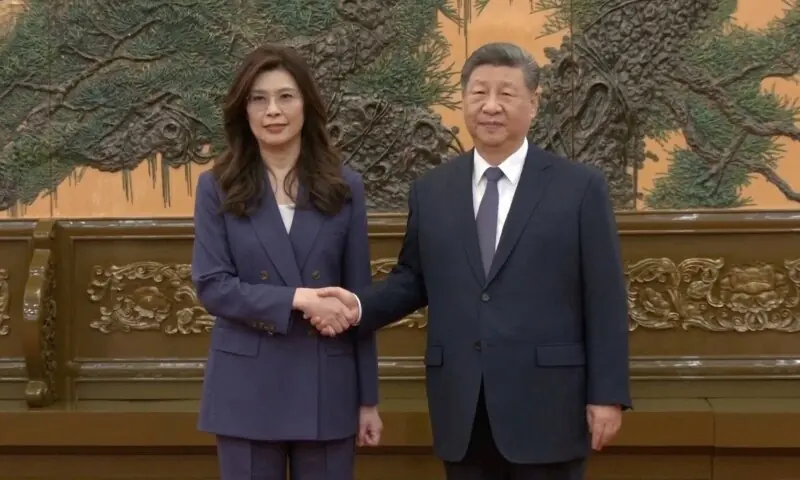
BEIJING: Chinese President Xi Jinping met Kuomintang chairwoman Cheng Li-wun in Beijing on Friday and told the visiting Taiwanese opposition delegation that he had “full confidence” Chinese and Taiwanese people would eventually be united.
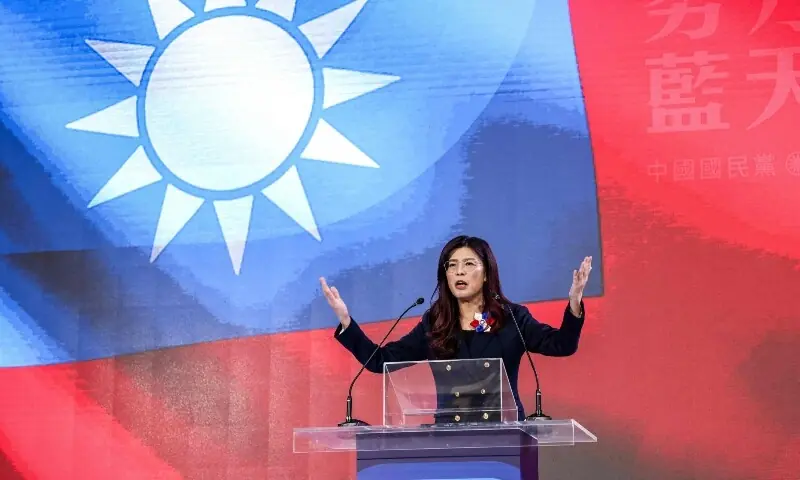
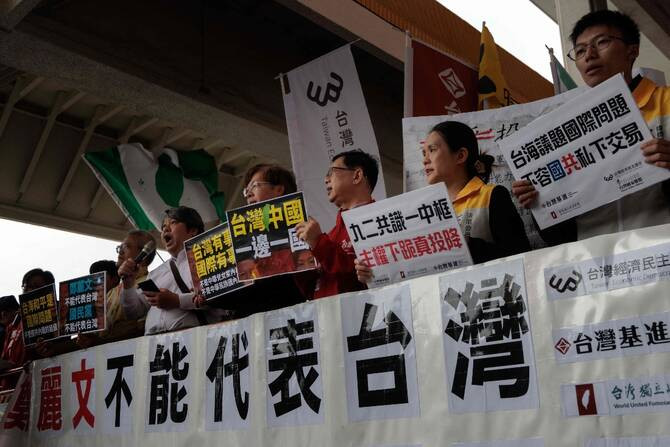
Cheng is the first leader of Taiwan’s Kuomintang (KMT) to visit China in a decade. Her trip has stirred debate in Taiwan, where critics have accused her of being overly close to Beijing.
During the meeting, Xi said that “the general trend of compatriots on both sides of the Strait getting closer, edging nearer and becoming united will not change”. He added: “This is an inevitable part of history. We have full confidence in this,” according to remarks carried by Taiwanese media.
Xi also said Beijing was prepared to expand dialogue with groups in Taiwan, including the KMT, on the “common political foundation of… opposing Taiwan independence”. The KMT favours closer ties with China, which claims Taiwan as part of its territory and has threatened to use force to take control of the island.
After the talks, Cheng repeated a similar position at a press conference, saying younger generations needed to understand “what challenges we face at this stage” and “how, by adhering to the 1992 Consensus and opposing Taiwan independence, we can avoid war”. The 1992 Consensus holds that there is “one China”, while leaving unspecified which side is its legitimate representative.
Earlier, Cheng told Xi that the Taiwan Strait would “no longer be a focal point of potential conflict” and that “both sides should transcend political confrontation”. She also said Xi had responded “positively” to her suggestion that both sides work towards Taiwan’s participation in international organisations including Interpol and regional trade arrangements.
Reaction from Taiwan’s ruling party
Taiwan’s ruling Democratic Progressive Party criticised Beijing’s approach. Party spokesman Lee Kuen-cheng said China should respect Taiwan’s “commitment to freedom and democracy, rather than interfering in the choices of the Taiwanese people through division and inducement”.
“Differences between the two sides must be handled through peaceful and equal means, rather than by using suppression and intimidation,” spokesman Lee Kuen-cheng said.
China cut off high-level contact with Taiwan in 2016 after Tsai Ing-wen of the DPP won the presidency and rejected Beijing’s claim that the self-ruled island is part of Chinese territory.
Relations across the Taiwan Strait have deteriorated further since the election of Tsai’s successor, Lai Ching-te, whom Beijing regards as a separatist. In a Facebook post on Friday, Lai said that “China’s… military threats in and around the Taiwan Strait and the island chain have severely undermined regional peace and stability”.
Beijing has increased military pressure on Taiwan in recent years, with near-daily deployments of fighter aircraft and warships around the island as well as regular large-scale drills.
Defence debate and wider context
Cheng’s visit comes one month before US President Donald Trump is scheduled to travel to Beijing for a summit with Xi. The United States has been pressing Taiwanese opposition lawmakers to support a defence procurement proposal, including purchases of US weapons, aimed at deterring a possible Chinese attack.
Taiwanese lawmakers have been sharply divided over the government’s plan to spend $39 billion on defence. The proposal has been held up for months in parliament, where opposition parties including the KMT hold sway.
Cheng has criticised the government’s plan, saying “Taiwan isn’t an ATM”. She has instead supported a KMT proposal to allocate $12 billion for US weapons, with the possibility of additional purchases later.
While KMT members frequently travel to China for exchanges with officials, the last party leader to make such a visit was Hung Hsiu-chu in 2016.
Cheng arrived in Shanghai on Tuesday evening and said soon after landing that “the two sides of the Taiwan Strait are not doomed to war, as the international community has feared”. She also visited the eastern city of Nanjing, where she went to the mausoleum of Sun Yat-sen, a revolutionary figure honoured in both Beijing and Taipei.
Comments
No comments yet. Be the first to join the discussion!