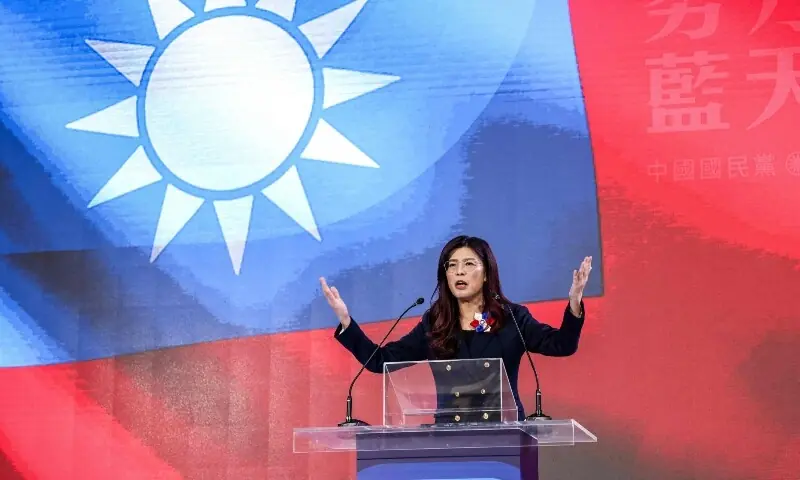
Taiwan opposition leader begins rare China trip focused on cross-strait peace
Taiwan opposition leader Cheng Li-wun has arrived in China for a rare six-day visit she says is aimed at preserving cross-strait peace. The trip comes amid disputes over Taiwan’s defence spending and concerns over US arms sales.

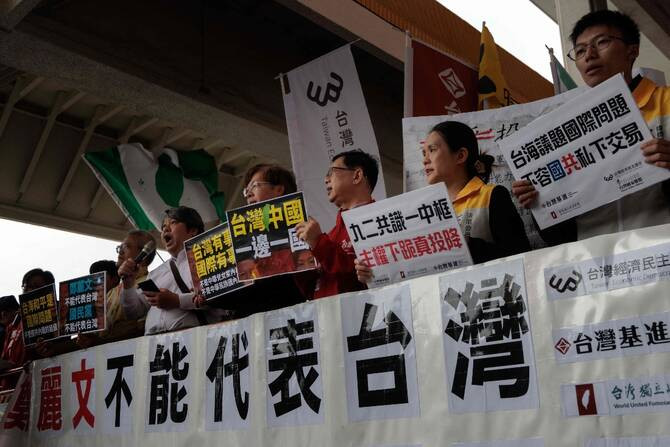
BEIJING: Taiwan’s main opposition leader Cheng Li-wun arrived in China on Tuesday for an uncommon visit that she says is intended to promote peace across the Taiwan Strait, as Taiwan’s government has warned Beijing may use the trip to try to hinder the island’s arms purchases from the United States.
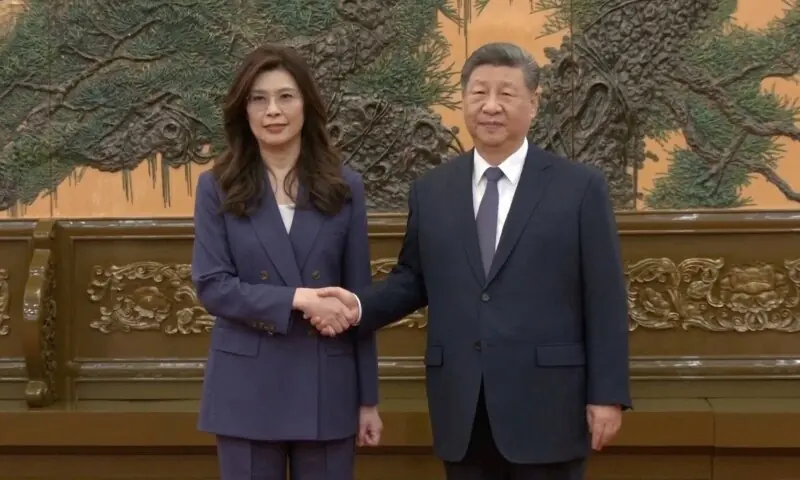
Cheng, chairwoman of the Kuomintang (KMT), is the first leader of the party to visit China in 10 years. She has said she wants to meet Chinese President Xi Jinping before travelling to the United States, Taiwan’s principal security partner.
The KMT favours stronger ties with China, which considers Taiwan part of its territory and has repeatedly said it could use force to take control of the island. Cheng’s rise to the KMT leadership in October prompted a congratulatory message from Xi, but critics, including some within her own party, have accused her of being overly close to Beijing.
China’s state news agency Xinhua reported that Cheng landed at an airport in Shanghai early on Tuesday afternoon. Footage broadcast by Taiwanese media showed her receiving flowers after stepping off a Shanghai Airlines aircraft before leaving in a convoy that appeared to avoid the main airport terminal.
Before leaving for Shanghai, Cheng told reporters in Taipei that Taiwan “must do everything in our power to prevent war from breaking out.” Speaking at a news conference at KMT headquarters, she said, “To preserve peace is to preserve Taiwan.” She added, “Goodwill must be built up, and mutual trust needs to be expanded, step by step, by both sides.”
Dispute over defence spending
Ahead of the visit, Taiwan’s top body responsible for China policy said Beijing would seek to “cut off Taiwan’s military purchases from the US and cooperation with other countries,” an allegation the KMT has rejected.
Responding last week, Cheng said, “This trip is entirely for cross-strait peace and stability, so it has nothing to do with arms procurement or other issues.”
The visit comes as Taiwan’s lawmakers remain divided over the government’s proposal to allocate NT$1.25 trillion ($39 billion) for defence, a plan that has been delayed for months in the opposition-controlled parliament.
Cheng is scheduled to spend six days in China, with stops in Shanghai, Nanjing and Beijing, where she hopes to hold talks with Xi. Although KMT members frequently travel to China for exchanges with officials, the last party leader to do so was Hung Hsiu-chu in 2016.
Wider regional backdrop
China ended high-level contact with Taiwan in 2016 after then-president Tsai Ing-wen of the Democratic Progressive Party won office and rejected Beijing’s claim over the island.
Relations across the strait have deteriorated since then, with China increasing military pressure through near-daily deployments of fighter aircraft and naval vessels near Taiwan, as well as regular large-scale military exercises.
Cheng’s visit also comes one month before US President Donald Trump is due to travel to Beijing for a summit with Xi. The United States has been pressing Taiwanese opposition lawmakers to support defence procurement plans, including purchases of US weapons, as a deterrent against a possible Chinese attack.
Cheng has criticised the government’s defence proposal, saying “Taiwan isn’t an ATM”, while backing a KMT plan to set aside NT$380 billion for US weapons and leave room for additional purchases later.
At the same time, she is facing growing disagreement within the KMT over how to respond to China’s military threat, with more moderate senior party figures advocating a significantly larger defence budget.
Although Washington has long maintained strategic ambiguity over whether it would directly defend Taiwan, it remains Taipei’s largest arms supplier, a position that has long angered Beijing. In December, the United States approved $11 billion in arms sales to Taiwan. Additional deals are expected, though questions have emerged over whether they will move forward after Xi warned Trump against sending weapons to Taiwan.
Cheng has said she supports maintaining strong defences for Taiwan, while also arguing that the island does not need to choose between Beijing and Washington.
Comments
No comments yet. Be the first to join the discussion!