April 9, 2026
Power consumers to face Rs10.57bn fuel cost burden in April bills
Nepra has approved a Rs1.42 per unit fuel cost adjustment for electricity consumers, adding about Rs10.57bn to April 2026 bills. The regulator said the net impact is still 21 paise per unit lower than March because the new charge replaces a higher previous FCA.

April 9, 2026
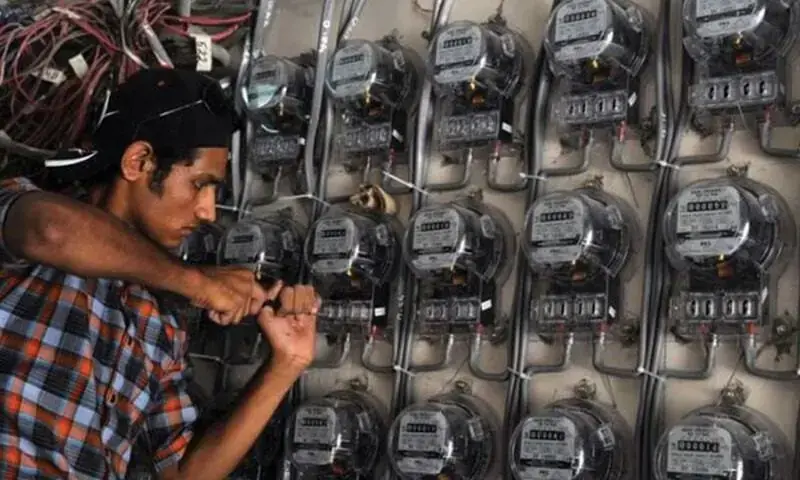
ISLAMABAD: The National Electric Power Regulatory Authority (Nepra) has notified an additional burden of about Rs10.57 billion on electricity consumers after approving a fuel cost adjustment (FCA) increase of Rs1.42 per unit, which will be reflected in April 2026 bills.
According to Nepra’s notification, the positive FCA for February 2026 has been set at Rs1.4235 per unit. The adjustment will apply to all consumer categories of K-Electric and ex-Wapda distribution companies (XWDISCOs), with the exception of lifeline consumers, electric vehicle charging stations (EVCS) and prepaid consumers across all categories.
The regulator said the adjustment would also cover consumers under the incremental consumption package, and directed power distribution companies as well as K-Electric to incorporate the FCA in April 2026 billing.
Although the latest decision adds to consumer bills, the net average impact is lower than the previous month because it replaces a higher FCA of Rs1.63 per unit charged in March. As a result, the overall effect works out to a decrease of 21 paise per unit compared to the earlier charge.
Nepra said additional electricity supplied from the national grid to K-Electric had a positive effect for consumers nationwide. "In the absence of such supply, the cost of electricity for consumers would have increased by Rs1.05 per unit on account of FCA and by Rs3.03 per unit due to quarterly capacity purchase price, resulting in an overall increase of Rs4.08 per unit," according to the notification.
Industry concerns over tariff burden
The regulator also referred to concerns raised by the Federation of Pakistan Chambers of Commerce and Industry (FPCCI). Its representative, Rehan Javed, said the industrial sector had absorbed a cumulative burden of Rs564.7bn over the last three years because of cross-subsidies and the Power Holding Limited surcharge.
He warned that any further increase would be unsustainable and harmful for industrial viability. The FPCCI called for FCA calculations to be made transparent, shared in a timely manner and matched with actual fuel procurement data.
The business body, along with other consumers, also demanded that a reduction of Rs0.62 per unit in the base tariff, effective from Jan 1, 2026, should be passed on to consumers without delay.
Power Division explains tariff mechanism
The Ministry of Energy’s Power Division said tariffs were being determined under the law to reflect prudent and efficient electricity supply costs. It said tariff projections were based on variables including fuel prices, exchange rates, demand patterns and the generation mix. "However, as these variables, particularly international fuel prices and supply disruptions, are largely beyond the control of the regulator, Discos and the government, accordingly, any resultant variations are duly passed through to consumers via the FCA mechanism, in accordance with the prescribed regulatory framework, to ensure alignment of tariffs with actual costs," the division said.
It further said that because industrial tariffs had historically remained high, the government had taken steps to improve industrial competitiveness, including a recent decision to eliminate cross-subsidy for industrial consumers. According to the Power Division, this resulted in a tariff reduction of Rs4.04 per unit.
The division said industrial tariffs before taxes had declined from Rs49.19 per unit, or 18 US cents, in March 2024 to Rs34.75 per unit, or 12 cents, in March 2026, showing a reduction of Rs14.44 per unit over a relatively short period.
In addition, Nepra quoted the Power Division as saying that a three-year incremental consumption package had been introduced at a concessional rate of Rs22.98 per unit to encourage higher consumption in the industrial and agricultural sectors, improve grid stability and generate wider economic benefits, including higher industrial output, increased revenues, greater tax collection, improved rural productivity and employment.
Under the existing tariff regime, the FCA is reviewed every month and is generally applicable for one billing cycle. Through this mechanism, changes in fuel costs are automatically passed on to consumers, while quarterly adjustments linked to power purchase price, capacity charges and system costs are incorporated into the base tariff by the federal government.
0 Comments
No comments yet. Be the first to join the discussion!