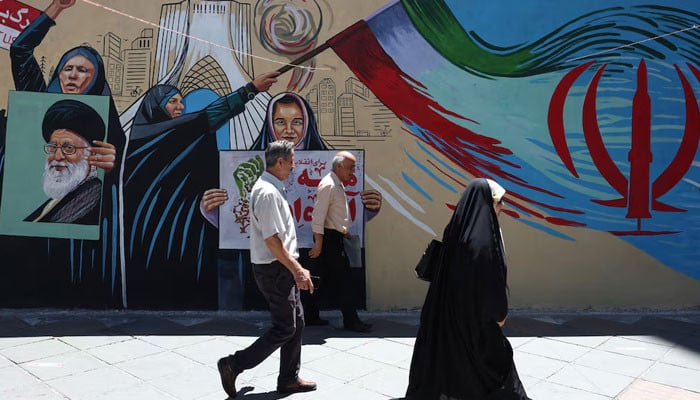
Iran rejects US proposal for ceasefire, demands permanent end to war
Iran rejects the US ceasefire proposal, saying it will only accept a permanent end to the war. Trump sets a deadline to reopen the Strait of Hormuz amid escalating US-Israeli strikes.

-- Ceasefire proposal faces challenges amid rising tensions
-- US President Trump sets today's deadline, threatens strikes on Iranian infrastructure
-- Trump details rescue of downed airmen, dismisses war crime concerns
-- US-Israeli attacks hit Iranian energy and intelligence facilities
TEHRAN/WASHINGTON: Iran has formally conveyed its response to the United States’ proposal for ending the ongoing conflict, rejecting a temporary ceasefire and emphasizing the necessity of a permanent resolution, the official IRNA news agency reported on Monday.
The move comes as US President Donald Trump set a hard deadline for Iran to reach a deal by Tuesday (today) to reopen the strategically vital Strait of Hormuz.
Tehran’s response consists of 10 clauses, including an end to regional conflicts, safe passage protocols through the Strait, lifting of sanctions, and post-war reconstruction. Iranian officials stressed that earlier US demands, such as the 15-point plan, were deemed excessive and rejected.
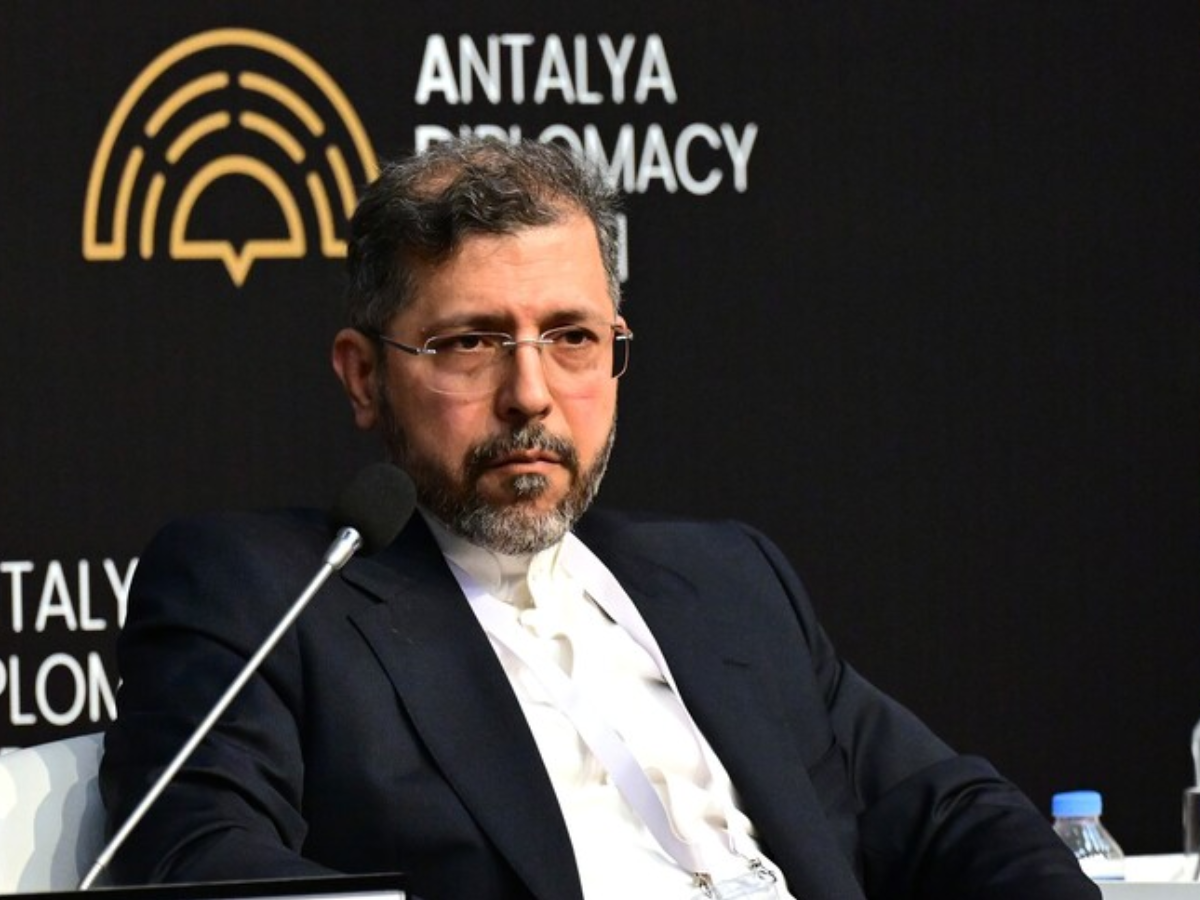
Foreign Ministry Spokesperson Esmaeil Baghaei stated that Iran’s clear articulation of its legitimate demands reflects confidence in defending its positions, not a willingness to compromise.
Iran also made clear that it would not reopen the Strait as part of a temporary ceasefire, nor would it accept externally imposed deadlines or pressure.
The peace plan proposed an immediate ceasefire followed by broader peace talks to be concluded within 15–20 days.
According to sources, Chief of Defence Forces and Army Chief Asim Munir maintained overnight contacts with US Vice President JD Vance, special envoy Steve Witkoff, and Iranian Foreign Minister Abbas Araghchi to coordinate the proposal.
Meanwhile, Donald Trump has repeatedly threatened Iran with further strikes on energy and transport infrastructure if the Strait is not reopened by his set deadline. Brent crude futures fell slightly amid market speculation over the ceasefire prospects.
The conflict has seen intensified US-Israeli attacks on Iranian energy and infrastructure. Iranian state media reported the death of Revolutionary Guards’ intelligence chief Majid Khademi, claimed by Israel, alongside damage to petrochemical complexes and data centres critical for AI and other services. Israeli Defence Minister Israel Katz warned of further attacks on Iran’s infrastructure and leadership.
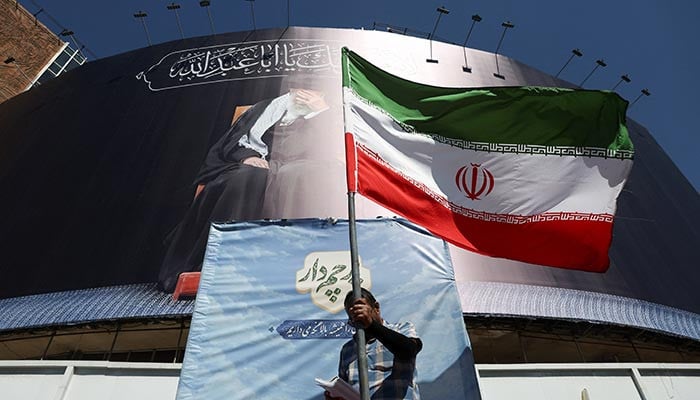
Iranian Supreme Leader Ayatollah Mojtaba Khamenei condemned the US and Israeli strikes on bridges, power plants, schools, and other civilian sites, describing them as crimes against humanity and a reckless attempt to push Iran “back to the Stone Age.” Analysts note that while such attacks could constitute war crimes under international law, the International Criminal Court lacks jurisdiction as the countries involved are non-members.
The escalating violence has already caused widespread damage to Iran’s energy sector, with targeted attacks on the South Pars gas field and several petrochemical complexes, heightening fears of a broader regional destabilization. International observers continue to call for urgent de-escalation, but both Tehran and Washington remain firm on their strategic positions.
US could bring Iran down tomorrow night: Trump
US President Donald Trump, talking about Operation Epic Fury, has said that Iran “could be taken down in one night”, hinting that this might happen tomorrow night.
Trump while delivering an address about operations to rescue US Air Force personnel who ejected from a fighter jet over Iran last week, said that the rescue mission for rescue of two US airmen was launched when military planes were unable to take off with the rescued airman and other personnel.
“Lighter, faster aircraft” were deployed as a contingency plan and the planes were destroyed, he added.
“We blew them up, to smithereens, because we had equipment on the planes that frankly we’d like to take, but I dont think it was worthwhile spending another four hours there taking it off,” he adds. “We have the best equipment anywhere in the world, we didn’t want anybody examining our anti-aircraft and other equipment.”
Trump has said: “I ordered the US Armed Forces to do whatever was necessary to bring our brave warriors back home. A risky decision, because we could have ended up with 100 dead, as opposed to one or two.”
“It’s a hard decision to make, but in the United States military, we leave no American behind. We don’t do it.”
Detailing the rescue of a downed US airman, US President Donald Trump says that in a “breathtaking display of skill, precision, lethality and force, America’s military descended on the real area, engaged the enemy, rescued the stranded officer, destroyed all threats and exited Iranian territory while taking no casualties of any kind”.
He adds that the F-15 weapons system officer evaded capture for almost 48 hours.
US President Donald Trump says that in the second rescue mission to extract the downed weapons system officer, Washington deployed 155 aircraft, including four bombers, 64 fighters, 48 refuelling tankers and 13 rescue aircraft, among others.
“A lot of it was subterfuge,” Trump says. “We wanted to have them (Iranian forces) think he (the downed airman) was in a different location, because they had a vast military force out there … so we wanted them to look in different areas.”
US President Donald Trump says that despite being injured, the Air Force weapons system officer stranded after being shot down in Iran “followed his training and climbed into the treacherous mountain terrain and started climbing towards a higher altitude … to evade capture”.
“You want to be as far away from the site of the shootdown … because they all head right to that site,” he says. “So you want to be as far away as you can.”
US President Donald Trump has brushed off concerns that hitting Iran’s power facilities, as he has threatened after a deadline expires this week, would be a war crime, AFP reports.
“I’m not worried about it,” Trump has told reporters at an Easter egg roll at the White House when asked what he would say to those who allege that striking power plants would breach the laws of war.
“You know the war crime? The war crime is allowing Iran to have a nuclear weapon,” the president adds.
Comments
No comments yet. Be the first to join the discussion!