Planning Minister urges early market closures, fuel conservation to offset global oil crisis
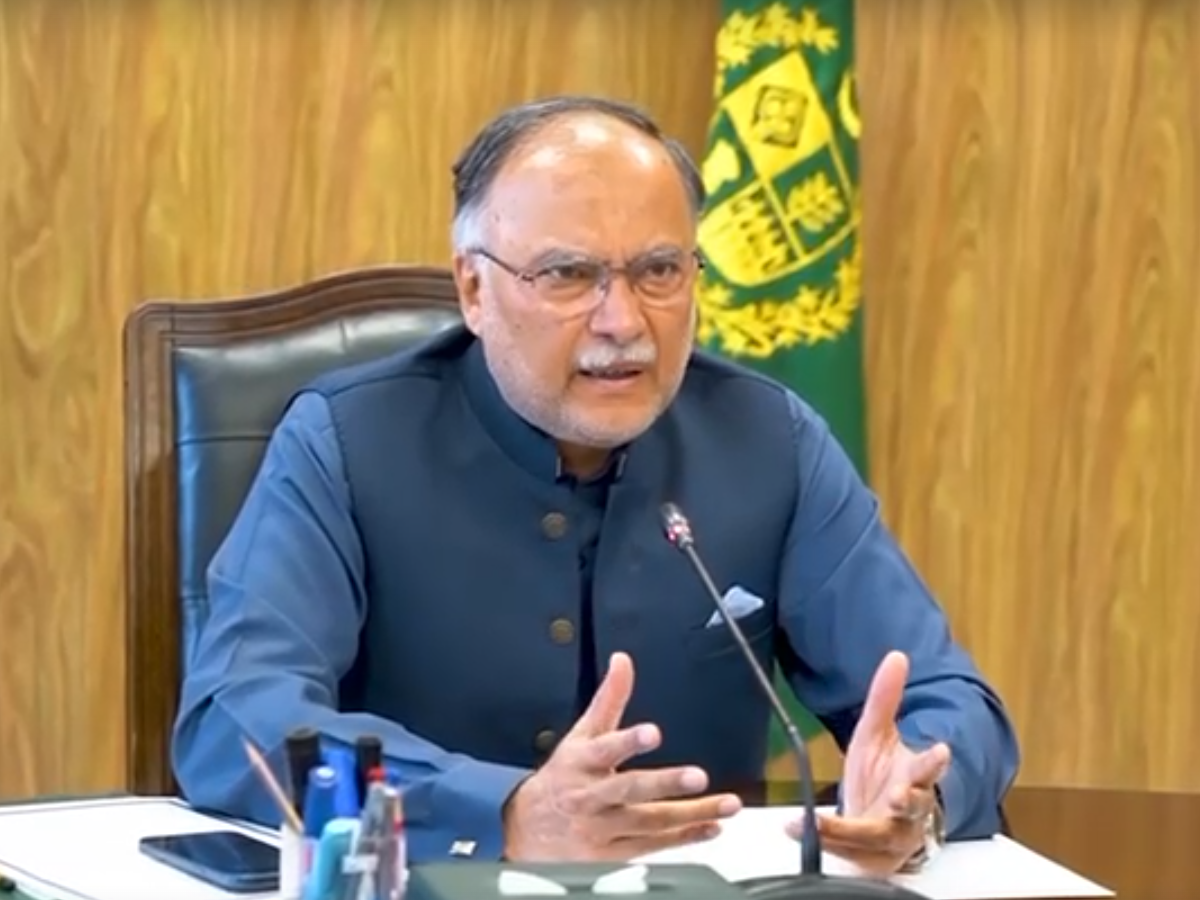
Planning Minister Ahsan Iqbal calls for revising market operating hours to reduce electricity consumption and fuel imports amid the global oil crisis, urging provinces and traders to submit action plans within a week.

ISLAMABAD: Planning Minister Ahsan Iqbal on Saturday called for a revision of market operating hours to reduce electricity consumption and save fuel amid soaring import costs caused by the global oil crisis. Speaking at a press conference in Lahore, Iqbal emphasised that energy conservation was critical to easing the economic strain brought on by the ongoing Middle East conflict.
Pointing out that much of Pakistan’s electricity is generated from imported fuel, the minister stressed the need to “bring efficiency in the consumption of petrol and diesel.” He observed that markets currently open after 12pm and remain active until 2am, consuming electricity derived from costly furnace oil. “If we use electricity at night now, this will be generated from furnace oil, which costs the public Rs60-80 per unit,” he said, questioning whether such “irresponsible conduct” was appropriate for a country facing a severe crisis.
Iqbal described crises as “moments of behavioural change” and urged provinces to consult traders and submit action plans within a week to implement early market closures. He requested traders to cooperate “with empathy,” asserting that the public would eventually adjust to the revised timings.
He highlighted international practices, noting that markets in developed economies such as Japan, the United States, Malaysia, Indonesia, and Turkiye typically close by 6pm or 8pm. “If you go into neighbourhoods after 9pm or 10pm, there is complete calm. People have gone to sleep. Early to bed, early to rise,” he said, noting that this principle is also supported by Islamic teachings.
The minister also addressed transportation, saying the government had taken notice of fare hikes and instructed provinces to engage with transporters to prevent profiteering. He encouraged citizens to adopt fuel-saving practices, such as carpooling and minimizing unnecessary electricity usage, to reduce the country’s import bill.
Iqbal called on the nation to face the challenges posed by the war as a united front without politicising them. He urged media outlets to avoid sensational reporting, noting that past criticism of fuel price hikes cannot be compared to the current situation, which is driven by global market dynamics.
Separately, Attaullah Tarar and Musadik Malik defended the government’s response to the crisis. Tarar said the fuel shortage was not a result of government policies, pointing out that the entire region, including India, faced supply constraints. He highlighted that PM Shehbaz Sharif had taken proactive steps, including emergency meetings with national leadership and a Rs129 billion subsidy to ease the burden on citizens.
Malik echoed the call for conservation, urging citizens to limit car usage and turn off lights when not needed, framing it as a “national duty” to mitigate the impact of the ongoing crisis.
The ministers stressed that these measures, along with diplomatic efforts to promote peace in the Middle East, were essential to stabilising Pakistan’s economy during these unprecedented global challenges.
Comments
No comments yet. Be the first to join the discussion!