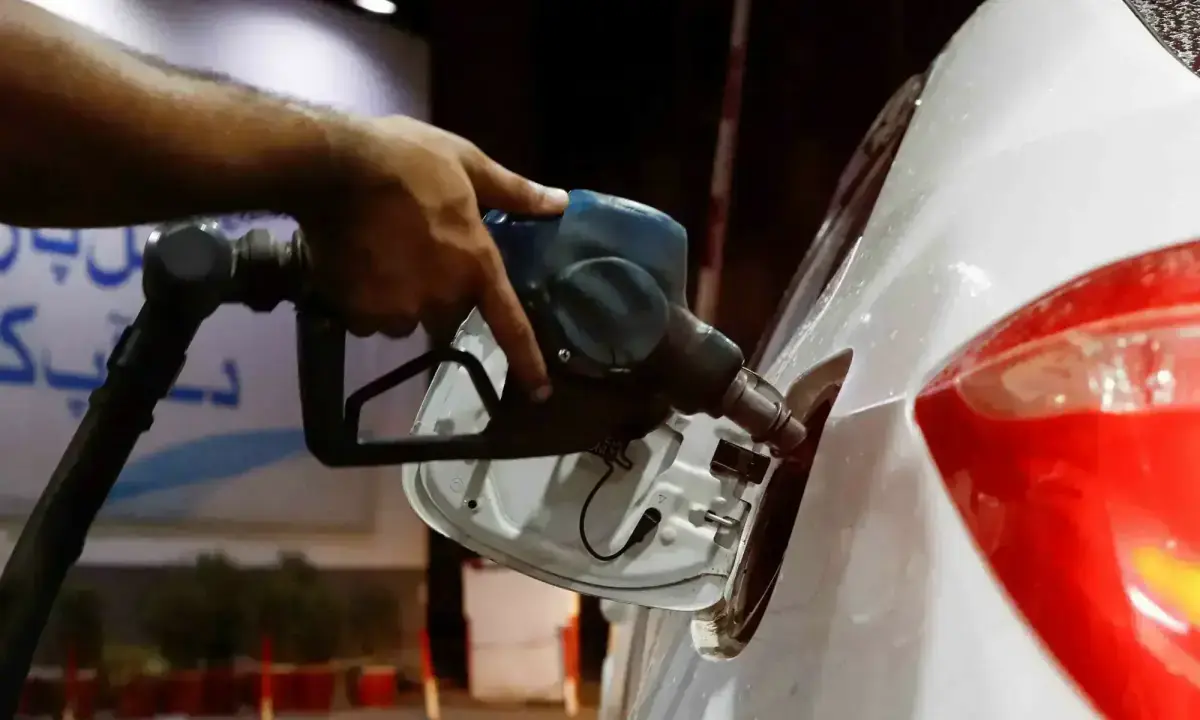
Provinces announce fuel-saving measures amid global energy crisis
In response to the global energy crisis, Khyber Pakhtunkhwa, Punjab, and Balochistan have introduced fuel-saving measures, including reduced allowances and virtual learning proposals. Authorities aim to curb consumption and ensure energy sustainability.

-- KP, Punjab and Balochistan introduce austerity steps to curb fuel consumption
-- Educational institutions face closures and virtual learning proposals
-- Governments slash fuel allowances and promote work-from-home policies
-- Authorities warn of strict action against hoarding as oil crisis deepens
ISLAMABAD: The governments of Khyber Pakhtunkhwa, Punjab, and Balochistan on Monday announced a series of fuel conservation measures, including reductions in fuel allowances for official vehicles and the closure of educational institutions in a bid to tackle the ongoing global fuel crisis.
The steps come amid rising energy concerns following the conflict involving the United States and Israel against Iran, which has disrupted global oil supply routes and triggered sharp increases in petroleum prices.
Punjab government’s measures
Separately, the Pakistan Muslim League-Nawaz (PML-N) said in a social media post that Chief Minister Maryam Nawaz had also approved fuel-saving measures in view of the economic pressures arising from the Middle East conflict.
Under the new policy, provincial ministers will not receive free petrol until the petroleum crisis ends, while the petrol and diesel allowance for official vehicles has been reduced by 50 per cent.
The provincial government has also restricted the use of protocol vehicles for ministers and senior officials, allowing only one additional security vehicle during their movement.
In addition, a work-from-home model has been introduced in government offices, with only essential staff required to attend physically, as part of broader efforts to reduce fuel consumption and ease pressure on national energy supplies.
KP government’s measures
The provincial cabinet of Khyber Pakhtunkhwa approved a “Fuel Conservation and Responsible Governance Initiative” aimed at reducing fuel consumption and promoting fiscal discipline.
According to Special Assistant to the Chief Minister on Information and Public Relations Shafi Jan, the measures will remain in place for two months on the instructions of Chief Minister Sohail Afridi, with a review planned to determine whether the policy needs to be extended.
Under the initiative, the cabinet approved a 25 per cent reduction in fuel allowances for government vehicles, which effectively brings the total reduction to 50 per cent, as a similar 25pc cut had already been implemented during the COVID-19 pandemic.
However, the restrictions will not apply to police, rescue and other law enforcement agencies due to their operational requirements.
The government has also decided to introduce a 50pc work-from-home policy in government departments, while all official meetings will be conducted virtually.
Authorities are also considering keeping educational institutions closed every Friday and encouraging virtual learning to further reduce fuel consumption.
In addition, the provincial cabinet decided to limit the use of VIP protocol vehicles and helicopters, impose a ban on unnecessary events and official dinners, and ensure greater financial discipline in government spending.
Jan said authorities would closely monitor petrol pumps and take strict action against hoarding while ensuring the continued supply of diesel to farmers for wheat harvesting.
The measures follow the announcement by Chief Minister Afridi a day earlier of a subsidy for registered motorcycle riders across the province after the recent rise in petroleum prices.
Earlier, the provincial finance department had also directed government offices and attached organisations to adopt precautionary fuel conservation measures, limiting fuel usage to essential official duties, emergency response and unavoidable field operations.
Sindh Govt to discuss possible fuel conservation measures today
The Sindh Government has convened a cabinet meeting on Tuesday to discuss possible fuel conservation measures amid fears of a looming energy crisis triggered by the ongoing conflict involving Iran, the United States and Israel.
The meeting will examine several proposals aimed at managing fuel consumption as concerns grow over potential supply disruptions following the closure of the strategically important Strait of Hormuz, a major global oil transit route.
According to official sources, the provincial cabinet will consider measures including limiting petrol supply to vehicles, discouraging unnecessary travel and shifting educational institutions to online classes.
Alternative working arrangements for government offices—excluding essential services—will also be discussed, along with possible changes to the fuel policy for government vehicles.
The cabinet is expected to review proposals put forward by the federal government and will be briefed on discussions held with Federal Finance Minister Muhammad Aurangzeb regarding the broader economic implications of the crisis.
Meanwhile, provincial ministers are scheduled to meet representatives of the business community to take traders into confidence about the situation and potential policy measures.
The deliberations come after the government recently increased petrol and diesel prices by Rs55 per litre, intensifying concerns about rising fuel costs and their impact on the economy.
In response to the price hike, several universities in Karachi—including the University of Karachi and the Federal Urdu University of Arts, Science and Technology—have already decided to shift their classes to virtual learning.
At the federal level, Prime Minister Shehbaz Sharif is expected to announce a nationwide austerity and fuel-saving plan later in the day after chairing a meeting to review economic stability amid escalating regional tensions.
Addressing concerns over a potential fuel shortage, Petroleum Minister Ali Pervaiz Malik said that three petrol cargo shipments were expected to arrive by Monday, which could help stabilise supply in the short term.
Officials have warned that if the Middle East conflict intensifies further, global crude oil prices could surge to around $120 per barrel, placing additional strain on Pakistan’s already fragile economy.
During recent discussions, policymakers also explored emergency energy conservation measures aimed at reducing fuel consumption while ensuring that economic activities continue with minimal disruption.
Comments
No comments yet. Be the first to join the discussion!