Abbasi urges fuel price deregulation, EV push as oil shock batters Pakistan
Awaam Pakistan leader Shahid Khaqan Abbasi urges fuel price deregulation and faster EV adoption, citing record petrol and diesel hikes from global oil shocks. He criticises inconsistent policies and questions recent relief measures.

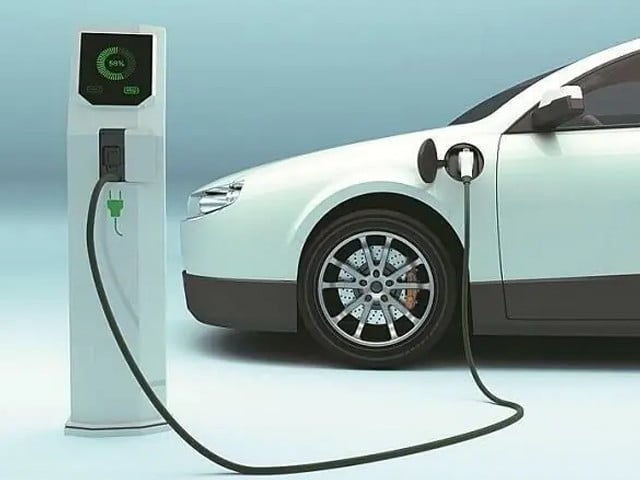
ISLAMABAD: Awaam Pakistan President Shahid Khaqan Abbasi on Saturday called on the government to deregulate petroleum prices and accelerate the adoption of electric vehicles (EVs) to cushion the economic fallout from soaring global oil prices triggered by the US-Israel war on Iran.
Since the outbreak of the conflict following the February 28 strikes, international oil markets have surged, pushing fuel prices in Pakistan to record levels. Petrol prices have climbed sharply from Rs266.17 to Rs378 per litre—despite a partial rollback—while high-speed diesel has skyrocketed from Rs280.86 to Rs520.35, placing immense pressure on consumers and businesses alike.
Addressing a press conference in Islamabad, Abbasi criticised the government’s handling of fuel pricing, stating that it lacked the capacity to manage a regulated regime effectively.
“I would like to say two things: deregulate petroleum prices—the government is not capable of handling it—and focus on electric vehicles, especially motorcycles,” he said, stressing that sustainable relief lies in structural reform rather than short-term adjustments.
Highlighting global best practices, Abbasi pointed to China as a model, noting how consistent policy incentives have enabled rapid EV adoption and reduced reliance on fossil fuels. He argued that Pakistan must follow a similar path by incentivising EV usage, particularly in the two-wheeler segment, which dominates the country’s transport landscape.
“This burden will keep increasing. The system will only function if you incentivise EVs,” he warned.
The former premier also criticised recent government measures, including subsidised public transport schemes and cash distribution initiatives, questioning their transparency and effectiveness. He alleged that widespread corruption would prevent the majority of allocated funds from reaching the public.
“Not even Rs20 billion out of the Rs200 billion announced will actually reach the people,” he claimed.
Abbasi further pointed out inconsistencies in policymaking, revealing that the government had adopted “five different policies” for fuel pricing within a single month. He argued that a deregulated, market-driven mechanism would provide greater stability and predictability.
“This is the path Pakistan should take. There is no other way,” he asserted, recalling that a decision to deregulate petroleum products had already been made in 2018.
He emphasised that controlling market manipulation—such as hoarding—remains the government’s responsibility, but warned against abrupt and poorly timed price hikes that burden consumers.
Calling for long-term policy consistency, Abbasi cited Pakistan’s rapid solar energy adoption as an example of how market forces can drive transformation without heavy-handed government intervention.
“We have already seen a solar revolution without government interference,” he said, lamenting frequent policy reversals in the energy sector, particularly regarding net metering.
“The government changed the policy four times. This is what you call elite capture,” he added, criticising shifting priorities and lack of continuity.
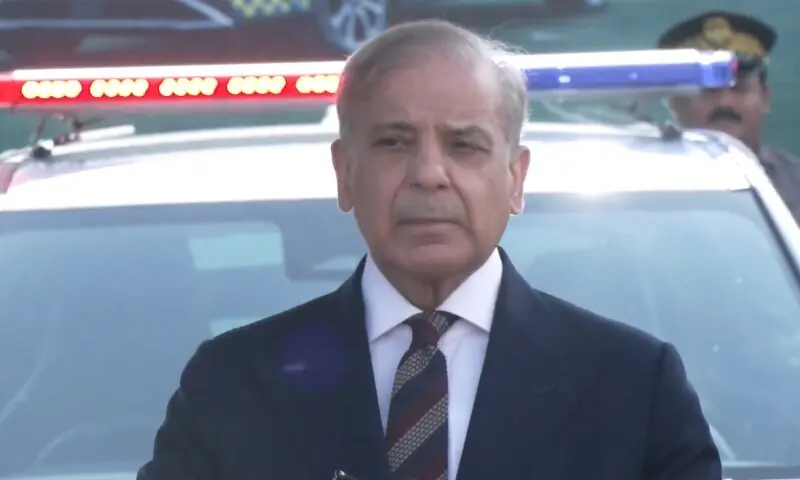
His remarks come amid widespread public backlash over recent fuel price hikes, including increases of up to 55 per cent in diesel prices. In response, Prime Minister Shehbaz Sharif announced a reduction in the petrol levy by Rs80 per litre, bringing the final price down to Rs378 instead of Rs458.
Despite the relief, opposition parties—including Pakistan Tehreek-e-Insaf and Jamaat-e-Islami—have strongly criticised the hikes, with warnings of nationwide protests if further increases are imposed.
Abbasi concluded by urging the government to adopt coherent, forward-looking policies that address both immediate economic pressures and long-term energy sustainability, warning that failure to act decisively could deepen the country’s economic challenges amid an increasingly volatile global environment.
Comments
No comments yet. Be the first to join the discussion!