Trump’s anger over Iran pushes NATO into a new crisis
Donald Trump’s anger over European allies’ stance on Iran has pushed NATO into a fresh crisis, with analysts warning the alliance is facing one of its weakest moments since its creation.

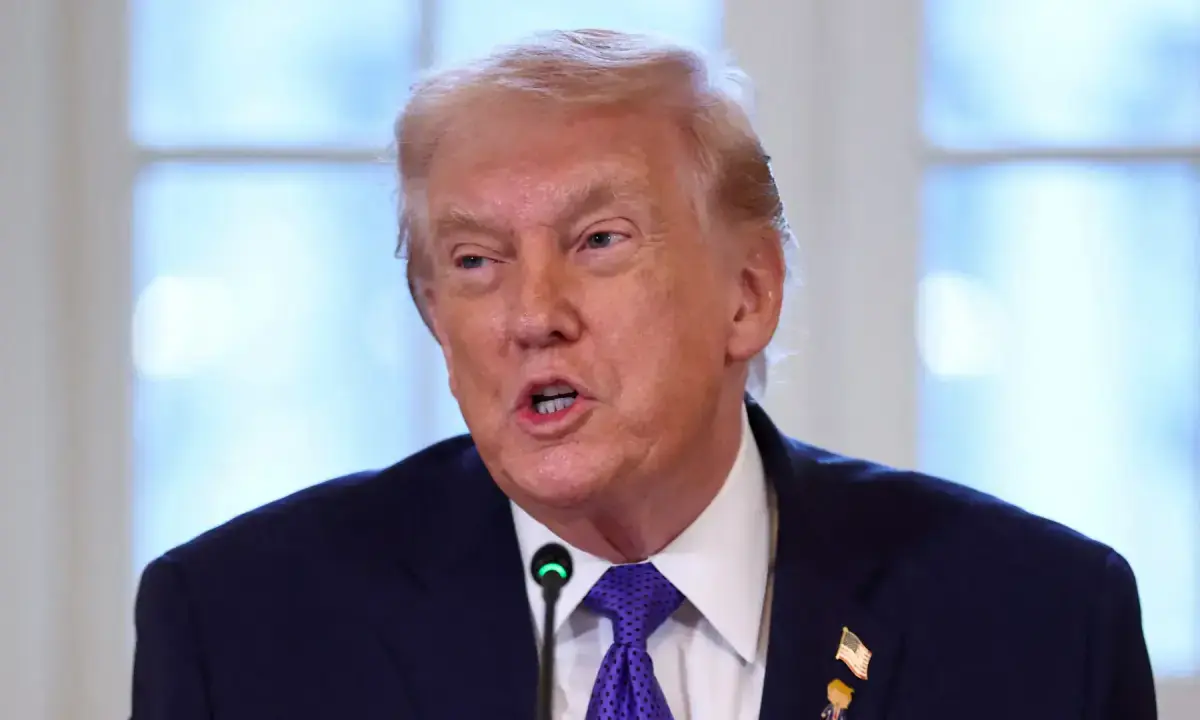
Washington: The NATO alliance, which has weathered major strains in recent years including the war in Ukraine and repeated pressure from US President Donald Trump, is now facing what analysts and diplomats describe as one of its gravest moments amid the US-Israeli war with Iran.
The conflict, far from Europe, has brought the 76-year-old alliance close to breaking point and risks leaving it in its weakest condition since it was formed. Trump has been angered by the refusal of European countries to deploy naval forces to help reopen the Strait of Hormuz to global shipping after the air war began on Feb 28, and has said he is considering withdrawing from NATO.
“Wouldn’t you if you were me?” Trump asked Reuters in a Wednesday interview.
In remarks on Wednesday night, Trump criticised US allies but did not directly denounce NATO, despite expectations among many experts that he might do so. Still, his latest comments, along with other recent criticism directed at European governments, have heightened concern that Washington may not defend European allies if they come under attack, regardless of whether the United States formally leaves the alliance.
Analysts and diplomats told Reuters that the alliance’s core principle of collective defence can no longer be assumed with certainty. Max Bergmann, a former State Department official who now heads the Europe, Russia, and Eurasia Program at the Center for Strategic and International Studies in Washington, said the alliance was in unprecedented difficulty.
“This is the worst place (Nato) has been since it was founded,” said Max Bergmann. “It’s really hard to think of anything that even comes close.”
The shift is also being felt in Europe, where NATO has long been seen as the foundation of security against a more assertive Russia. While NATO Secretary-General Mark Rutte had as recently as February dismissed the idea of Europe defending itself without the United States as a “silly thought,” many officials and diplomats now increasingly see that as the likely scenario.
“Nato remains necessary, but we must be capable of thinking of Nato without the Americans,” said General Francois Lecointre, who served as France’s armed forces chief from 2017 to 2021. “Whether it should even continue to be called Nato - North Atlantic Treaty Organization - is a valid question.”
White House spokeswoman Anna Kelly said: President Trump has made his disappointment with Nato and other allies clear, and as the President emphasised, the United States will remember. A NATO representative did not immediately respond to a request for comment, Reuters said.
Growing strain in the alliance
NATO has faced serious tests before, including during Trump’s first term from 2017 to 2021, when he also weighed leaving the alliance. Many current and former US and European officials now believe the situation is different, and fewer European officials think Trump can still be persuaded through ceremony and personal diplomacy.
Trump and members of his administration have voiced frustration over what they see as NATO’s failure to support the United States in a moment of need. This includes the lack of direct assistance in the Strait of Hormuz and restrictions on US use of certain airfields and airspace. US officials have argued that NATO cannot be a “one-way street”.
European officials, however, told Reuters they had not received specific US requests for assets for any mission to reopen the strait. They also complained that Washington had sent mixed signals on whether such an operation would take place during the war or after it.
“It’s a terrible situation for Nato to be in,” said Jamie Shea, a former senior Nato official who is now a senior fellow at the Friends of Europe think tank. “It is a blow to the allies who, since Trump returned to the White House, have worked hard to show that they are willing and able to take more responsibility (for their own defense).”
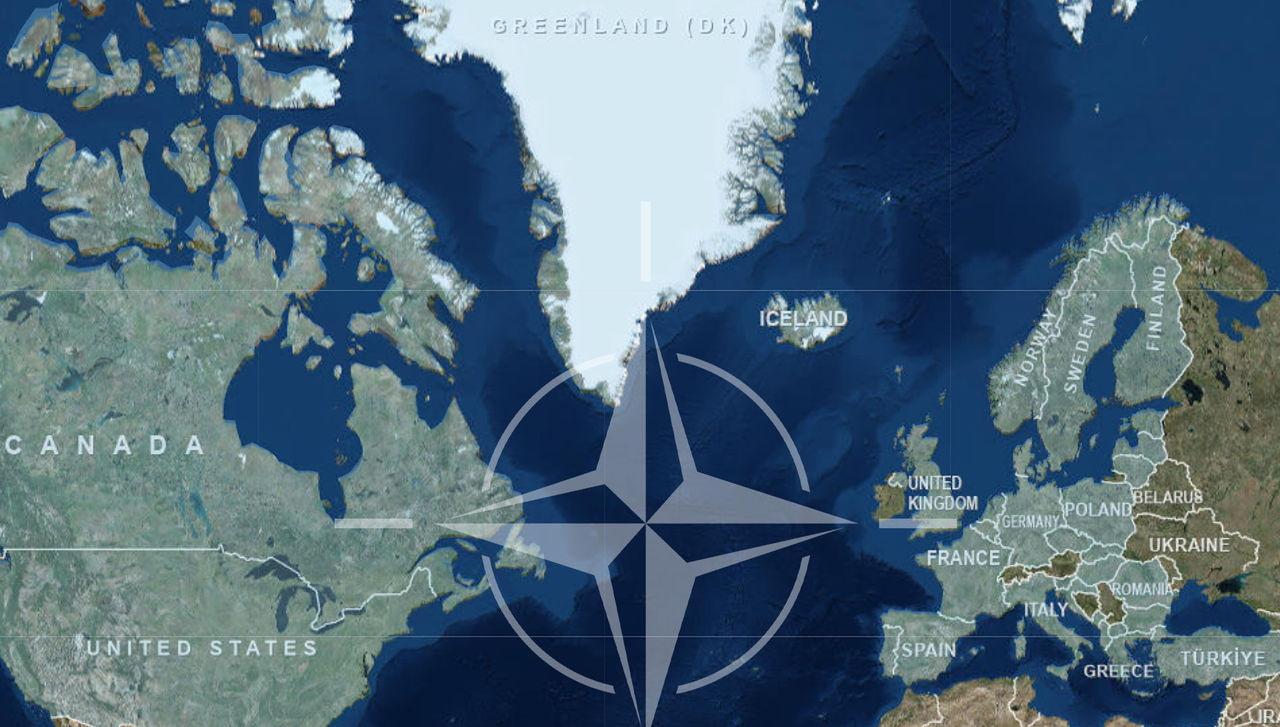
Trump’s latest remarks come after other developments that have unsettled the alliance, including his renewed threats in January to take Greenland from Denmark and recent US steps that Europeans view as unusually accommodating toward Russia, which NATO identifies as its main security threat.
The US administration has largely stayed silent amid reports that Moscow supplied targeting data to Iran for attacks on US assets in the Middle East, and that Washington has removed sanctions on Russian oil in an effort to ease global energy prices that surged during the war.
At a meeting of G7 foreign ministers near Paris last week, US Secretary of State Marco Rubio and European Union foreign policy chief Kaja Kallas had a tense exchange, citing five people familiar with the matter. Kallas asked when US patience with Russian President Vladimir Putin would run out over Ukraine peace talks, and Rubio responded irritably that the United States was trying to end the war while continuing support for Ukraine, adding that the EU could mediate if it wished.
Uncertainty over the future
Trump may not have the legal authority to pull the United States out of NATO on his own. Under a 2023 law, a US president cannot leave the alliance without the approval of two-thirds of the Senate, a threshold nearly impossible to meet. Even so, analysts said Trump, as commander-in-chief, could still decide whether the US military would defend NATO members, and that a refusal to do so could undermine the alliance even without a formal withdrawal.
Not all officials see the current moment in the same way. One French diplomat described Trump’s rhetoric as a temporary outburst. Trump has shifted his position on NATO before. During the 2024 campaign, he said he would encourage Putin to attack NATO members that did not spend enough on defence. But by the alliance’s annual summit in June 2025, he was praising European leaders as people who “love their countries.”
Next week, Rutte is due in Washington and is expected to try once again to alter Trump’s view of the alliance. Analysts told Reuters that European countries still have strong reasons to keep the United States engaged in NATO, not least because the US military provides capabilities that are difficult for the alliance to replace, including satellite intelligence.
Even if both sides manage to remain together within NATO, diplomats, analysts and officials told Reuters that the transatlantic relationship that has shaped the global order since World War Two may already be undergoing a lasting change.
“I do think we’re turning the page of 80 years of working together,” said Julianne Smith, the US ambassador to Nato under Democratic President Joe Biden. “I don’t think it means the end of the transatlantic relationship, but we’re on the cusp of something that’s going to have a different look and feel to it” he said.
Comments
No comments yet. Be the first to join the discussion!