Trump calls on NATO allies to 'get guts', send ships to Strait of Hormuz
President Trump urged NATO allies to send naval vessels to the Strait of Hormuz, criticizing the alliance and escalating pressure amid Iran’s disruption of the waterway. France warns force is unrealistic.

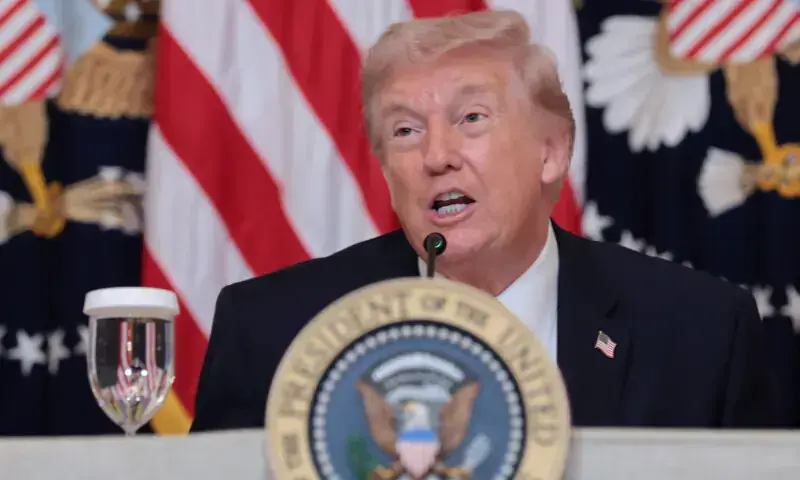
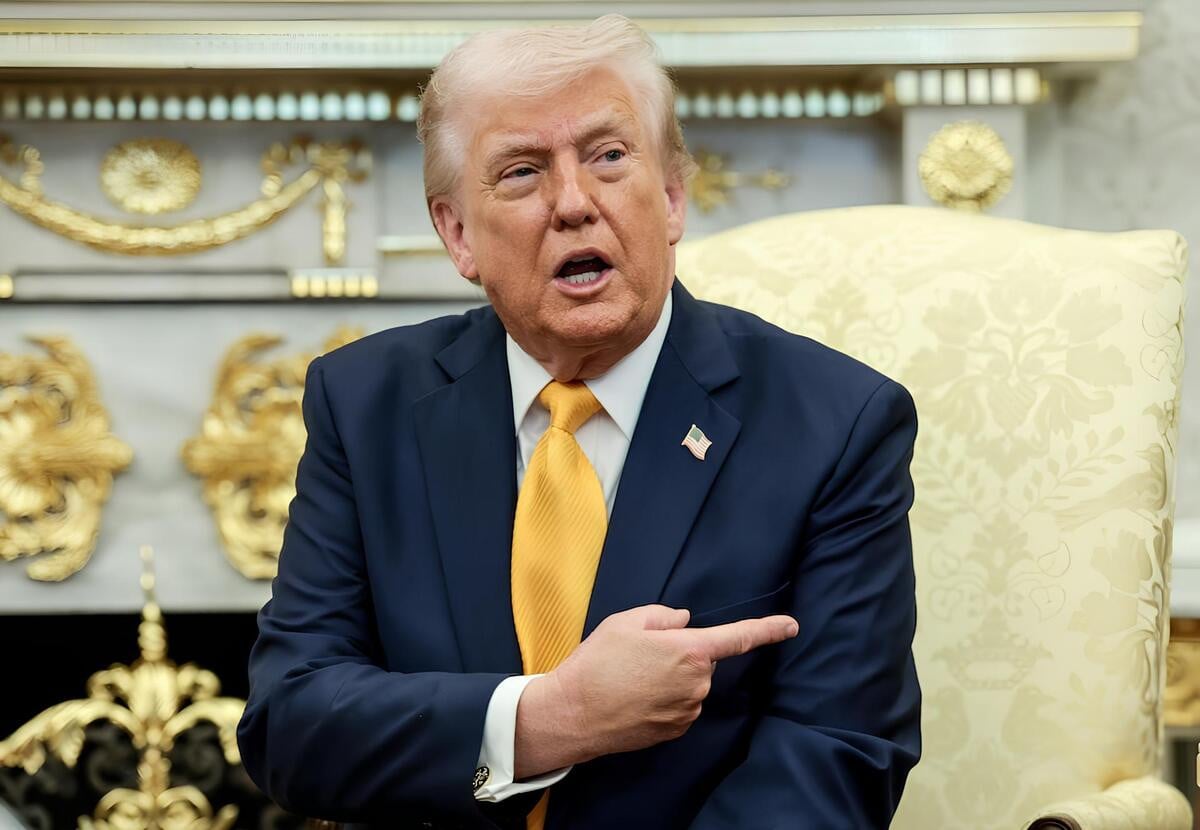
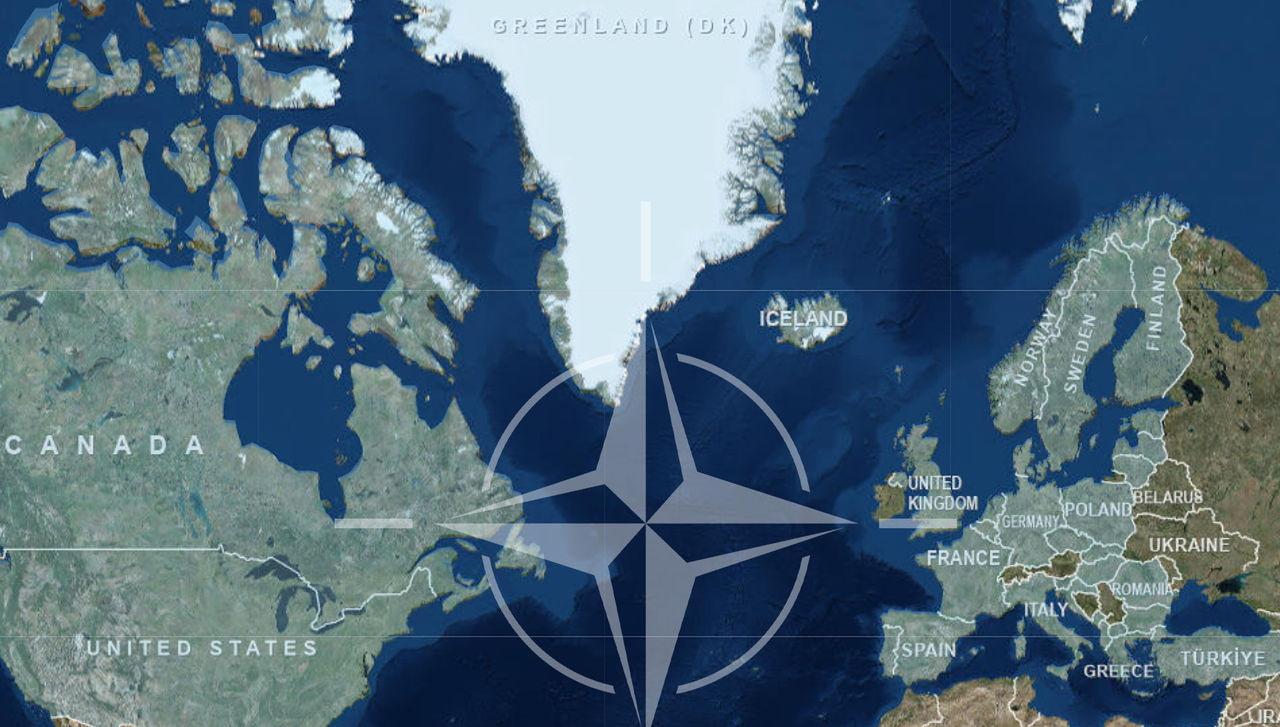
WASHINGTON: United States President Donald Trump on Thursday urged the members of NATO to gather the courage to send naval vessels to the Strait of Hormuz, again disparaging the longtime military alliance.
Asked why he had not mentioned NATO in his Wednesday night address to the nation, Trump said it was not a NATO speech but that he had referenced the strait and those who were absent. "They gotta get guts and go in and just send your ships up there and enjoy it," he told Politico.
Pressed on whether he was frustrated with the alliance, Trump said: "I couldn't care less. I didn't need them."
He added: "But if I ever did need them, they wouldn't be there."
NATO has invoked Article 5 — its collective defence clause — just once in its history, after the 2001 terrorist attacks on the US. NATO allies have criticised Trump for starting the war with Iran without consulting them.
The remarks are the latest in a string of pointed criticisms Trump has directed at NATO over its response to the Strait of Hormuz crisis. He has previously called alliance members "cowards" and, in a separate interview with British daily The Telegraph, described NATO as a "paper tiger" and said leaving the alliance was "beyond reconsideration".
Leaving NATO unilaterally — a move Trump has hinted at since his first term — would face significant legal hurdles. A 2023 law bars any US president from withdrawing from the alliance without the backing of a two-thirds majority in the US Senate.
The strait, through which roughly 20 million barrels of oil pass daily, has been effectively disrupted since early March following Iranian measures taken in retaliation for the US-Israeli offensive on Iran that began on February 28.
Trump has repeatedly urged European allies and Gulf states to take a more active role in securing the strait, arguing that countries dependent on its oil should bear responsibility for reopening it.
Trump will meet with NATO chief Mark Rutte in Washington next week, according to The Wall Street Journal.
Trump ‘desperate’ to make deal with Iran, says ex-Pentagon adviser
Meanwhile, a former Pentagon adviser said recent remarks by Trump suggested he was “desperate” to secure a deal with Iran to end the ongoing conflict in the Middle East.
“What the Iranian regime is getting from President Trump’s speeches is that he is actually desperate to make a deal,” former Pentagon adviser Jasmine El-Gamal told CNN.
“They know that if they continue to impose these costs on the US, Gulf allies, global energy markets, they have a better chance of getting to the negotiating table on their terms," she added.
Her comments came after Trump said on Wednesday that the US would hit Iran "very hard" over the coming weeks.
"We’re going to bring them back to the Stone Age, where they belong," he added.
El-Gamal said Trump’s back-and-forth between calls for negotiations and threats of escalation was hindering progress towards ending the conflict.
“We’re not closer than we were last week because he keeps doing the same thing, vacillate between these two positions," she said.
"We want a deal but we’re also going to bomb you to the Stone Age if you don’t give it to us. That’s not the way you bring an adversary to the negotiating table," she added.
Macron says it is unrealistic to open Strait of Hormuz by force
Separately, French President Emmanuel Macron said it would be unrealistic to launch a military operation to force open the Strait of Hormuz after Trump challenged US allies to work towards reopening it.
Thousands of people have been killed across the Middle East since February 28, when the US and Israel struck Iran, triggering Iranian attacks on Israel, US bases and the Gulf states, and Tehran effectively closing the waterway that carries about a fifth of global oil and liquefied natural gas supplies.
"Some people defend the idea of freeing the Strait of Hormuz by force via a military operation, a position sometimes expressed by the United States, although it has varied," Macron told reporters during a trip to South Korea.
"This was never the option we have supported because it is unrealistic," he said. "It would take forever and would expose all those who go through the Strait to risks from the guardians of the revolution but also ballistic missiles," he said.
Macron, who has worked with European and other allies to build a coalition to guarantee free passage through Hormuz once hostilities have stopped, said this could only be done by talking to Iran.
"What we say from the beginning is that this strait must be reopened because it is strategic for energy flows, fertilisers and international trade, but that it can only be done in consultation with Iran," he said.
Asked about Trump's criticism of NATO allies and threats to pull the US out of the alliance, Macron said:
"I don't want to provide a running commentary of an operation the Americans have decided on their own with Israel. They can deplore the fact they're not being helped, but that's not our operation. We want peace as soon as possible."
Macron also said that Trump's comments mocking him and his wife Brigitte, were "neither elegant nor commensurate" with the moment.
Iran army chief warns ‘no enemy troops should survive’ any US ground invasion
Iran’s army chief warned on Thursday that “no enemy troops should survive” if the US attempts a ground invasion. “In the event the enemy attempts a ground operation, no one should survive,” Amir Hatami said in comments carried by state broadcaster IRIB.
Hatami said the military leadership has instructed operational commands to closely monitor movements by the US forces and respond in a timely manner.
“It is necessary to monitor the enemy’s movements and actions with utmost precision and extreme caution, moment by moment, and to implement plans to counter its attack methods at the appropriate time,” he said. “The spectre of war must be removed from our country, and security must prevail for all, as it is unacceptable for places to be safe while our people are in danger,” he added.
Earlier, Iranian Foreign Ministry spokesperson Esmaeil Baqaei said Iran will take 'necessary actions' to prevent the Strait of Hormuz from being exploited for 'military aggression' against the country, according to Tasnim News Agency.
Baqaei also said Thursday that a US missile strike on a sports hall in Lamerd, Fars, killed 21 civilians on Feb. 28, including teenagers, denouncing the attack as a “despicable war crime.” “The American new #PrSM missile … struck a crowded sports hall filled with innocent teenagers,” he said in a statement on X.
Baqaei accused the US of deliberately targeting civilians and described the attack as a “despicable war crime.”
According to visual evidence examined by the New York Times and weapons experts, a newly developed US missile struck civilian sites in southern Iran, targeting a sports hall and an adjacent elementary school near a military compound in the city of Lamerd.
An analysis of videos and photos from the scene suggested the weapon used was a Precision Strike Missile, a short-range ballistic missile developed by the US Army.
Comments
No comments yet. Be the first to join the discussion!